From over 100,000 films, discover the handful you'll love.
Free or premium access to the world's largest documentary library.
3589 films(Page 2 of 75)
In the spring of 1453, Sultan Mehmed II's siege of Constantinople leads to the fall of the Byzantine Empire and the establishment of Ottoman dominance in the region.
Vladimir Putin's rise from a KGB colonel in St Petersburg to Russia's president is examined through key political events and insights from his inner circle.
In August 1942, Hitler's attempt to capture Stalingrad involved forces from Italy, Hungary, Romania, and Croatia, marking a pivotal moment in World War II.
In October 1943, Allied leaders met in Tehran to discuss military strategies as the war intensified on multiple fronts.
The Treaty of Versailles and the interwar years created economic conditions and resentment in Germany that contributed to the outbreak of World War II.
A 255-man crew aboard the frigate Hessen conducts combat drills over three weeks alongside the USS Harry S Truman and six other warships in the Atlantic.
Three generations of the Kim family have ruled North Korea for over seventy years, shaping a regime that prioritizes nuclear development amid widespread poverty.
Hitler's invasion of the Soviet Union in 1941, marked by early advances and harsh winters, became a pivotal blunder that contributed to the Nazi regime's downfall.
On May 14, 1948, David Ben-Gurion proclaimed the creation of the State of Israel, marking a significant moment in Jewish history.
Six nuclear weapons remain unrecovered in the ocean, abandoned by the United States during the Cold War, posing ongoing environmental and security risks.
China is building air strips on disputed islands in the South China Sea, raising concerns about potential military conflict with the United States.
From Lenin's death to Gorbachev's reforms, the evolution of the Soviet Union is marked by political turmoil, war, and the eventual collapse in 1991.
Five computers, ten hard drives, and 110 thumb drives were recovered during the raid that killed Osama bin Laden in Abbottabad, Pakistan, on May 2, 2011.
Hitler's underestimation of the United States during World War II is examined through the lens of the US War Department's strategies and personal accounts from soldiers.
A war that began over 40 years ago remains officially unacknowledged, pitting Iran against the United States and Israel in a complex conflict.
In 1943, a U.S. military orientation film details the German military offensive from 1939 to 1940, highlighting key events such as the invasion of France and the evacuation at Dunkirk.
Two superpowers had five times more missile warheads in 1979 than they did just eight years earlier, raising fears of global destruction.
On August 20, 1944, a Russian offensive trapped the German 6th and Romanian 3rd armies, marking a significant turning point in the Eastern Front.
In April 1982, British forces launched a significant nighttime raid on Port Stanley in response to Argentinian aggression during the Falklands War.
The Rwandan genocide of 1994, resulting in the deaths of one million Tutsis, was a meticulously planned atrocity rooted in decades of colonialism and ethnic manipulation.
Klaus Scherer travels along the northern border of the United States, exploring the diverse lives of Americans from Maine's islands to Arctic Deadhorse.
Four Hong Kong activists live in exile in London, fighting for democracy and freedom.
In Tanzania, the Mlima Kitonga section of the A7 highway poses extreme risks for drivers, while Kenya's "flying trucks" transport perishable goods on perilous roads.
Galileo Galilei, born in 1564 in Pisa, faced life imprisonment for advocating heliocentrism, challenging the Catholic Church's geocentric doctrine.
Hitler's invasion of the Soviet Union marked a critical turning point in World War II, highlighting the catastrophic miscalculations that led to Nazi Germany's downfall.
Between 1978 and 1988, KGB agent Peter Wolter made nearly 100 trips from West Germany to East Berlin to deliver intelligence.
In 1991, Iraq's once-mighty army faced a swift and overwhelming defeat by Coalition forces during the Gulf War, collapsing in just 100 hours.
In 1942, as Hitler's forces occupied vast territories in Europe, key strategic decisions began to shift the momentum of World War II in favor of the Allies.
NATO's Operation Brown Jack involved the largest military exercise in Denmark, demonstrating the alliance's readiness during the Cold War.
Operation Sea Lion, Hitler's planned invasion of Britain following the Battle of France, ultimately failed due to British resilience and strategic defenses.
50 kilograms of heroin and a large amount of arms were seized from the North Korean ship Pong Su during a 2003 operation led by the US State Department.
Alexander the Great's rapid conquests across the known world in just 12 years are examined, highlighting the historical context of his rise and fall.
Operation Barbarossa, launched by Nazi Germany in June 1941, is chronicled through rare footage and personal accounts, highlighting the Eastern Front's early brutality.
On October 7, 2023, Gaza launches an unexpected attack that shakes Israel's security.
Operation Barbarossa, Hitler's 1941 invasion of the Soviet Union, failed due to strategic blunders and the impact of Stalin's purges on the Red Army.
Operation Barbarossa, Hitler's invasion of the Soviet Union in World War II, faced insurmountable challenges due to Nazi racial ideology and the Red Army's fierce resistance.
Joe Biden was sworn into the Senate in 1973, just weeks after a car accident claimed the lives of his wife and infant daughter.
More than 2 million people have died in Sudan's civil war, driven by the struggle for control over oil resources.
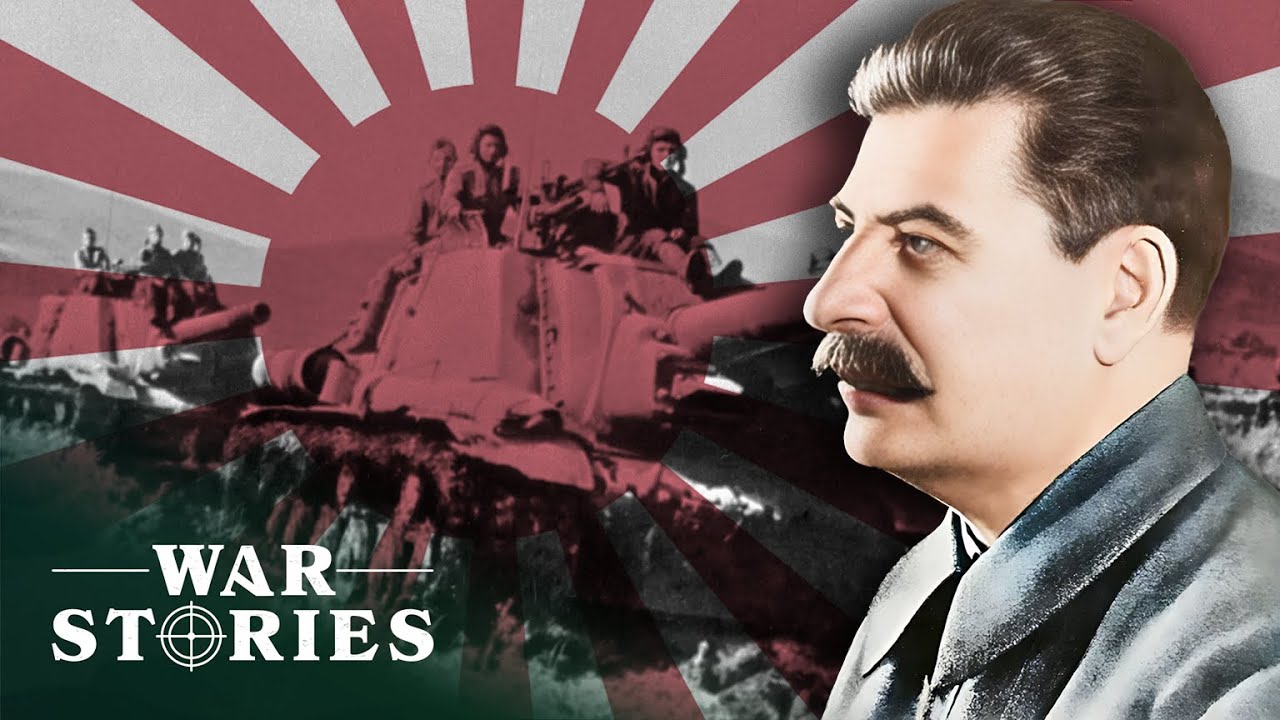
The Soviet campaign in Manchuria in 1945 significantly weakened the Imperial Japanese Empire, overshadowed by Japan's surrender following the atomic bombings.
Germany's invasion of Poland in September 1939 is examined through political context, including the Molotov-Ribbentrop Pact, and the brutal realities of warfare.
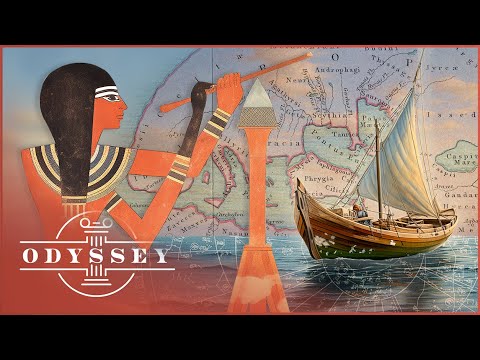
Ancient civilizations, from Mesopotamia to Rome, utilized maps as tools of power for trade, conquest, and warfare, shaping their understanding of the world.
The Treaty of Versailles, the stock market crash, and the rise of dictators contributed to the conditions that led to the outbreak of World War II.
On July 20, 1944, Klaus von Stauffenberg carried a briefcase containing two bombs into Hitler's Wolf's Lair in an attempt to assassinate the dictator.
150 bodies of Hezbollah fighters are returned by Israel in exchange for two Israeli soldiers during the conflict that began in 1984.
Neutral Scandinavia faced significant threats during World War II as competing powers violated its sovereignty to control strategically vital territories.
Afghanistan's diverse landscapes, from the Bamiyan Buddha niches to the remote Wakhan Corridor, reveal a resilient culture shaped by ancient history and geography.
Nearly 40,000 Italian soldiers were taken prisoner after a swift British counterattack in December 1940 during Italy's campaign in North Africa.