From over 100,000 films, discover the handful you'll love.
Free or premium access to the world's largest documentary library.
20584 films(Page 426 of 429)
Leah Thomas discusses identity and perception through her work in psychology and education.
Sheikh Haithem Al-Haddad and Dr Suhaib Hasan discuss Islamic divorces in Britain's Sharia Council.
Wendy Suzuki discusses how anxiety can be harnessed alongside exercise and human connection to enhance brain function and overall well-being.
Daniela Rus, a computer scientist at MIT, discusses the integration of AI into daily life, exploring its history, applications, and future developments.
Interviewing individuals about ketamine reveals a range of immersive stories that challenge perceptions of culture, crime, art, and fashion.
Jiadong reveals what happens when names are lost, affecting identity and recognition.
Irene Hirano Inouye delivers closing remarks at the National Conversation on #RightsAndJustice: Immigration Barriers and Access on November 19, 2016.
Professor David Nutt discusses functioning heroin users and addiction risks after one use.
A diverse panel debates colorism and its impact today, including skin bleaching and social media.
Isabelle Huppert describes the film as a fable and metaphor about family life, stating, "it's called home, but it becomes hell."
Benny Gantz discusses Israeli politics and Netanyahu's potential ousting in an exclusive interview.
Jake and Dinos Chapman discuss their controversial exhibition of modified Hitler watercolours, provoking extreme reactions and challenging perceptions of art and evil.
Jamie Oliver discusses his plans for the next decade, including a food emporium for the Olympics.
Jan Gehl, a pioneering Danish architect, emphasizes the importance of human-centered urban design, advocating for pedestrian-friendly cities that enhance quality of life.
Janelle Monáe describes her grandmother's 25 years serving food in county jail while reflecting on her identity as a young, black, queer woman.
Jeffrey Tambor describes how he felt joy in using all of himself to portray a transgender woman, saying it allowed him to access parts of his identity.
Jim Lehrer discusses the evolution of journalism, the significance of fact-checking, and his experiences covering pivotal events like Watergate and Nixon's impeachment.
Joelle Gamble, Director of the National Network of Emerging Thinkers at the Roosevelt Institute, discusses the perspectives of her generation on social justice issues.
John Connors discusses his iftar award and the pressure of representing his community.
John Lewis reflects on his civil rights activism, his relationship with Dr. Martin Luther King Jr., and the ongoing fight for equality in America.
John Smith, a deaf comedian, highlights his experiences in stand-up comedy and the significance of British Sign Language during a performance in Preston.
Jon Meacham examines how historical conflicts, from Reconstruction to the Civil Rights movement, shape America's identity and political landscape.
Jon Meacham analyzes the impact of fear during anxious times, the legacy of McCarthyism, and the significance of empathy in leadership, highlighting the Civil Rights Movement.
Jon Rafman critiques the evolution of the internet from a free space to one dominated by surveillance, exploring its impact on identity and society.
Joseph Stiglitz discusses President Donald Trump's impact on American society and politics.
Hiring a senior advocate in India can cost between 500,000 to 2 million rupees per appearance, often exceeding the price of major medical procedures.
Kareem Abdul-Jabbar reflects on Gordon Parks's nuanced portrayal of Black life, his encounters with Muhammad Ali, and the influence of Colin Kaepernick.
Kathy Burke discusses the challenges of growing up and the realities of aging today.
Katie Couric reflects on her upbringing, career challenges in television journalism, and the essential role of empathy and accountability in storytelling.
A panel discussion on March 17 features Ken Loach discussing the collective memories and ambitions that shaped British society from 1945 to 1950.
Kevin Gates and Boobie Black offer advice on personal dilemmas and spiritual alignment.
Two friends take calls from listeners seeking advice on personal dilemmas, including living in a polyamorous relationship.
Kate Orff, a pioneering landscape architect, emphasizes the vital connection between humans and nature, advocating for biodiversity and community stewardship in her work.
Lauren Greenfield explores the impact of consumerism and media on identity and aspirations, highlighting the commodification of women and the corruption of the American dream.
Laurence Tribe reflects on his influential career as a Harvard Law professor, discussing constitutional interpretation and landmark Supreme Court cases involving notable students like Barack Obama and Ted Cruz.
Thotline answers questions about dating, sex moves, and finding the best porn.
Two friends take calls from people around the world, offering advice on personal dilemmas and life challenges in a 15-minute session.
Terry H. Brooks, a former Guantanamo Bay guard, reflects on his experiences and advocates for the closure of the detention center while emphasizing freedom of speech.
Candid interviews reveal the challenges and rewards of polyamorous relationships.
In celebration of Black History Month, director Bogdan Anifrani-Fedach participates in a live Q&A about his animated film, moderated by Osas Eweka-Smith and Magalie Boutin.
Douglas Latchford, a key figure in Cambodian art, exploited the Khmer Rouge's chaos to loot the nation's cultural heritage, aided by Western art elites.
Ana Carolina from Campo Grande, Brazil, shares her life with microcephaly in a Guardian interview.
Louie Lingard, known as NotLewy, navigates the challenges of TikTok fame while balancing crude humor about his disability and his true passion for rap music.
Malcolm Gladwell discusses the 91% top rate income tax during the candy johnson era.
Mary and her husband reflect on their engagement while looking through wedding photos, sharing memories and contrasting their relationship with modern challenges.
Mette Winckelmann, a Danish artist, uses abstract painting to convey feminist messages, challenging traditional narratives in art through her unique visual language.
Michael Eric Dyson analyzes the influence of Chicago's racial and political landscape on Barack Obama's rise, including key moments from his political career.
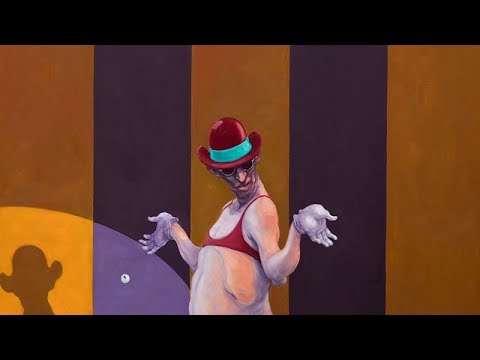
Michael Kvium, a prominent Danish artist, discusses his provocative art that critiques contemporary European issues, particularly the refugee crisis and societal discomfort.