From over 100,000 films, discover the handful you'll love.
Free or premium access to the world's largest documentary library.
590 films(Page 5 of 13)
NASA's Apollo program trained astronauts through rigorous survival courses and simulations, enabling successful lunar missions from 1969 to 1972.
Luna 1, the first robotic emissary to the Moon, missed its target by nearly 6,000 km but became the first spacecraft to orbit the sun.
Military bomber aircraft, from the Avro Lancaster to the B-52 Stratofortress, have significantly influenced warfare strategies and historical conflicts.
The United States and Canada drew up plans to invade each other in the 1920s and 1930s, with the U.S. plan declassified in 1974.
The CIA uses a fake movie in Operation Hollywood to rescue Americans from Tehran in 1979.
Dwight D. Eisenhower orchestrated a covert campaign to dismantle Senator Joseph McCarthy's influence, utilizing previously overlooked documents to reveal the strategy.
28,121 acres make up the U.S. naval base at Guantanamo, where American marines and Cuban soldiers maintain a constant watch along an 18-mile perimeter.
269 victims died when a Korean passenger plane was shot down by the Soviet Union due to a GPS positioning error in 1983.
West Germany's military buildup during the Cold War is illustrated through archival footage from the Department of Defense and the War Department.
In January 1968, General Westmoreland claimed the end of the Vietnam War was in sight, while the North Vietnamese prepared for a major offensive.
Anatoly Kuznetsov shares his escape from the USSR to the UK during the Cold War.
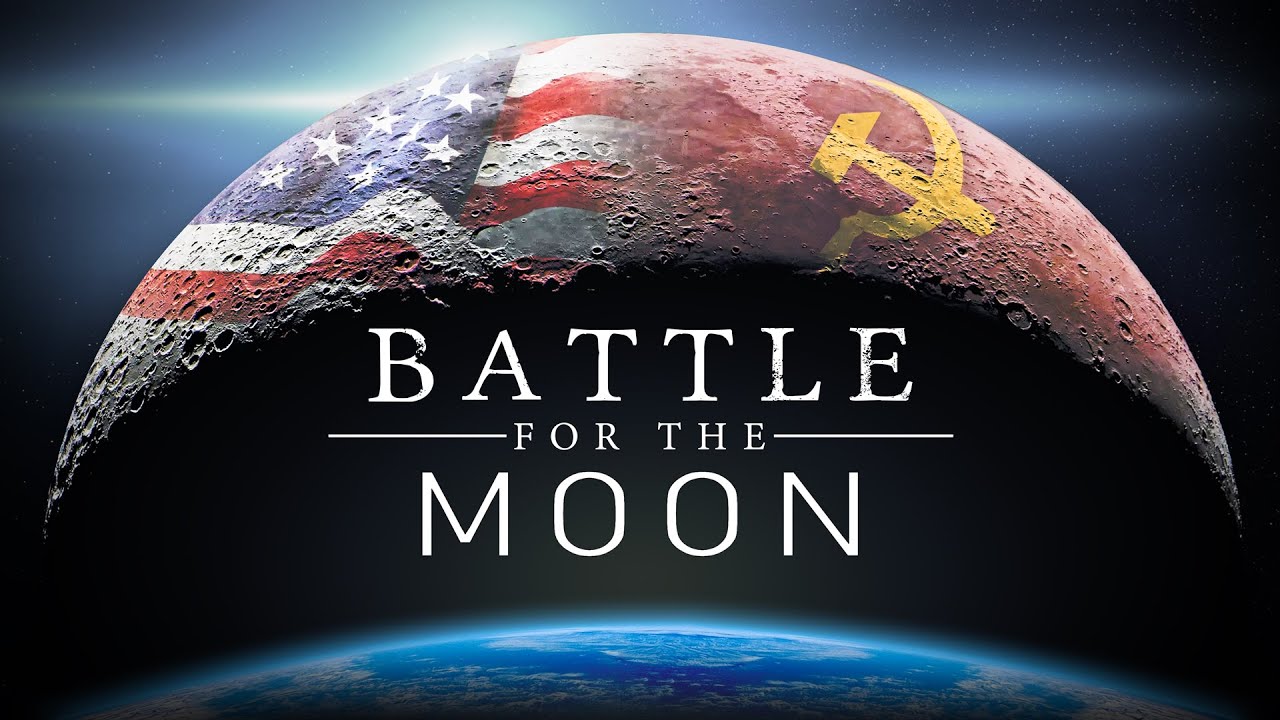
Neil Armstrong lands on the moon on July 20, 1969, marking a triumph for Americans over Soviets.
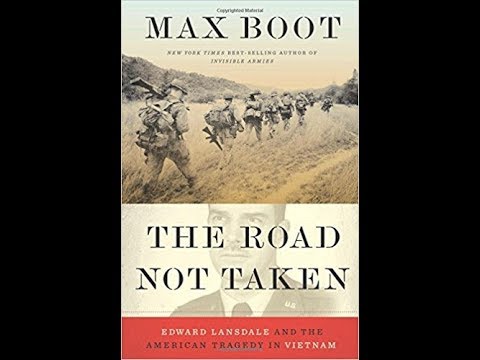
Edward Lansdale's diplomatic strategies in Vietnam, as examined by military historian Max Boot, highlight the failures of America's military bureaucracy.
In 1982, the British submarine Conqueror sank the Argentine cruiser General Belgrano, resulting in the loss of 368 lives during the Falklands War.
Dwight D. Eisenhower's presidency is examined through his efforts in coalition building and compromise during the Cold War, as discussed by professor Louis Galambos.
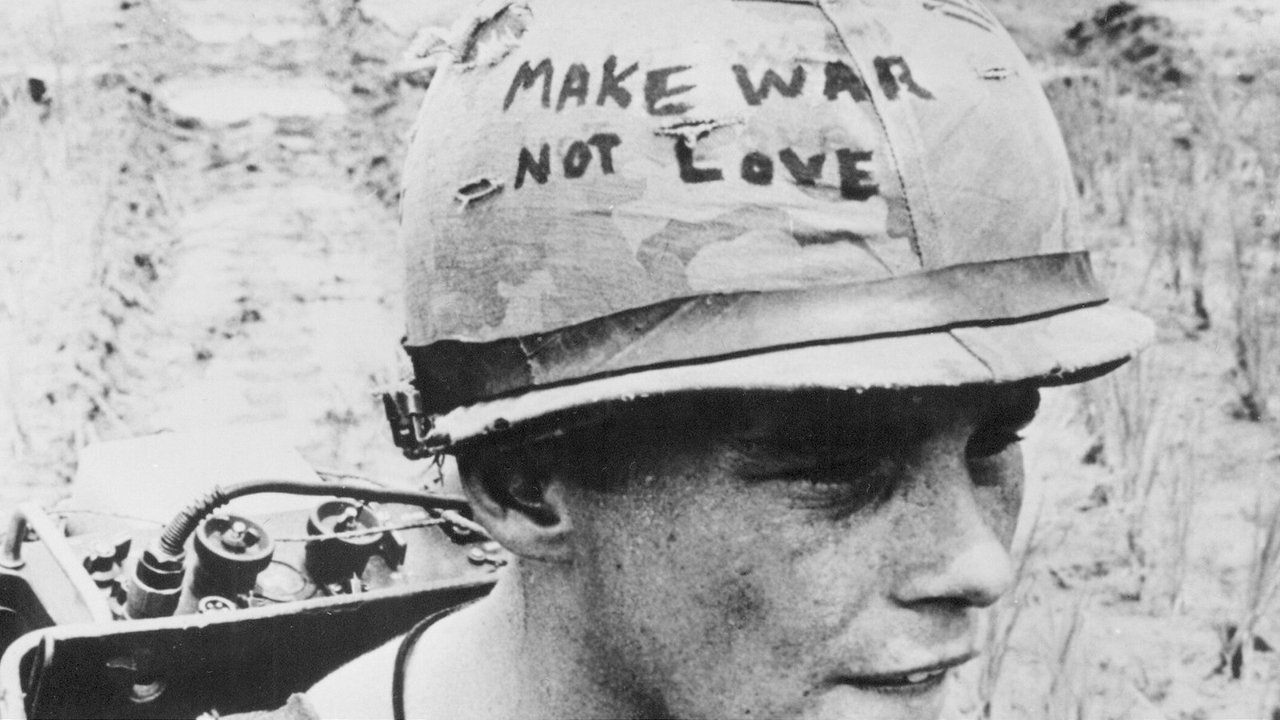
The Vietnam War is critically examined through interviews and archival footage, highlighting its effects on both Vietnam and American foreign policy.
Stanislav Petrov prevents nuclear war, struggling to reclaim his life afterward.
In January 1968, the Viet Cong and North Vietnamese forces launched a coordinated series of attacks across South Vietnam during the Tet Offensive.
A rocket 30 meters high launched the first Sputnik on October 4, 1957, marking the start of the intense space race between the USSR and the United States.
In 1969, Richard Nixon and Henry Kissinger implemented a secret global nuclear alert as part of their coercive diplomacy strategy to expedite the end of the Vietnam War.
Stanislav Petrov, a Russian officer, played a crucial role in averting a potential nuclear war during a false alarm in 1983, as detailed in this documentary.
Dwight Eisenhower delivered his farewell address on January 17, 1961, warning against the undue influence of the military industrial complex.
Salvatore Giuliano's story has been under state-secret status for more than 60 years, reflecting the hidden complexities of postwar Italian politics.
Ronald Reagan negotiated with Mikhail Gorbachev for 36 hours in Reykjavik in 1986, aiming to eliminate nuclear weapons between superpowers.
Ho Chi Minh declared Vietnam's independence on September 2, 1945, borrowing language from the American Declaration of Independence.
James Stewart narrates an overview of the U.S. Air Force's missile program, highlighting its strategic significance during the Cold War.
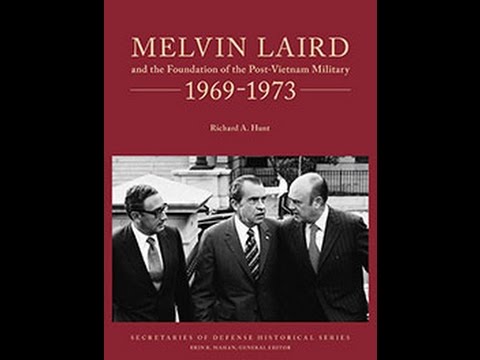
Melvin Laird's role as Secretary of Defense from 1969 to 1973 is analyzed through discussions moderated by Erin Mahan and featuring insights from Richard A. Hunt.
The launch of Sputnik by the Soviet Union ignited the Space Race, leading to NASA's Apollo program and the historic Moon landing by American astronauts.
Twelve Americans walked on the moon during six successful lunar landing missions between 1969 and 1972, marking a key achievement in the space race.
Le Cercle is a clandestine neoconservative group formed to combat communism after World War II.
The Vietnam War, as explored by Ken Burns and Lynn Novick, examines the conflict's profound impact on American society through the perspectives of veterans and historians.
Rare archival footage and declassified documents reveal the intense espionage, nuclear threats, and proxy wars that defined the Cold War between the United States and the Soviet Union.
Ernest Hemingway's involvement in mid-twentieth-century espionage is explored through historian Nicholas Reynolds' research at the CIA Museum.
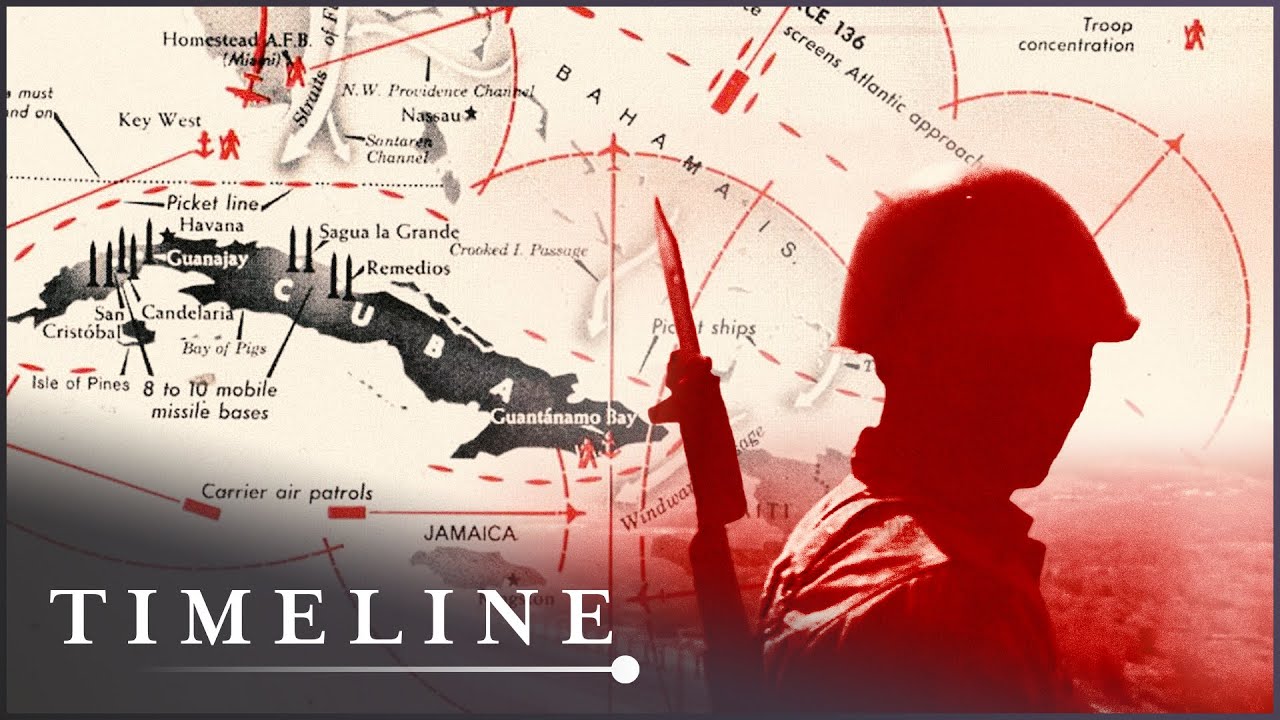
For two weeks in October 1962, the world faced the threat of thermonuclear war as the Soviet Union deployed nuclear missiles just 90 miles from the U.S.
Herbert Norman leapt to his death in 1957, facing accusations of communism from the United States Senate and the FBI, despite being cleared by Canadian authorities.
Eighty-two crew members of the USS Pueblo were captured by North Korean forces on January 23, 1968, and held for eleven months.
The assassination of Bulgarian dissident Georgi Markov in London in 1978, using a poisoned umbrella, raises questions about Cold War espionage and covert operations.
In October 1962, Oleg Penkovsky, a Soviet officer, provided critical intelligence to the CIA that helped prevent nuclear war during the Cuban missile crisis.
In 1960, directors Otto Preminger and Kirk Douglas hired Dalton Trumbo under his own name, marking a significant shift in Hollywood's response to the blacklist.
Post-World War II Europe experienced unprecedented peace and prosperity, but the rise of nationalism and events like Brexit threaten this unity.
In modern Korea, the Demilitarized Zone (DMZ) symbolizes the division between North and South, reflecting the emotional scars of families separated since the Korean War.
In October 1962, the world came the closest it has ever been to nuclear armageddon during the Cuban Missile Crisis between the United States and the Soviet Union.
On March 12, 1947, President Harry S. Truman delivered a speech to Congress that established the U.S. policy to help free nations resist subjugation.
In February 1945, a cargo of car wheels from Hannibal, Missouri, was loaded onto a ship in San Francisco to support U.S. military efforts in the Pacific.
Lyndon Baines Johnson faced significant challenges in 1968, including the Vietnam War, the assassinations of Martin Luther King, Jr. and Robert Kennedy, and the chaotic Democratic National Convention in Chicago.
Negotiations between Washington and Havana from the Kennedy to Obama administrations reveal a complex history of dialogue and diplomacy.
Robert F. Kennedy's potential presidency is examined through his evolution from a Cold War warrior to a proponent of peace and social justice.
In December 1950, General Douglas MacArthur's offensive led to a desperate escape for American troops encircled by Chinese forces near the Yalu River during the Korean War.