From over 100,000 films, discover the handful you'll love.
Free or premium access to the world's largest documentary library.
Topics explored in films with this theme:
5980 films(Page 9 of 125)
A telescope built in one of the most inhospitable places on Earth seeks to answer the question of how the universe began.
Astronomers search for Earth-like planets among four hundred billion stars in our galaxy.
A type 1A supernova shines 5 billion times more brightly than the sun, illustrating the vast scale of cosmic events in the universe.
One of the most advanced helmets in the world undergoes rigorous testing at BAE Systems' Rochester facility to ensure pilot safety and performance.
In 1961, President John F. Kennedy challenged America to land a man on the moon and return him safely to Earth within the decade.
The International Space Station, operational for 23 years, is reaching its limits while new technologies aim to expand human presence in space.
The Atacama Desert is home to the world's largest radio telescope, ALMA, and Mega Transports.
NASA's James Webb Space Telescope aims to enhance understanding of cosmic phenomena and improve strategies for planetary defense against asteroid threats.
A single Ohio class submarine carries 24 ballistic missiles, each capable of striking with little or no warning under extreme stealth.
Since the discovery of exoplanets in 1995, scientists have faced significant challenges in identifying habitable planets that can support human life.
NASA's Phoenix Lander successfully touched down on Mars on May 25, 2008, to search for signs of water and the potential for life on the planet.
Massive onshore and offshore wind turbines are engineered through precise assembly of rotor blades and tower segments, utilizing advanced robotics and safety protocols.
Major players like Bugatti and Koenigsegg race to build the fastest car in the world.
A man with a strong Israeli accent seeks to understand why his YouTube videos receive fewer views, despite his past success in other media.
NASA's Cassini spacecraft launched on October 15, 1997, traveled nearly 900 million miles, and orbited Saturn from 2004 to 2017, gathering vital data.
China's start-up revolution, driven by innovative entrepreneurs in Shanghai, is reshaping global markets through significant investments in artificial intelligence, drones, and biotechnology.
The Hercules-Corona Borealis Great Wall is thought to be three times bigger than the Giant Arc, challenging current theories of the universe's formation.
Masdar, a city in Abu Dhabi, aims to house 50,000 people in a 2.3 square mile area, powered entirely by renewable energy by 2030.
A food rescue program founded in 2003 collects excess food from hotels and restaurants to deliver to communities facing severe food insecurity.
At 200 meters long and weighing 22,000 tons, the Thunder Boat is the second-largest vessel in the French navy, designed for diverse military operations.
ValuJet 592 crashed into the Florida Everglades on May 19, killing all 105 passengers and prompting a deeper examination of black box technology in aviation safety.
A 365-meter skyscraper in Moscow aims to be the strongest and safest super high-rise ever built, employing expertise from 20 different countries.
A haptic exoskeleton developed in Italy allows users to lift up to 100 kilograms while transferring the feeling of touch from a robot to a human.
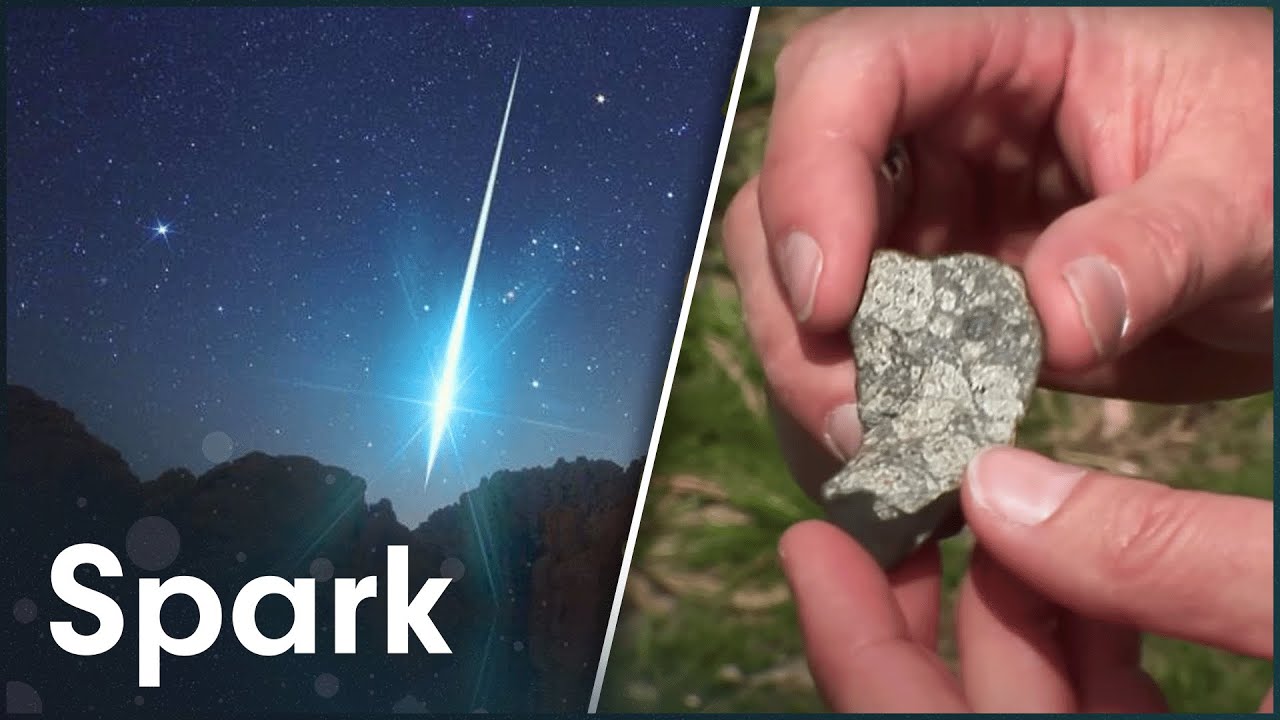
A giant fireball weighing close to 1.5 tons exploded nearly 18 miles above Wisconsin on April 14, 2010, marking a significant meteorite fall.
Earth's weakening magnetic field, generated in its molten core, raises concerns among scientists about the potential loss of protection from harmful space radiation.
NASA's Kepler Space Telescope has identified billions of Earth-like exoplanets in our galaxy, suggesting that life may exist beyond our planet.
Refugees Amjad, Omar, Zena, and Shahinaz navigate life in Europe while connected to Syria.
Six astronauts aboard the Space Shuttle Endeavour experience the view of Earth from 233 kilometers above, describing it as a stunning sight.
Mining diamonds from a frozen volcano in Canada involves extreme tasks and innovative creations, including gyroplanes and high-speed boats.
Experts still searching for the truth about MH370 reexamine the official documents.
In October 2014, an Antares rocket built by Orbital Sciences was set to ferry supplies to the International Space Station.
3,700 known exoplanets have been identified, yet no signals indicating extraterrestrial life have been detected in nearly 60 years of searching.
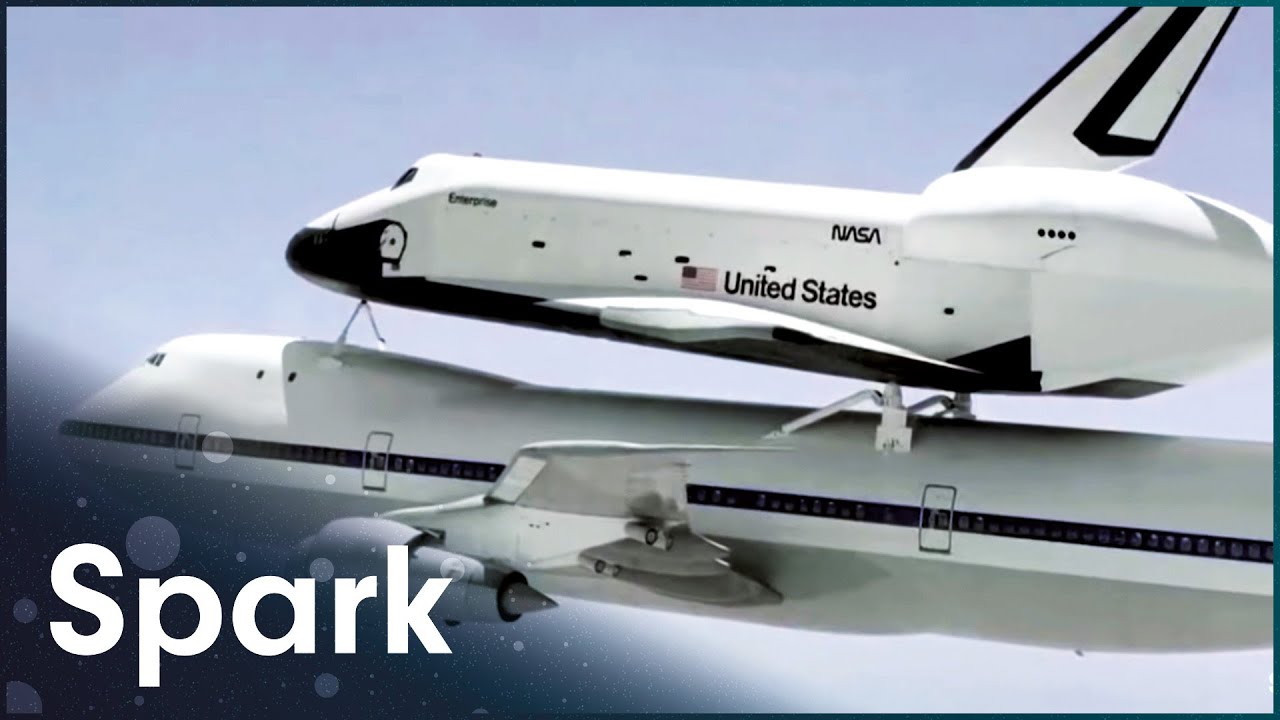
The space shuttle program completed 133 missions and transported nearly 150 astronauts, significantly advancing human space flight and scientific research.
Supercars exemplify cutting-edge automotive engineering, utilizing advanced materials and innovative designs to achieve remarkable performance and efficiency.
The Milky Way's beauty serves as a backdrop for exploring cosmic wonders and the potential for life across the universe's vast expanse.
Wales' dramatic coastline features cockle collectors racing against tides, church congregations on island sermons, and serves as a Mars testing ground for ESA.
China plans to outspend the world in artificial intelligence, aiming to be the global leader in the field by 2030 with a billion dollars in investments.
Advancements in artificial intelligence and biotechnology raise questions about the potential for human immortality and the implications of merging with AI.
In 2018, Qantas reported a profit of $1.2 billion, a turnaround from a $2.7 billion loss in 2014, illustrating the challenges faced by companies in volatile markets.
Director Guillaume Lenel discusses asteroid mining as a solution for rare metals from disposable electronics.
The sun's colossal nuclear storms threaten Earth, disrupting technology and communications.
The Moon is 239,000 miles from Earth and is being considered as the first potential home for humanity beyond our planet.
Apollo 8 orbited the Moon in 1968, revealing Earth as a fragile "little Blue Marble" from a quarter of a million miles away.
President Kennedy's moon landing goal in July 1961 relies on Werner Von Braun's vision and expertise.
Origami's mathematical principles are being applied by scientists and engineers, including roboticist Shuguang Li, to innovate technologies like shape-shifting robots and artificial organs.
In the Persian Gulf, advanced warships patrol vital shipping routes to combat rising piracy and ensure the safety of global maritime traffic.
More than 100 planets orbiting distant stars have been discovered since 1995, raising hopes for finding a new home for humanity.
A day on Mercury lasts 58 Earth days, with temperatures ranging from minus 300°F to 840°F, making it an inhospitable candidate for human life.