From over 100,000 films, discover the handful you'll love.
Free or premium access to the world's largest documentary library.
Topics explored in films with this theme:
5981 films(Page 12 of 125)
Cliff Stoll discovers a hacker infiltrating U.S. military computers in September 1986.
By 2050, over one-third of the global population will live in slums, prompting innovative uses of gaming to engage communities in urban planning.
The brain and artificial intelligence will give rise to augmented humans with telepathy capabilities.
Surgeon Peter operates on a three-month-old baby while Tom and Lucy perform eye surgery.
Over 4,000 cases of UFO sightings are documented, yet tangible evidence remains scarce as experts seek to determine their origins.
In 1654, Anna Feldmans was accused of witchcraft and sentenced to burn at the stake, reflecting the era's struggle for truth amid fear and superstition.
Launched aboard an Ariane 5 rocket, the James Webb Telescope orbits one million kilometers from Earth, aiming to reveal the universe's early galaxies.
A team of British engineers competes in a prestigious robotics competition in the Middle East, facing intense challenges for a share of the $5 million prize.
50,000 people move to Austin each year, drawn by its booming economy and vibrant culture, while grappling with the challenges of rapid growth.
Astronomers discovered that supermassive black holes, weighing three billion times the mass of the Sun, exist at the core of every large galaxy.
Two teams compete to build an amphibious vehicle capable of racing on land and water, with a £5,000 prize at stake.
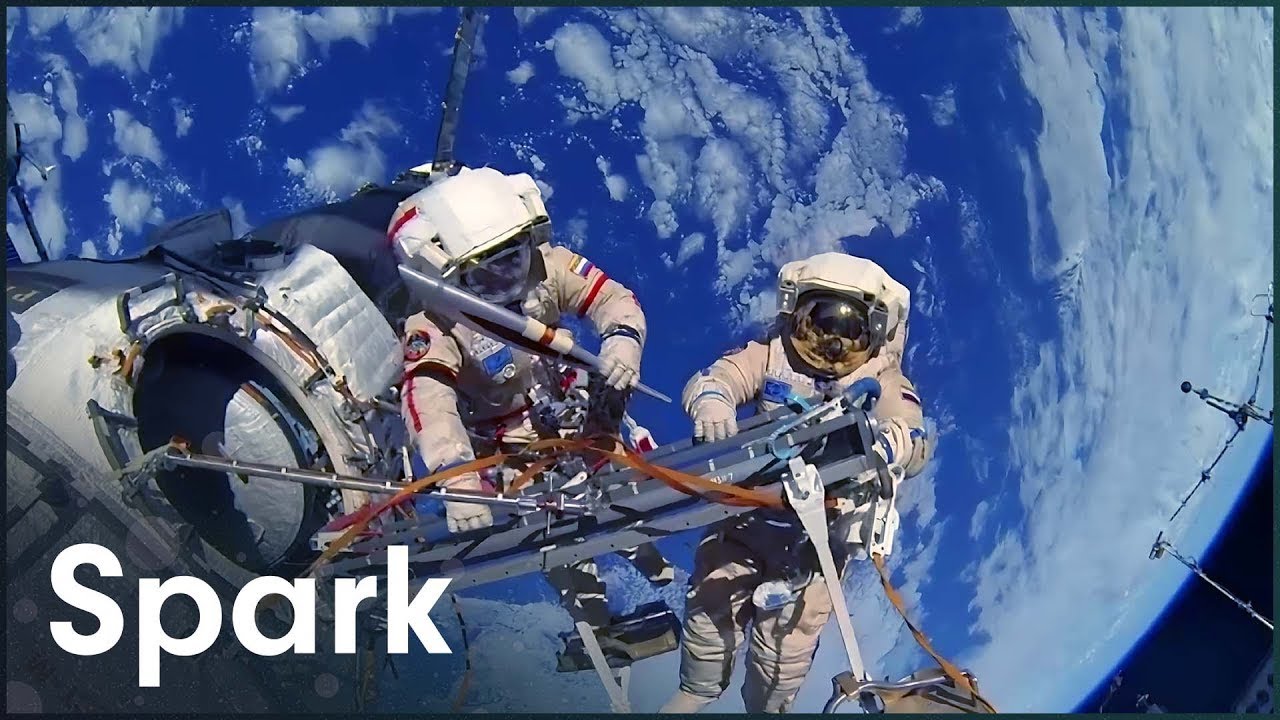
The International Space Station orbits the Earth every 90 minutes, serving as a platform for scientific research and international collaboration.
A test dummy simulates injuries from improvised explosive devices to train combat medics in realistic medical scenarios.
Astronomers are studying the supermassive black hole at the center of the Milky Way galaxy by tracking stars orbiting it at extraordinary speeds.
Shell’s refinery in Rotterdam processes crude oil into fuels while adapting to future energy demands.
Innovations in clean electric aircraft and autonomous sky taxis signal a potential end to the traditional jet age in the aviation industry.
Colossal vessels navigate complex lock systems with precision and teamwork, showcasing the logistics and engineering required for global shipping operations.
Women would not gain equal rights before the law in European constitutions until the 20th century, despite calls for equality dating back to the 18th century.
Sky History presents official UFOs as real with hosts Craig Charles and Sarah Cruddas.
3D printing technology allows for the customization of medical implants, potentially transforming how replacement organs are created and used.
Global shipping innovates with wind-powered machines to reduce greenhouse gas emissions.
Nuclear waste poses dangers that have remained hidden for thousands of years, as communities confront the consequences of past energy decisions.
Leading neuroscientists and technologists discuss the ethical considerations of merging human cognition with artificial intelligence and brain-computer interfaces.
Since the launch of the first Sputnik satellite in 1957, more than 10,000 satellites have been sent into space, with half still active today.
2,000 cubic meters of concrete are crushed and removed as demolition teams tackle the challenges of bringing down buildings across New Zealand.
Delivery services have created a $100 billion industry, changing how people access food and transforming the restaurant business.
A cattle drive in Mississippi requires Bubba, Cody, and Booger to move a large herd while managing the risk of damaging valuable soybean crops.
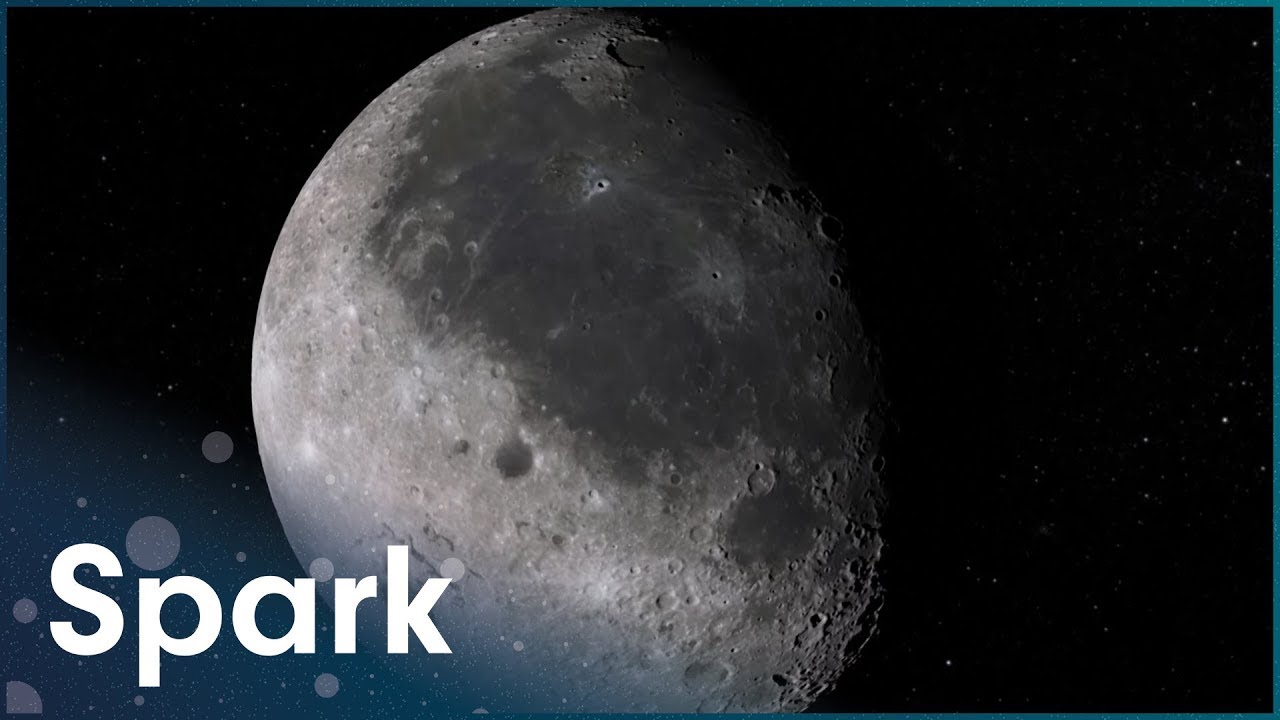
NASA's Apollo missions returned lunar samples that revealed enough water locked inside the moon to cover its surface in a layer 1 meter deep.
Edwin Hubble demonstrated that the Milky Way is one galaxy among countless others, reshaping our understanding of the universe's vastness.
Three billionaires, Elon Musk, Jeff Bezos, and Richard Branson, are competing in a new space race to make space travel accessible and colonize Mars.
In Le Mans, France, the high-tech factory of Claas assembles the Axion 960 Cemos using automation and robotics along a 500-meter production line.
NASA successfully concludes the Apollo Program with the December 1972 Apollo 17 mission.
Solar research has advanced significantly since the 1859 observations by Richard Carrington and Richard Hodgson, with the Parker Solar Probe providing crucial insights into the Sun's corona.
Asteroids and meteorites are examined across Argentina, Chile, and Colombia, highlighting their potential to impact life on Earth and the significance of sites like Campo del Cielo.
A six-month residency at the Science Museum features the Collider exhibition, which aims to answer fundamental questions about the universe.
Evidence from South Australia’s deserts supports the theory that Earth was once entirely covered in ice, raising questions about future climate implications.
Parallel worlds and multiverses are explored through discussions with leading thinkers, examining the possibility of intelligent life beyond Earth.
Explosives engineers and demolition specialists, including a bomb disposal unit, coordinate the 2024 demolition of a 19th-century railway bridge in the UK.
Supercar Tech reveals how supercars trace back to the mid-20th century and their evolution.
Water in the main belt of asteroids may explain how Earth acquired its water, which is essential for the emergence of life.
Twelve Americans walked on the moon during six successful lunar landing missions between 1969 and 1972, marking a key achievement in the space race.
A team of international astronomers, led by Dr Shep Doeleman, aims to capture the first image of a black hole, a feat that has never been accomplished.
In the summer of 1977, Ohio radio astronomers detected the Wow!
Two lateral boosters of the Ariane 5 weigh 227,000 metric tons each when full of fuel, providing 6,000 kN of thrust during launch.
Over half the people in Germany spend more time in front of a computer, yet many feel they have less time for important aspects of life.
Humanity produces as much information in two days as it did in its entire history before the digital age, contributing to increased stress levels.
More than 60 years after its inception, the internet has changed how people communicate, but it has also given rise to a new breed of online trolls.
Netflix offers thousands of shows, a stark contrast to traditional networks that typically provide only five or six options.