From over 100,000 films, discover the handful you'll love.
Free or premium access to the world's largest documentary library.
2154 films(Page 8 of 45)
A Roman catapult could launch projectiles nearly a quarter of a mile, prompting a team to recreate this ancient weapon in three days.
Stanislav Petrov prevents nuclear war, struggling to reclaim his life afterward.
In September and October 1945, footage from the Hanford Nuclear Reservation examines the effects of the atomic bombings on Hiroshima and Nagasaki, extending four miles from the detonation sites.
The Canadian Corps transformed from untrained volunteers into a formidable force during World War I, notably at the battles of Montserrat and Hill 70.
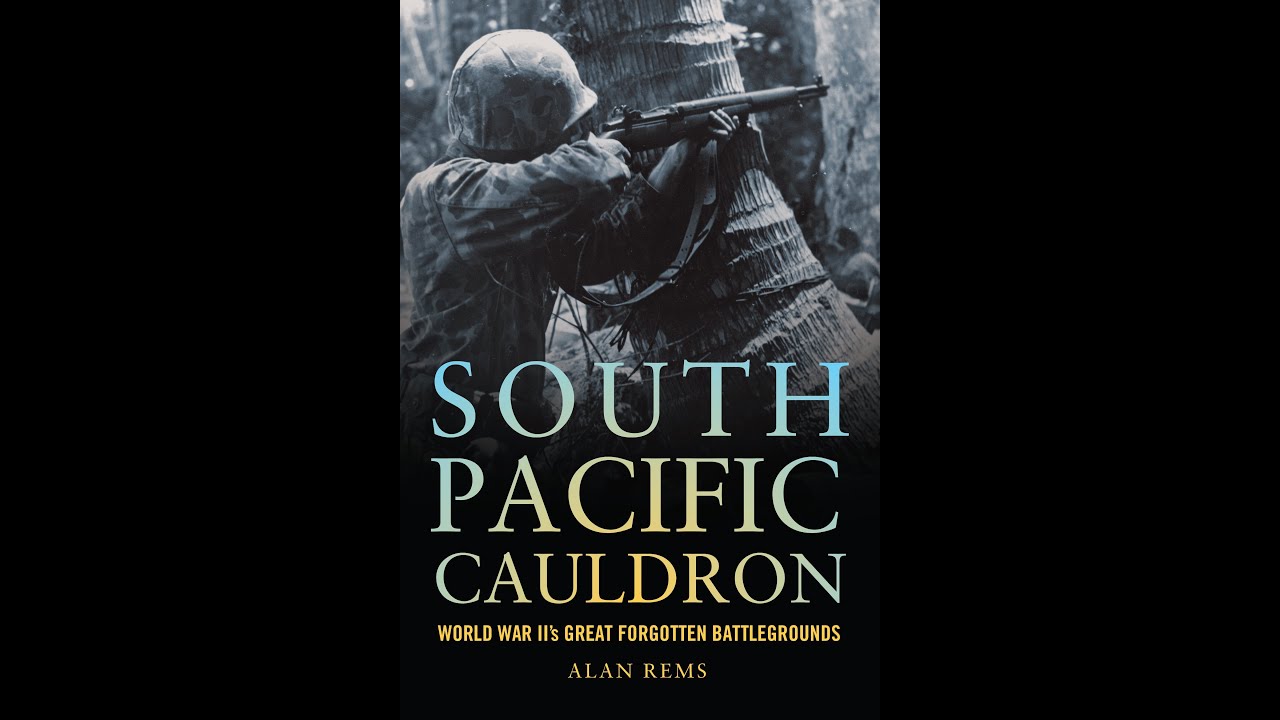
Forgotten battlegrounds of World War II in the South Pacific, including Buna and Rabaul, are examined by author Alan Rems alongside key military figures.
The Paris Peace Accords and the Fall of Saigon are examined through the perspectives of Vietnam veterans, activists, and historians in this critical series.
Civilians suffer the most from weapons designed to attack populations throughout history.
A 100-year history of naval aviation begins with a pilot landing on an improvised wooden deck in 1911 and extends to modern supersonic jets.
24,000 Spitfires were built during World War II, and a team at a British airfield works to restore one of the few remaining models to flying condition.
Peter Monk's Spitfire Factory prepares for the Biggin Hill air show amid restoration challenges.
On June 27, 1864, Union General William Tecumseh Sherman ordered an assault on Confederate forces at Kennesaw Mountain, a key strategic location for capturing Atlanta.
More than 75,000 homes were damaged or destroyed during the war in Kosovo, leaving many families like Hassan's in precarious living situations.
More than 9,000 Allied aircraft faced fewer than 2,500 German planes during World War I, marking a significant shift in aerial warfare.
Four American diplomats reported from London, Berlin, Rome, Paris, and Moscow on the rise of Adolf Hitler and the growing threat of Nazi Germany.
As the Second World War neared its conclusion in 1945, Soviet Marshals Georgy Zhukov and Ivan Konev raced to capture Berlin while General Eisenhower's decisions reshaped Europe.
A torpedo can reach speeds of more than 300 kilometers per hour, marking a significant advancement in naval warfare technology.
Ancient weaponry is examined through the reconstruction of a flamethrower, highlighting its historical significance and the craftsmanship of ancient civilizations.
The RAF's bombers reach Berlin, marking a new era of direct attacks on British civilians.
Inigo Gilmore returns to Gaza to document families rebuilding after the conflict's one year anniversary.
The Battle of Antietam on September 17, 1862, played a crucial role in shaping the United States' future by influencing politics and the fate of slavery.
Scenes document the living conditions of Japanese Americans in relocation centers during World War II, as recorded by the War Relocation Authority.
A 250,000-hectare reserve in the Amazon is home to the Warani warriors, where Géraud Burin des Rosiers faces extreme survival challenges.
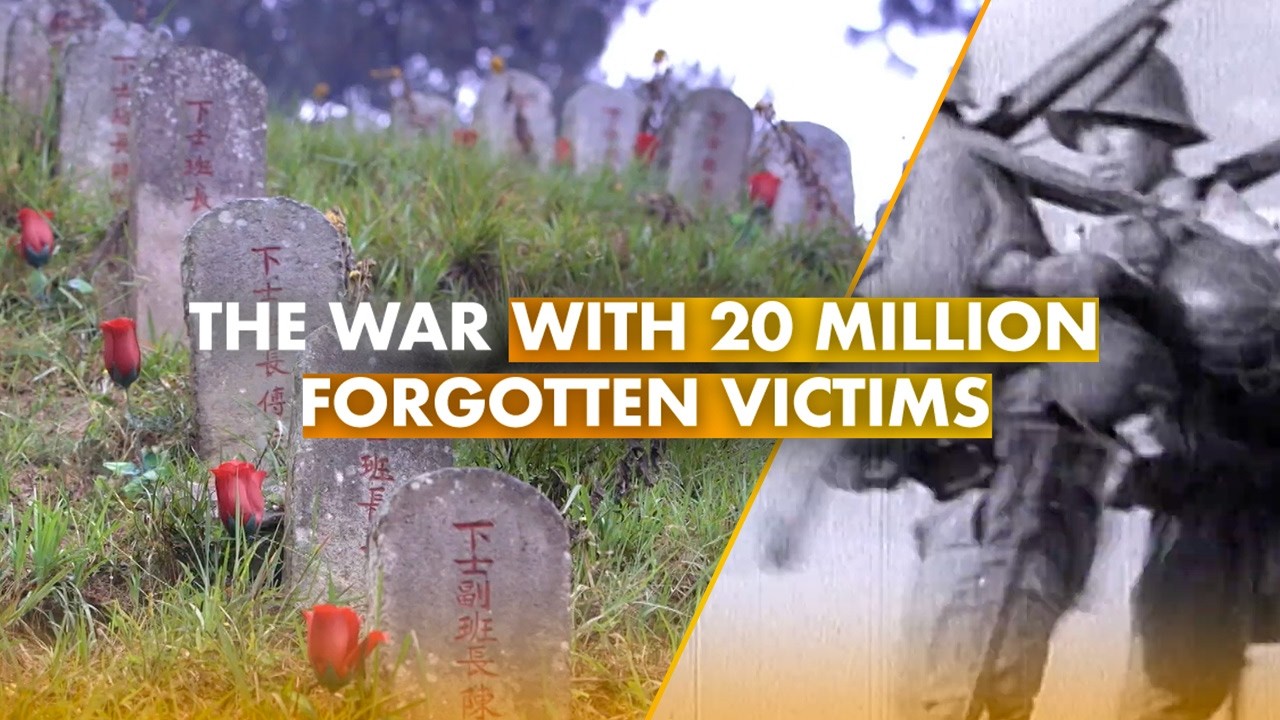
China's resistance against Imperial Japan from 1937 to 1945, which resulted in 14 million deaths, played a crucial role in the broader context of World War II.
Two soldiers must decide the fate of a terrorist using a military drone under pressure.
Operation Foxley was a covert British mission aimed at assassinating Adolf Hitler during his morning walks at Berghof, ultimately failing despite its strategic planning.
Engineers restore D-Day veteran C47 Night Fright at Membury airfield for its 75th anniversary.
Benito Mussolini's death in 1945 is examined through official accounts and conspiracy theories, questioning the roles of Italian partisans and British Special Forces.
The episode reveals Hitler's plans for a Nazi-occupied Britain and the 'Black Book' of arrests.
Over the past 100 years, the Karuna to Narvik railway line has transported over 1 billion tons of iron ore, shaping the region's economy and infrastructure.
Juno Beach serves as the backdrop for an exploration of WWII relics and Nazi fortifications, highlighting the Canadian infantry's bravery during D-Day.
In April 1945, Canadian and Allied forces faced fierce German opposition while fighting through the streets of Groningen during the final weeks of World War II.
The Battle of Bannockburn in 1314 showcases Robert the Bruce's strategic use of defensive formations against King Edward II's cavalry, highlighting a pivotal moment in Scottish history.
Airlift operations by UH-1Ds of the 68th Assault Helicopter Company support ground troops and evacuate wounded civilians near Bien Hoa AB during the Vietnam War.
Over 6,000 vessels transported troops and equipment during the D-Day invasion on June 6, 1944, marking a critical moment in the liberation of Europe.
General Patton's Ghost Army executed deception strategies during World War II, significantly impacting the success of the Normandy Landings and Operation Overlord.
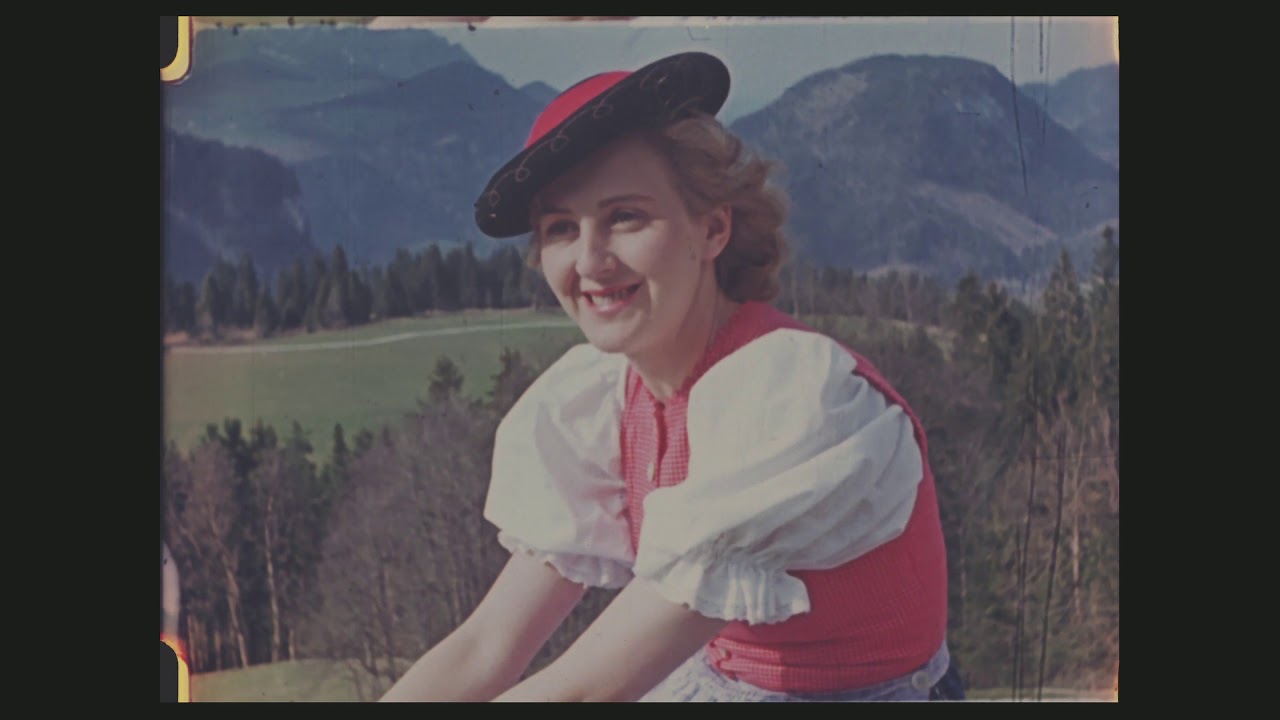
Private motion pictures of Adolf Hitler and Eva Braun, seized by the US Army in 1945, showcase their life and interactions in various locations, including Berghof and Norway.
Dover's strategic position was vital during WWII, particularly in Operation Dynamo, which facilitated the evacuation of Allied soldiers from Dunkirk in May 1940.
Professor David O'Keefe and filmmaker Wayne Abbott explore the Rhineland Campaign of Winter 1945, featuring aerial reconnaissance and a WWII-era Duck vehicle ride.
Private motion pictures of Adolf Hitler and Eva Braun, seized by the US Army in 1945, showcase life at the Berghof retreat and interactions with key figures.
Sir Anthony De Lucy, a 14th-century English knight, is examined through the archaeological discovery of his remarkably preserved body and the brutal realities of medieval warfare.
In the 1920s, the implementation of the 'Strength through Joy' program by the National Socialists transformed travel in Germany, making it accessible to a wider population.
Lady Jane Grey's Nine Days Queen reign faces rebellion from Mary Tudor in 1553.
Five major battles took place in the Belgian city of Ypres during World War One, resulting in hundreds of thousands of soldiers killed or missing.
Nazi plunder during World War II led to the theft of significant artworks, including a missing Raphael painting, with ongoing efforts to recover these treasures in locations like Grodno Castle and Krakow.
Two German U-boats traveled over 3,000 miles across the Atlantic in 1942 to land Nazi agents on the American coast for sabotage missions.
The Spies for Peace group, including Ruth and Nicholas, exposed Britain's Cold War secrets during the Cuban Missile Crisis, revealing hidden nuclear plans and bunkers.
Archaeologist Tim Sutherland investigates the lost graves of Agincourt, following clues from antiquarian John George Woodford and exploring the battle's historical significance.
In April 1945, Canadian and Allied forces faced fierce German opposition while advancing through the city of Groningen during the final weeks of World War II.