From over 100,000 films, discover the handful you'll love.
Free or premium access to the world's largest documentary library.
1616 films(Page 2 of 34)
7,000 personnel aboard the USS Harry S. Truman participated in a two-week military exercise involving live-fire drills and simulated combat scenarios.
Adolf Eichmann, the architect of the Holocaust, lived incognito in Buenos Aires under the alias Riccardo Klement before being hunted down by Israeli agents in 1960.
The aftermath of World War II saw the establishment of war crimes trials, including the Nuremberg Trials, which aimed to prosecute Nazi war criminals and set legal precedents.
The Treaty of Versailles, the stock market crash, and the rise of dictators contributed to the conditions that led to the outbreak of World War II.
After D-Day, the Allies advanced from the Normandy beachhead towards the Rhine, while the Red Army launched Operation Bagration in the East.
150 bodies of Hezbollah fighters are returned by Israel in exchange for two Israeli soldiers during the conflict that began in 1984.
Nuremberg, once the heart of Nazi ideology, became the site of the landmark trials where leaders like Hermann Göring and Rudolf Hess were sentenced for war crimes.
Seven Bolivian soldiers are killed and 12 taken prisoner as revolutionary Che Guevara seeks to destabilize South America and threaten U.S. interests.
On April 24, 1951, 10,000 Chinese troops advanced toward Australian and Canadian positions in the Capyong Valley during a critical battle in the Korean War.
Foreign nationals played a significant role in the Spanish Civil War (1936-1939), influenced by political ideologies and the fight against fascism.
In December 1941, Japan's surprise attack on the American naval base at Pearl Harbor marked a pivotal moment that propelled the United States into World War II.
Hitler's alliance with Mussolini, forged in the early 1930s, ultimately proved unstable as their ambitions for empire clashed during World War II.
After the attack on Pearl Harbor, the US Navy mobilized for extensive naval battles and land invasions across the Pacific during World War II.
U.S. combat cameramen documented the dual missions of 'Hearts & Minds' and 'Search & Destroy' during key operations like Starlight, Cedar Falls, and Masher in Vietnam.
Condoleezza Rice discusses her upbringing in Birmingham, Alabama, her academic achievements, and her roles as National Security Advisor and Secretary of State.
A single German aircraft flew a secret mission over the British Isles on May 5, 1940, to establish contact with IRA members for a planned invasion of Northern Ireland.
The 1936 Olympics in Berlin served as a platform for Nazi Germany to promote its propaganda and showcase its ideology to the world.
As the Axis powers faced defeat, Germany and Japan implemented contrasting home front strategies that significantly influenced their wartime outcomes.
Psychological operations, or PSYOPs, use techniques to influence the behavior and emotions of target audiences, including enemy combatants and civilians.
The Doolittle Raid in 1942 marked a significant American military operation against Japan, with Chinese civilians and soldiers risking their lives to assist stranded airmen.
In the lead-up to World War II, the secret Japanese society known as the League of Blood plotted to assassinate Charlie Chaplin to incite global conflict.
More than 30,000 East Germans fled to the West in the late 1980s, prompting massive uprisings and significant political changes in Eastern Europe.
In March 1945, U.S. troops document the fall of Nazi Germany in color, capturing the devastation and surrender through the lenses of George Stevens and Major Kirke B. Lawton.
The invasion of China and the fall of Poland, Belgium, and France marked the brutal onset of World War II, highlighting strategic failures and key figures like Winston Churchill.
Adolf Hitler's suicide on April 30, 1945, led to Germany's surrender and the United States' use of atomic bombs on Hiroshima and Nagasaki, ending World War II.
The Gallipoli Campaign of 1915, orchestrated by Winston Churchill, resulted in a catastrophic defeat for Allied forces, with significant casualties and no strategic advantage.
23 years as a comedian and television host preceded Volodymyr Zelensky's election as Ukraine's president in 2019 and his rise to global prominence in 2022.
Two brothers fled Tibet 30 years ago, one killed in an ambush, while the other now returns to his homeland after decades in exile.
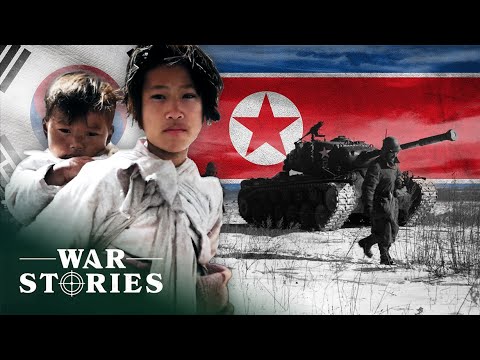
The Korean War's outbreak is marked by the communist invasion, the defense by South Korean and United Nations forces, and the retaking of Seoul.
In 1940, Adolf Hitler's strategy to invade Britain faltered as the Luftwaffe struggled to achieve air superiority over the English Channel.
Giuseppe Garibaldi is a key figure in Italian unity and a notable 19th-century revolutionary.
500 rebels confront a Guatemalan army of 6,000 in the CIA's first covert operation to overthrow a democratically elected government in 1954.
Britain's colonial policies during and after the First World War shaped the ongoing conflict between Arabs and Jews in the Holy Land.
James Monroe, William McKinley, Woodrow Wilson, and George H.W. Bush navigated critical moments in U.S. history while representing the nation on the world stage.
In December 2010, a man is found dead in an Israeli prison, identified only by a tag that reads "Ben Alon," though his true name is Ben Zygier.
The attack on Pearl Harbor on December 7, 1941, marked a pivotal moment in World War II, leading to significant American military engagement in the conflict.
On December 19, 1989, Helmut Kohl delivered a speech in Dresden that was seen as a turning point for German reunification, receiving an enthusiastic reception from the crowd.
The atomic bomb's deployment in Hiroshima marked a pivotal moment in World War II, significantly altering the conflict's trajectory in the Pacific.
240 kilometers of electrical fences along Hungary's border with Austria were designed to prevent crossings, but by 1989, they were failing.
Christopher Boyce reveals his past as a CIA double agent selling secrets to the KGB.
On September 1, 1939, Hitler's invasion of Poland marked the beginning of World War 2, highlighting the urgent diplomatic efforts and military strategies of the time.
Antonio Salazar's Portugal maintained a precarious neutrality during World War II, skillfully navigating pressures from both the Axis and the Allies.
Almost five million allied troops participated in the liberation of Western Europe, leading to the unconditional surrender of Nazi forces on May 7, 1945.
A 70-km long fence was erected along the Danish-German border to keep out wild boar infected with African swine fever, disrupting local communities.
On November 8, 1918, German, British, and French delegates negotiated the armistice in a railway carriage, setting the stage for future conflicts.
The Treaty of Versailles contributed to the rise of totalitarian regimes in Germany, Italy, and Japan, ultimately leading to the outbreak of World War 2.
157 Goethe-Instituts operate worldwide, promoting cultural collaboration as Klaus-Dieter Lehmann concludes his tenure as president in 2020.
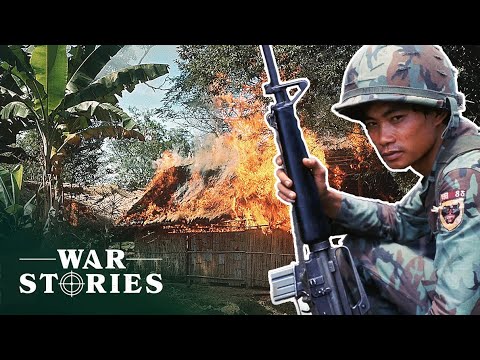
American advisors began laying the groundwork for village defense in South Vietnam in September 1961, teaching locals to protect themselves against communist attacks.