From over 100,000 films, discover the handful you'll love.
Free or premium access to the world's largest documentary library.
336 films(Page 6 of 7)
Two Google engineers claim that artificial intelligence has reached a level of sentience, challenging traditional views on machine consciousness and the Turing test.
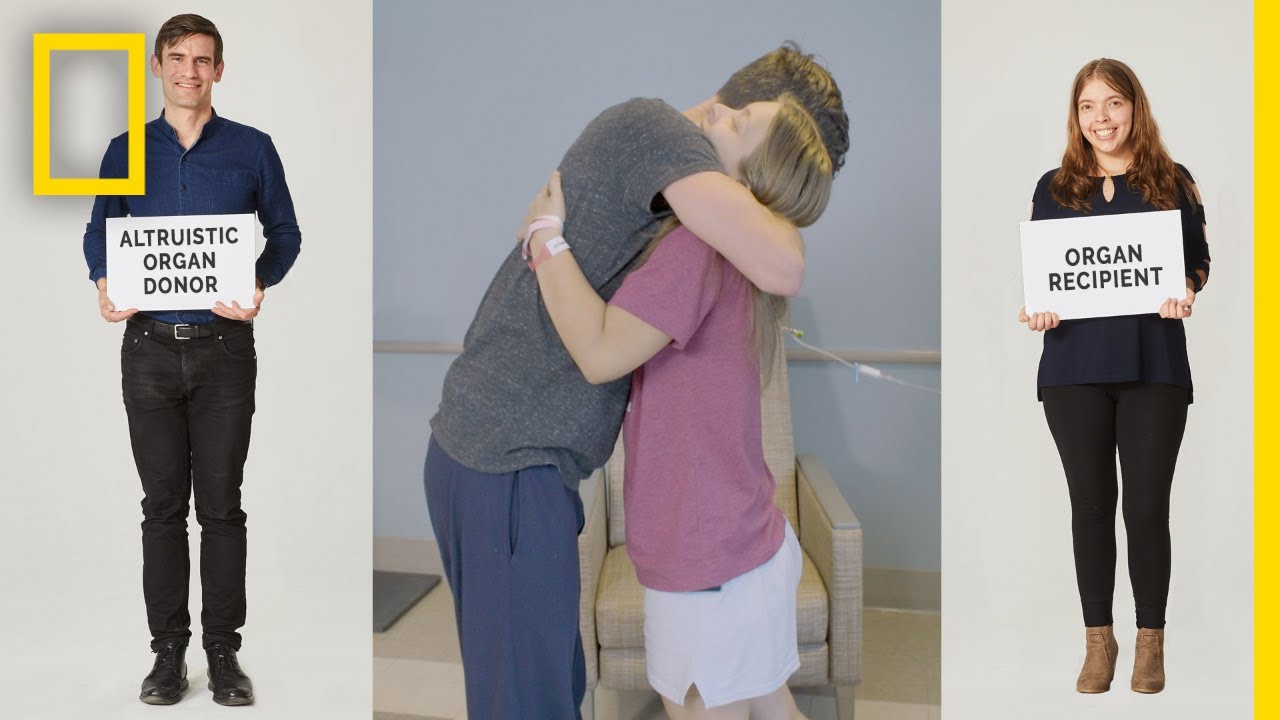
One kidney donation can help thousands of people on the waiting list for transplants, as shown by Hendrik Gerrits' altruistic act.
Many Americans still believe in literal biblical creation despite Enlightenment influences.
At an altitude of 12,000 feet, 9-year-old Urgan prepares to leave his family in Tang to enter a monastery and study tantric Buddhism.
In Würzburg, a society tests supernatural claims for a 10,000 euro prize.
A body was sliced into 1-millimeter sections to create a high-resolution digital cadaver for medical education and training.
The Toraja funeral in Indonesia requires buffalo sacrifices for the deceased's afterlife.
Wildlife tourism accounts for 10-20% of the global tourism industry, yet many animals suffer in captivity under harsh conditions.
This episode of Would You Rather questions the ethics of having children and personal motivations.
OpenAI's CEO Sam Altman discusses the implications and insights of ChatGPT, highlighting its ability to facilitate natural language conversations with computers.
Dr. Henry Lowe leads Medicanja, producing CBD products with support from Jamaican universities.
John Pachaya Ferry, a 22-year-old entrepreneur, operates a business called John's Bones from his apartment, selling human remains valued at approximately half a million dollars.
A baby girl learns about her identity and moral choices while surrounded by Indigenous culture and the effects of colonialism.
Mike Rowe assists Nate from Utah State University in relocating nuisance beavers that are damaging trees and blocking culverts in Nibley, Utah.
Navy Deck Logs, which provide chronological accounts of events on ships, are among the most requested records at the National Archives.
Ex-Muslims face persecution and isolation after leaving Islam around the world.
Human composting, a funeral practice legal in the United States and Germany, transforms bodies into humus through microorganisms, sparking debate in Europe.
As robots like the NAO at Tufts University become more integrated into society, ethical programming is essential to prevent them from executing harmful commands.
Scientists explore the potential for machines to achieve self-awareness through advanced AI technologies like Deep Learning, raising questions about machine cognition and emotion.
Dr. Tim Goodman experiences premonitions of patients dying during surgery, prompting him to confront the implications of his visions in a medical setting.
In the UK, Dan O’Neill investigates the growing trend of keeping primates as pets, highlighting the experiences of pet owners and the challenges faced by Wild Futures, a primate rescue centre.
Tibetan sky burial, a traditional practice symbolizing life's impermanence, faces ethical concerns as it becomes a controversial tourist attraction.
Sightings of luminous beings, often described as angels, have been reported across the Middle East, North Africa, and Asia, including Syria and Azerbaijan.
A South African man, Moses Mari, is declared clinically dead but later appears alive, claiming a miraculous resurrection by faith healer TB Joshua.
A church minister in the United States engages in a dangerous relationship with a student, leading to a plot to murder his wife.
75% of the U.S. population identifies as Christian, and some are beginning to integrate cannabis into their spiritual practices.
Dr. Gunther von Hagens' factory in Germany aims to commercialize human remains through the sale of dissected body slices, igniting ethical debates and local outrage.
$400 billion to $600 billion a year is estimated to be stolen by the Communist Party of China through trade secret theft and industrial espionage.
US syphilis experiments in Guatemala still impact lives despite Obama's apology.
From 1961 to 1971, the US military sprayed 72 million liters of Agent Orange in Vietnam, causing severe health issues that persist today.
Three generations lived under one roof in Kuwait, where connection was modeled through shared meals and open conversations, shaping future relationships.
CRISPR gene-editing technology, exemplified by the case of a bull calf named Cosmo, raises ethical questions about its potential to eliminate diseases and create designer babies.
The Sackler family, through their company Purdue Pharma, played a significant role in the opioid crisis that has resulted in over 200,000 deaths in the United States.
Lab-grown meat technology, spearheaded by companies like Memphis Meats and Mosa Meat, aims to revolutionize food production and address environmental concerns.
Nine canons at the Abbey of Saint-Maurice are implicated in multiple cases of sexual abuse, prompting a justice system investigation and new victim testimonies.
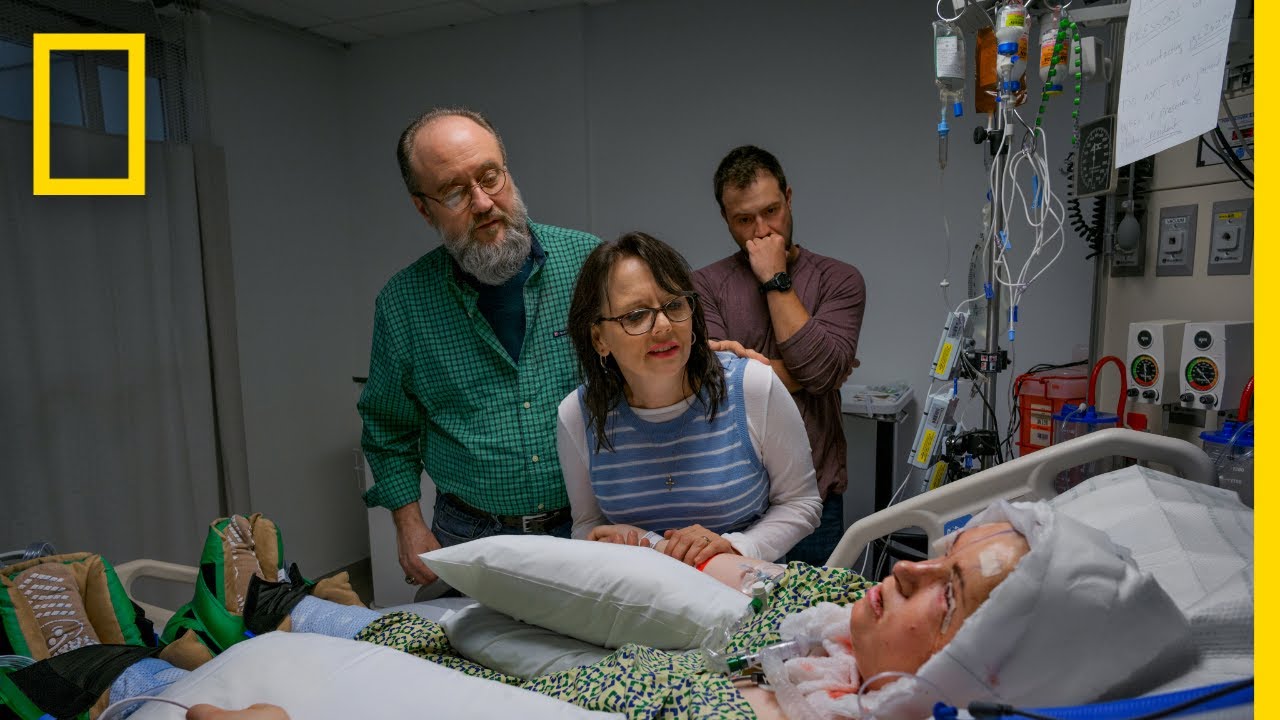
At 21, Katie Stubblefield became the youngest face transplant recipient in the United States after a tragic incident left her severely injured.
In the quest to understand woolly mammoths, scientists explore the potential for de-extinction using genetic blueprints and advancements in biotechnology.
Nuclear energy programs, once seen as a beacon of progress in the 1950s and 60s, now face scrutiny over safety and waste management following disasters like Chernobyl and Fukushima.
On June 3, 2017, Alex Honnold completed a nearly 3,000-foot free-solo ascent of El Capitan, raising ethical questions for the filmmakers documenting his climb.
Artificial intelligence is explored through the advancements of IBM Watson and Google's DeepMind, highlighting their impact on technology and society.
More than one million Uyghurs, Kazakhs, and other minorities have been detained in re-education camps in China's Xinjiang region since 2017.
Deepak Chopra explains how consciousness affects biology and electromagnetic fields.
Austin Meyer received a lawsuit from Unilock, which claimed ownership of the technology behind all Android apps, illustrating the risks of patent infringement.
John Oliver corrects past errors, including the purchase of Alaska and MySpace's status.
A new study suggests that drinking a glass of red wine is just as good as spending an hour at the gym, a claim Oliver questions in his segment.
Moscow plans referendums to annex parts of Ukraine amid Ukrainian military gains.
Rebecca Walker asserts that the revolution after capitalism is already within each of us.
Petrus, a Suriyani Christian in Turkey, desperately wants to become a priest despite oppression.








![Documentary backdrop image for Robots Learn to Say "No" to Humans [Demo Included] (2015)](https://i.ytimg.com/vi/Tzzu7Q-yL7Y/maxresdefault.jpg)