
Animated Motion: Part 3
Synopsis
A five-frame hold in animation can create a pause that changes the perception of movement, as shown by Norman McLaren and Grant Munro.
Synopsis
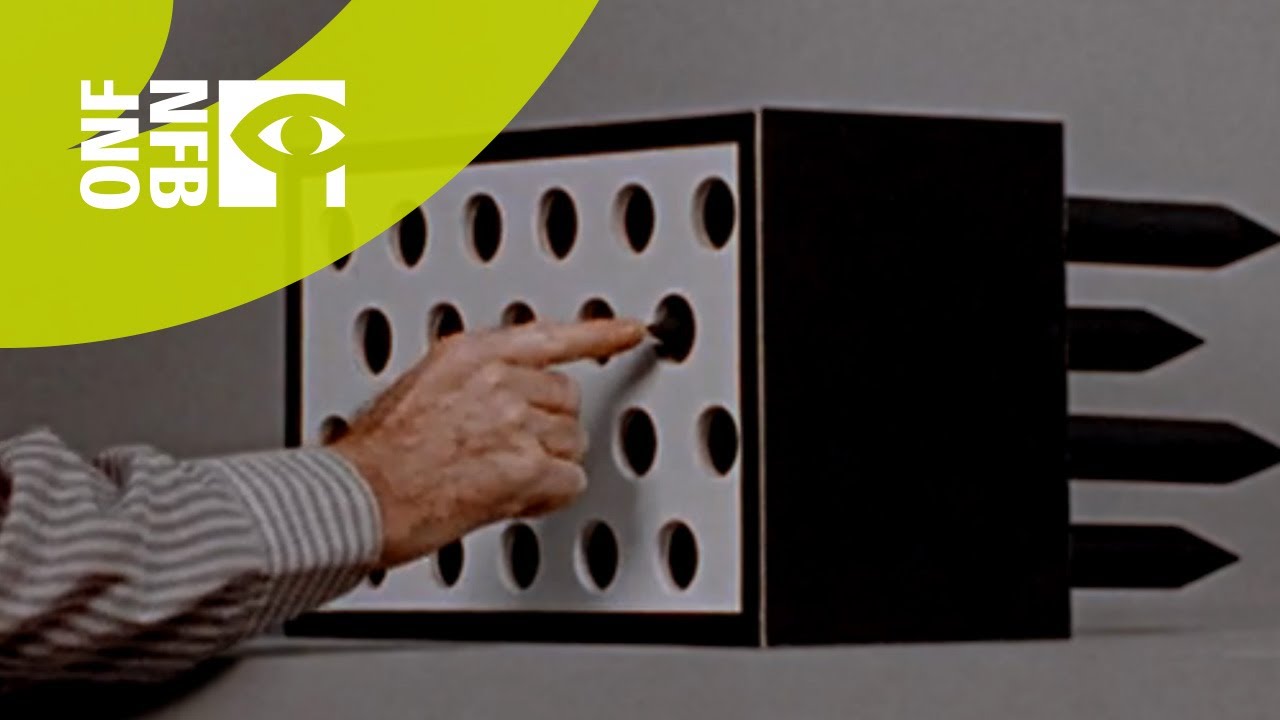
Norman McLaren and Grant Munro present Animated Motion: Part 3, produced by the National Film Board of Canada. The documentary discusses key animation techniques, focusing on zero motion or "holds" and irregular motion. McLaren demonstrates how holds function like pauses in music, enhancing animated sequences. The film is part of a five-film series that illustrates fundamental concepts for animators and students.
Deep Dive
Why Watch
- See how zero motion impacts animation sequences.
- Find out the role of holds in creating rhythm.
- Discover the characteristics of irregular motion.
Did You Know
- The shortest possible hold occurs with no change between two frames.
- A five-frame hold can be used to create a deceleration effect.
- Irregular motion can appear as erratic, nervous, or frightened.
Perfect For
Frequently Asked Questions
What is zero motion in animation?
Zero motion, also known as a hold, is a crucial aspect of animation where there is no change between two adjacent frames, serving as a pause in the movement.
How does the tempo affect animation holds?
The presence or absence of holds is more marked with fast motions and less marked with slow motions, impacting the overall perception of the animation.
What are the basic categories of movement in animation?
The basic categories of movement in animation are tempo, constant motion, accelerating, decelerating, zero motion, and irregular motion.
What are people saying?
Play More Like This




Where else to watch





Related Films
Is this your film?
If you made this film or hold the rights to it, we'd like to talk. We can license it and pay you a share of what it earns.
Comments