From over 100,000 films, discover the handful you'll love.
Free or premium access to the world's largest documentary library.
190 films(Page 2 of 4)
Two teams compete to build an amphibious vehicle capable of racing on land and water, with a £5,000 prize at stake.
A test dummy simulates injuries from improvised explosive devices to train combat medics in realistic medical scenarios.
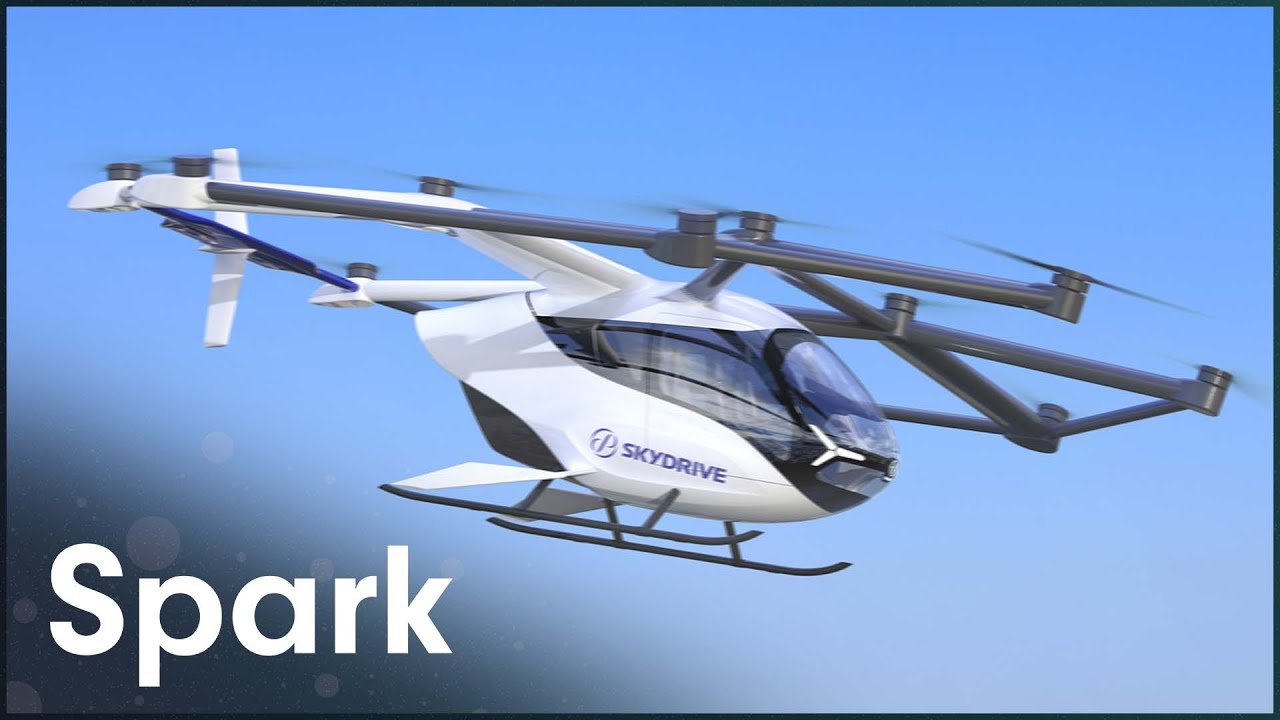
Innovations in clean electric aircraft and autonomous sky taxis signal a potential end to the traditional jet age in the aviation industry.
Two lateral boosters of the Ariane 5 weigh 227,000 metric tons each when full of fuel, providing 6,000 kN of thrust during launch.
The B-52 bomber has performed its mission for almost 80 years, making it the longest-serving bomber in history.
Dr. Krithika Swaminathan from NOVA's upcoming film "Building Stuff: Boost It!" joins engineer Dr. Nehemiah Mabry to discuss motion capture techniques and their applications in engineering.
The Modulo Sperimentale Elettromeccanico (MOSE) system features mobile gates designed to protect Venice from flooding, showcasing advanced engineering and technology.
Advancements in A.I. over the last decade blur the lines between human and machine.
Human enhancement through technology is explored, featuring insights from experts at MIT and Stanford University on the ethical implications of integrating AI and robotics.
In a German factory, the assembly of a 14-ton, 500-horsepower tractor showcases advanced engineering and precision testing essential for modern agriculture.
The Sapsan, one of the fastest trains in the world, undergoes a meticulous inspection and repair process to ensure its safety and efficiency across Russia.
The Detonators showcases demolition engineers and their explosive work worldwide.
Dr. Carlotta Berry, an Electrical Engineer, joins host Dr. Nehemiah Mabry for a discussion on how robots perceive their environment.
By 2050, 75 percent of the global population will live in overcrowded cities, driving the construction of super skyscrapers over 300 meters tall.
More than 100,000 life-saving missions are flown in Germany each year using advanced rescue helicopters like the H145.
An 88-year-old inventor created the floppy disk and a popular aphrodisiac while Japan seeks to revive its robotics sector.
Rich Gilliam, an award-winning author and STEM professional, collaborates with Dr. Nehemiah Mabry to build a robotic arm in a virtual maker space.
The rise of self-thinking robots raises critical questions about their autonomy and the future role of AI in the workforce and society.
In Hannover, technology companies and innovators gather annually at CeBIT to showcase advancements in artificial intelligence, robotics, and cybersecurity that shape the digital economy.
Innovative technologists at leading engineering firms are using Artificial Intelligence to create self-navigating robots and Androids that enhance human productivity and safety.
In Malawi and Germany, drones are utilized to deliver medicines to remote areas while robots are employed to perform dangerous tasks, enhancing safety and efficiency.
Ten thousand monogenic diseases affect hundreds of millions of children worldwide, prompting advancements in genetic engineering for potential cures.
40,000 workers are engaged in constructing a $50 billion driverless metro system in Sydney, digging over 60 kilometers of tunnels beneath the city.
Adam and Jamie build a working hovercraft using vacuum cleaners and leaf blowers.
The MythBusters test a grappling hook's ability to scale a building, discovering that the cable used snaps under pressure like cotton twine.
Costing $300 million, the High Roller stands 167 meters tall and features 28 temperature-controlled capsules that remain level during each rotation.
Google's AI chatbot, LaMDA, has been claimed to have attained consciousness, raising questions about the future of human-robot relationships.
Artificial intelligence is embedded in everyday technology, from mobile phones to public transport systems, often without users' awareness.
A missile destroyer cost the US Navy 4 billion dollars per unit, raising questions about the financial impact of advanced military technology.
On March 18, 2018, Elaine Hertzberg became the first person killed by a self-driving car, raising urgent questions about the safety of autonomous vehicles.
A drone can create a 3D model of a scanned area accurate to within one centimeter, enhancing military intelligence and battlefield awareness.
Dmitri Gishon, co-founder of Mailroot Group, operates a tech empire in Moscow that controls the three largest Russian social networking sites.
Robotics companies like Tesla, NVidia, and Figure are rapidly advancing technology, showcasing impressive new robots and explaining the surge in innovation.
Engineers are developing autonomous aircraft and flying cars, with companies like Uber leading innovations that could transform future transportation.
Moscow's surveillance network uses facial recognition to monitor citizens during COVID-19.
Figure AI, NVIDIA, and other robotics companies are developing technologies aimed at replacing warehouse workers in the evolving landscape of artificial intelligence.
Josh Browder, a Stanford University student, creates an AI-driven website that successfully appeals over 190,000 parking tickets by exploiting legal loopholes.
A 3D model shows the failure of a 460HP pump and the need for a complete rebuild.
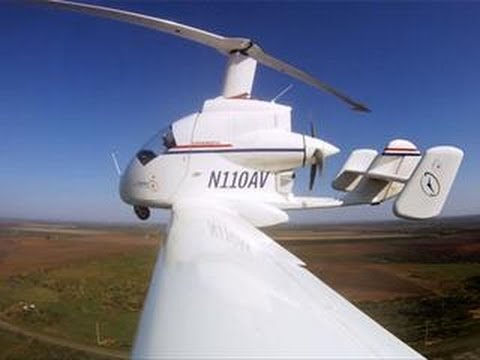
Carter Aviation Technologies develops slowed-rotor technology for vertical takeoff aircraft.
Nathan from Pittsburgh controls a robotic arm using thoughts after a spinal injury.
Peter Scott Morgan allowed surgeons to implant various chips into his body in hopes of extending his life, living for four more years until his death in 2022.
Five arcade games are identified as scams, with an average payout rate of just 20 cents for every dollar spent, often targeting children.
Tomorrow's robots like Asimo and Nexi will have something extra: emotional intelligence.
Autonomous vehicle technology has advanced significantly over the past decade, raising questions about the safety and feasibility of self-driving cars.
Bob drives a Tesla, discusses autopilot, and shares cartoons about self-driving cars.
Elon Musk discusses the Hyperloop train, a high-speed transport system using magnetic levitation within a steel tunnel to reduce aerodynamic drag.
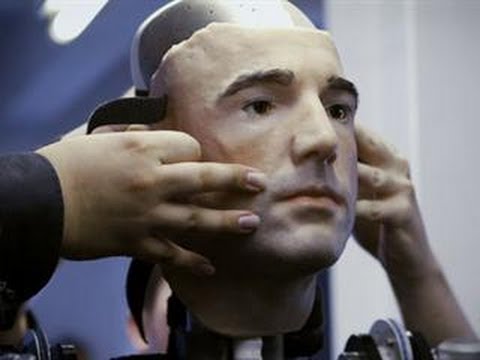
Bertolt expresses strong discomfort upon seeing the Bionic Man's new face, describing it as a "Patchwork assembly of parts" that looks horrifying.
Hakitzu teaches kids coding through robot battles using JavaScript style code.