From over 100,000 films, discover the handful you'll love.
Free or premium access to the world's largest documentary library.
159 films(Page 3 of 4)
In the geologically-active Danakil Depression of Ethiopia, a group explores one of the world's few accessible lava lakes and the summit of an active volcano.
The Bahamas' protected parks provide critical habitats for migratory birds, green turtles, and rock iguanas amidst unique geological features like sandstone cliffs and pink-sand beaches.
Curiosity, NASA's car-sized Mars rover, utilizes advanced scientific tools to search for signs of life on the Red Planet.
The age of the universe is called into question as measurements from supernovae and cosmic background radiation reveal a billion-year discrepancy.
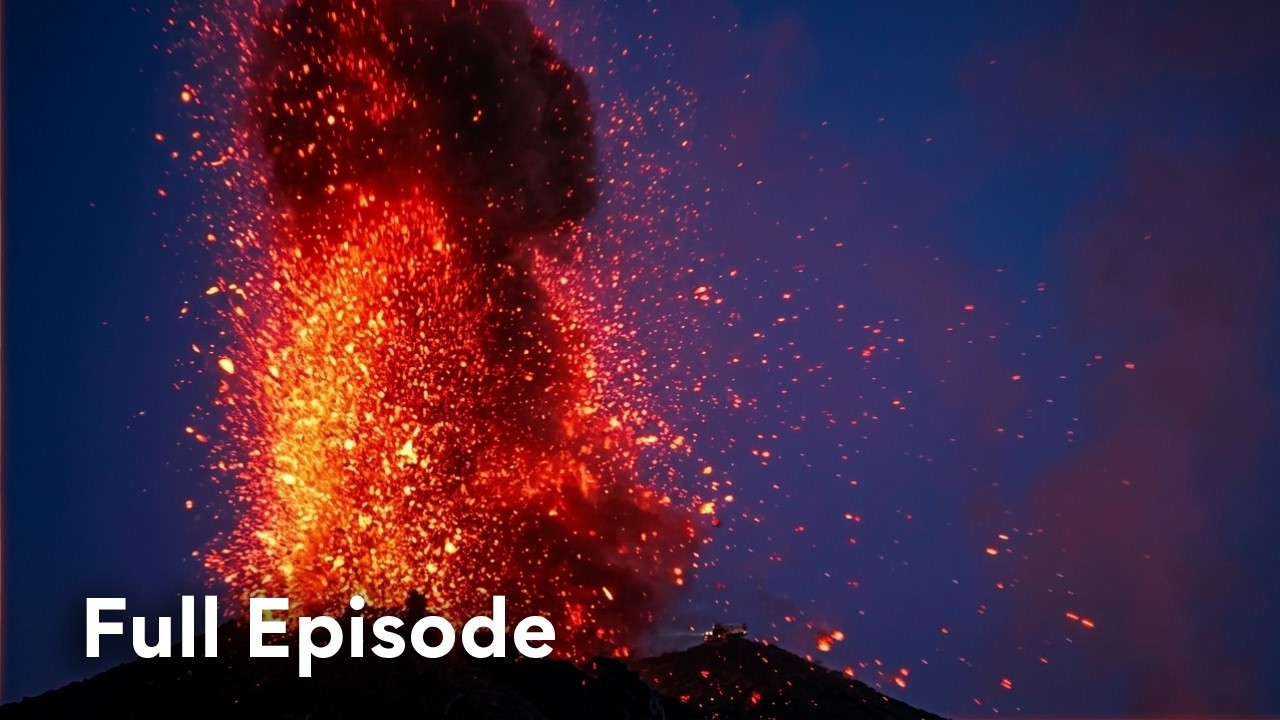
Mount Etna in Italy is a prime location for observing volcanic activity, featuring eruptions that can launch lava fountains up to one kilometre high.
For over 25 years, NASA's Space Shuttle program served as a vital platform for scientific research and technological advancements in low Earth orbit.
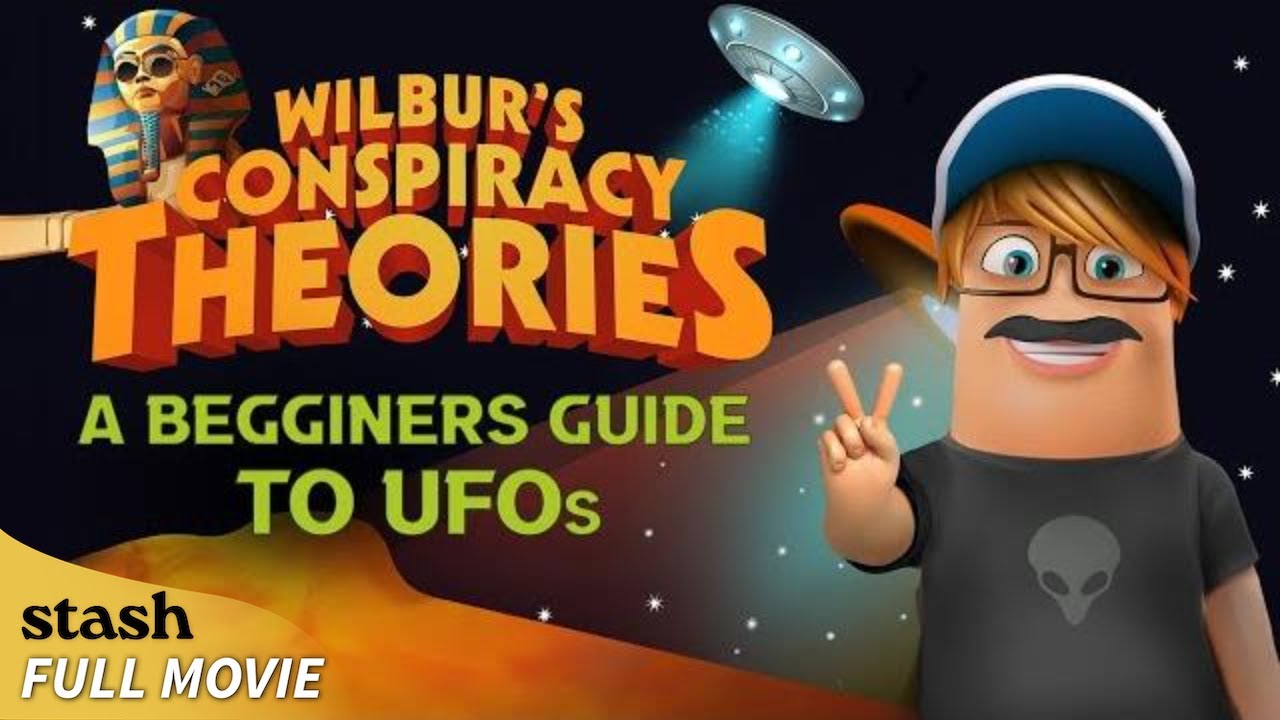
Wilbur explores UFOs and alien conspiracy theories, investigating phenomena such as Area 51 and the cultural impact of the X-Files.
Jim Al-Kahlili shows that information is fundamental to understanding the universe's laws.
Space exploration reveals astonishing facts about the universe, including the vastness of black holes and the potential for extraterrestrial life.
Trillions of atoms, each less than a millionth of a millimeter across, form the building blocks of everything in the universe, from stars to human beings.
Advancements in powerful telescopes and supercomputers have provided a new perspective on the universe's large-scale structure, revealing the limitations of current understanding.
The search for extraterrestrial life examines planets similar to Earth and the implications of recent discoveries on humanity's understanding of the universe.
Black holes are mind-blowing objects essential to understanding our universe's fabric.
Energy is exchanged and transferred across the universe, from nearly frozen atoms to the explosive forces of colliding stars and black holes.
The trailer showcases cutting-edge stories about the universe and its mysteries through Janson Media.
The birth of a black hole occurs in a cosmic maelstrom, where extreme heat and pressure lead to the creation of high-energy photons that later reach Earth’s detectors.
White holes, as explained by Nigel in response to a question from Willow Roberts, are hypothetical regions of spacetime that allow matter and light to escape.
The Egyptians explain their universe through centuries of devotion to gods and magic.
Dark matter, which constitutes five times more of the universe than ordinary matter, remains undetected despite its significant gravitational influence on visible matter.
Astronomers using the Hubble Space Telescope reveal a giant dark matter filament extending 60 million light-years.
Astronomers use the Very Large Telescope in Chile to reveal new galaxies in the Universe.
The Hubble Space Telescope captures the First Image of an Alien Planet, revealing its mass.
The evolution of giant telescopes, from the Hale reflector on Palomar Mountain to the European Southern Observatory's Very Large Telescope at Cerro Paranal, is crucial for advancing astronomical research.
Giant galaxy clusters help Hubble look deeper into the Universe using gravitational lensing.
At solar noon on the winter solstice, prisms in the Potomac space align to create light patterns that serve as an astronomical clock.
Black holes pose extreme dangers due to their intense gravitational forces, leading to two popular theories on how they would kill an unsuspecting victim.
The Very Large Telescope (VLT) utilizes active optics technology to maintain mirror shape and provide astronomers with sharp images of distant celestial objects.
The video discusses how large telescopes help us see deeper into the universe on clear nights.
Dr. J hosts an awards ceremony celebrating the Hubble Space Telescope's 20th anniversary in space.
Hubble Space Telescope's launch in 1990 promised unprecedented views of the Universe, but a distorted mirror necessitated a costly repair mission.
This episode features answers about Hubble's observations of empty space and distant objects.
The Hubble Space Telescope's first light images in HD showcase galaxies, nebulae, and other celestial phenomena, revealing intricate details of the universe.
Hubblecast reveals how light's spectrum informs our understanding of the Universe.
Hubble's Time Tunnel showcases Hubble's role in understanding the early universe's mysteries.
Hubble Space Telescope inspires awe and influences popular culture through stunning images.
Dr. Edwin Powell Hubble's work decades before the Hubble Space Telescope revolutionizes astronomy.
Astronomers use the Great Observatories Origins Deep Survey to study the Universe more effectively.
Nobel Laureate Adam Riess and Nat Geo Explorer Kenny Broad explore the scientific significance of blue holes and dark energy in their presentation.
In a visual exploration of the cosmos, the film showcases Earth's atmosphere, neighboring planets, and the vastness of the universe using advanced CGI.
In a visual exploration of the cosmos, the film showcases the beauty of the universe, from Earth's aurorae to distant galaxies and the edge of the universe.
Scientists narrow the search for dark matter using NASA's Fermi Gamma-ray Space Telescope.
The first video from @HistoryofHumankind is out, and fans cannot wait for more content.
Scientists confirm space-time is smooth, supporting Einstein's predictions about gravity.
Life on Earth originated from single-celled organisms in deep-sea vents around 3.5 billion years ago, evolving into complex ecosystems through adaptation.
Panspermia suggests life spreads through the Universe via comets and other celestial bodies.
Quasars, powered by supermassive black holes, emit energy brighter than 100 galaxies and provide insights into the early universe's formation.
They believe our galaxy teems with planets, despite the stars having offered little evidence of life.
CERN's Large Hadron Collider will conduct a groundbreaking experiment involving ten thousand scientists to explore matter just after the Big Bang.






![Documentary backdrop image for Top 10 Facts - Space [Part 8] (2017)](https://i.ytimg.com/vi/7tgdvkRY1L8/maxresdefault.jpg)