From over 100,000 films, discover the handful you'll love.
Free or premium access to the world's largest documentary library.
49 films(Page 1 of 2)
More than 10,000 galaxies exist, each containing up to 100 million solar systems, raising questions about the potential for extraterrestrial life.
Titan, Saturn's largest moon, has lakes of methane at temperatures of 290 degrees below zero, revealing extreme conditions in the universe.
NASA's Cassini spacecraft detected water vapor above Enceladus' South Pole during its 2005 flyby, revealing unique geological activity on the moon.
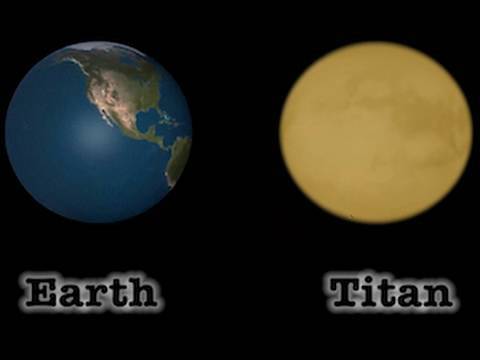
Professor Brian Cox explores the Earth's atmosphere from the heights of Alaska, contrasting it with Saturn's moon Titan and emphasizing its vital role in the solar system.
Mariner 2 successfully transmitted data from Venus after 100 days in deep space, marking a significant achievement in early interplanetary exploration.
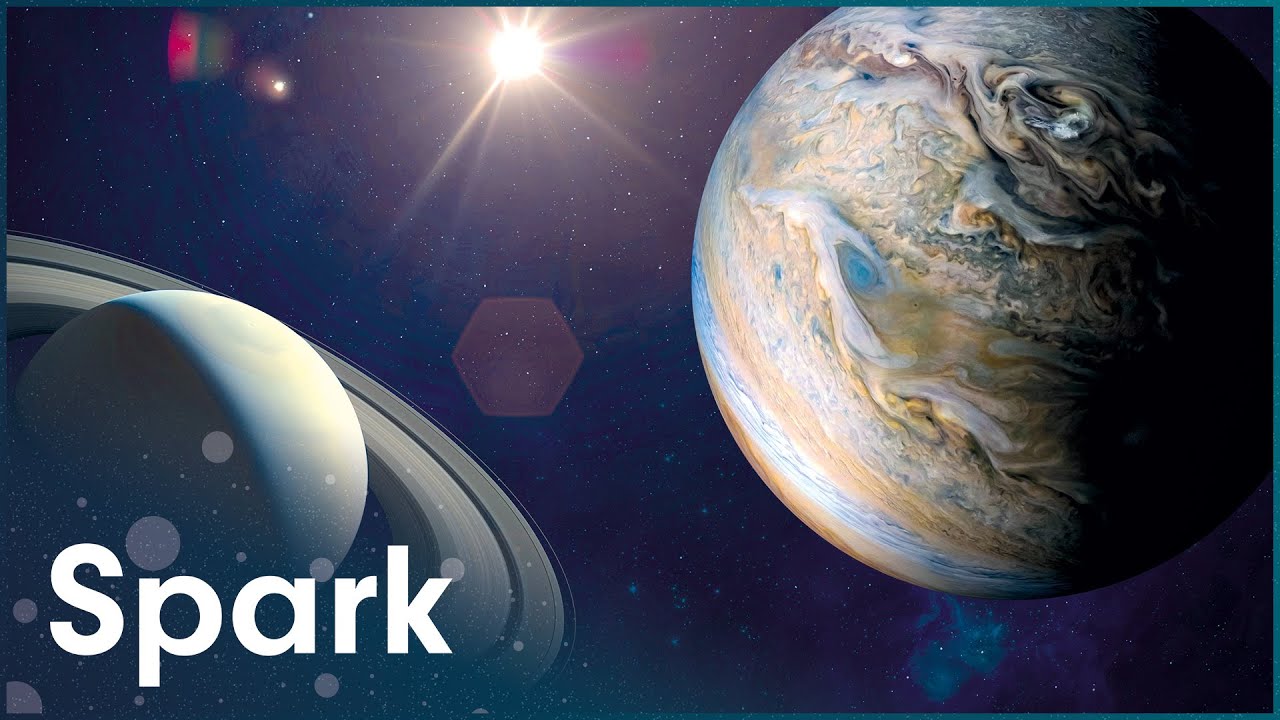
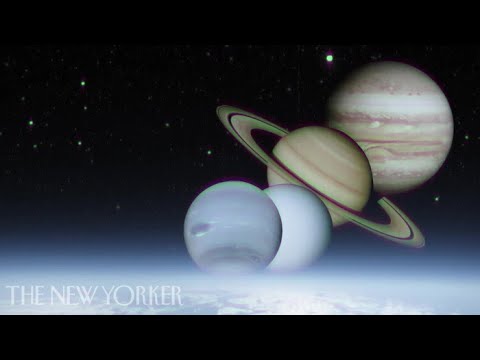
Gas giants Jupiter and Saturn, along with their moons and the potential existence of Planet Nine, are explored in the outer Solar System's icy realms.
For more than 20 years, musician Alal has traveled Arizona's desert roads in his old taxi, performing concerts in small towns across the state.
Jupiter's atmosphere is examined through data from the Juno mission, building on insights gained from the Cassini spacecraft and Huygens lander.
On August 15, 1977, a strong narrowband radio signal lasting 72 seconds was received by Ohio State University's Big Ear radio telescope, suggesting possible extraterrestrial origin.
Orbiters of Jupiter and Saturn provide new insights into their moons and the outer solar system.
After 13 years of orbiting Saturn, the Cassini probe's final plunge to the planet's surface significantly advanced scientific understanding of its rings and moons.
NASA's Cassini spacecraft launched on October 15, 1997, traveled nearly 900 million miles, and orbited Saturn from 2004 to 2017, gathering vital data.
Alleged alien abductions are examined through expert interviews and eyewitness testimonies, highlighting psychological, cultural, and scientific perspectives.
Professor Brian Cox connects tornadoes in Oklahoma to the origins of our Solar System.
Luna 1, the first robotic emissary to the Moon, missed its target by nearly 6,000 km but became the first spacecraft to orbit the sun.
Every second, 10,000 kg of ring rain falls to the surface of Saturn, indicating that its rings will disappear in 100 million years.
4.6 billion years ago, the sun ignited, marking the beginning of the solar system and the eventual formation of Earth as a unique planet capable of supporting life.
In 2015, NASA telescopes identified a promising exoplanet with Earth-like temperatures and potential liquid water, prompting astrophysicists to explore similar solar systems.
This ESOCast video shows astronomers tracking an exoplanet's motion across its host star.
Advancements in space exploration, driven by NASA's Horizons and Cassini probes, highlight the potential for human colonization of Mars through private companies like SpaceX.
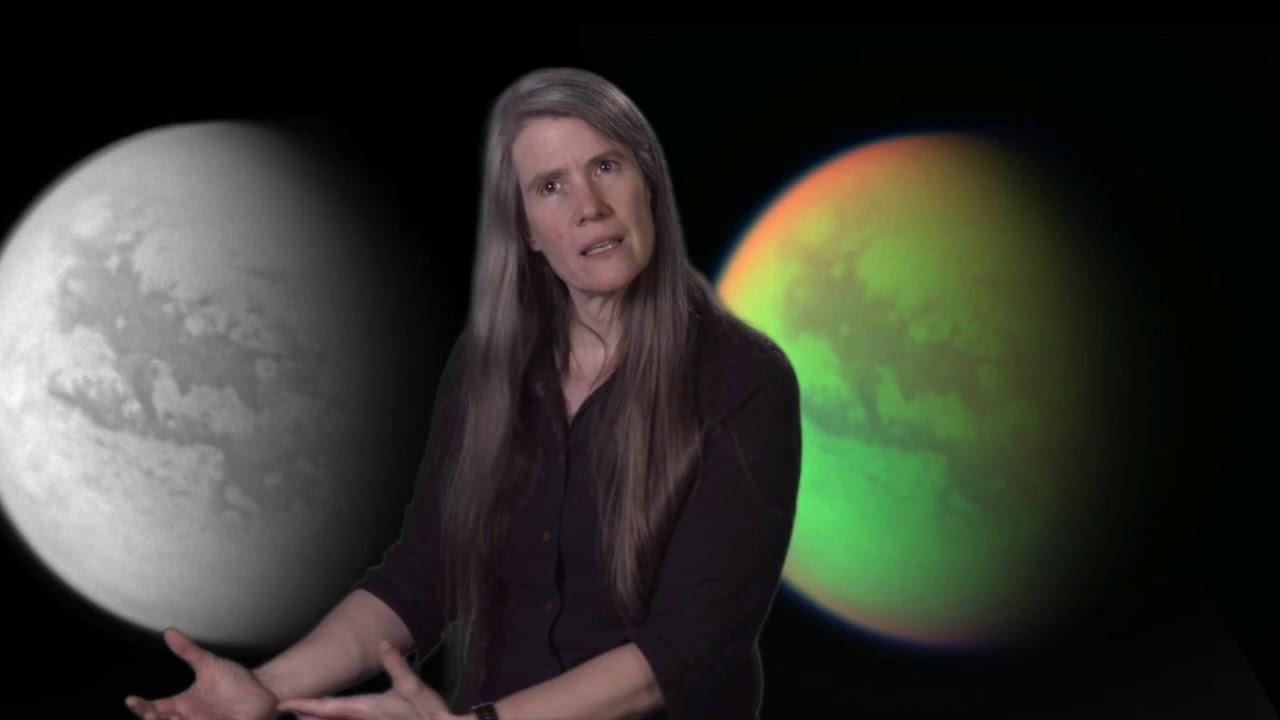
Titan, Saturn's largest moon, has revealed complex atmospheric and surface features through the Cassini-Huygens mission, enhancing understanding of planetary science.
The program presents a collection of unusual facts and striking images of Saturn's moons, featuring highlights from the Cassini spacecraft's mission.
NASA scientists look for Earthly examples to understand Titan's terrain features.
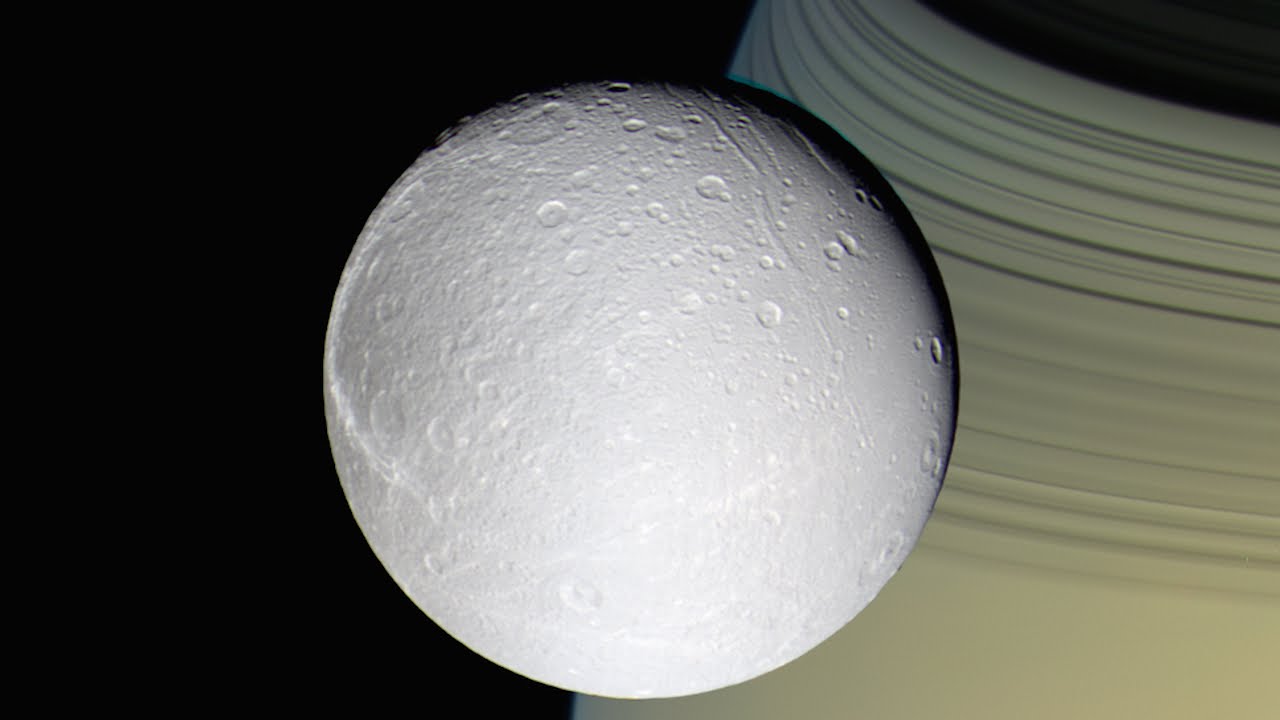
The Cassini Spacecraft conducts its last close flyby of Dione, showcasing detailed observations after over a decade of exploring the Saturn system.
Giorgio Tsoukalos investigates megalithic walls in Ferentino, Italy, believed to be linked to ancient giants and extraterrestrial influences.
Scientists map the moon's gravity patterns and study Saturn and Mars in Cosmic Vistas.
Hubble captures its best images year by year, starting with Saturn in April 1990.
Cassini reveals possible ice volcanoes on Titan, resembling those on Earth.
Kim Stanley Robinson reflects on his childhood fascination with space, his experiences with astronomy, and the significance of understanding Earth's place in the universe.
Around 4 billion years ago, Jupiter and Saturn's alignment triggers asteroid bombardment on Earth.
Saturn 5 engines missing their serial numbers are restored for public display after recovery.
A secret government video claims that an alien civilization near Saturn is manipulating conspiracy theories to distract humanity from their true intentions.
Light pollution in New York City obscures the beauty of planets like Saturn and Jupiter.
Comets represent leftover materials from the solar system's formation, crucial for Jupiter and Saturn.
Last year, Saturn moved into a position allowing Hubble to image its dual aurorae simultaneously.
Starting 6 million kilometers from Saturn, the newly discovered ring extends outward about 12 million kilometers, making it the largest ring ever seen around a planet.
NASA's Jet Propulsion Lab team discusses lightning observations in Saturn's atmosphere.
Enceladus, one of Saturn's moons, features a bright icy surface, extreme temperatures, and intriguing geological characteristics that suggest potential for scientific exploration.
NASA's Cassini observes Saturn's rings and the influence of moon Prometheus on icy particles.
The Cassini spacecraft captures eerie sounds from Saturn's intense radio emissions.
Geysers on Enceladus shoot ocean water hundreds of kilometers into space, containing organic molecules that could indicate the presence of life.
Saturn's moon count has increased to 82, surpassing Jupiter by three, thanks to discoveries made using the Subaru telescope in Hawaii.
NASA's Cassini mission, launched in 1997, spent over 13 years studying Saturn and its 60 moons, transforming our understanding of the planet.
Voyager 1 became the only spacecraft to travel beyond the solar system and into interstellar space, now nearly 13 billion miles from the Sun.
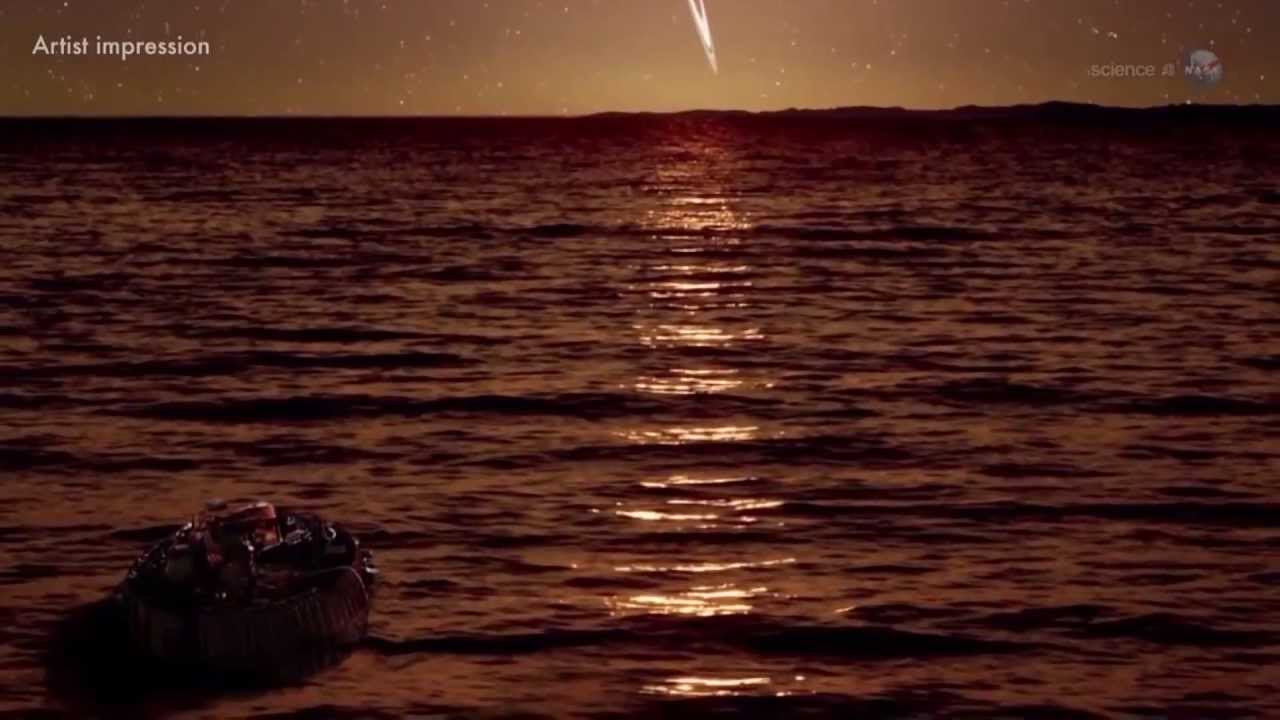
Titan, Saturn's largest moon, has stable surface liquids but no wave activity.
Titan, Saturn's largest moon, features a complex weather system with liquid hydrocarbons like methane and ethane, challenging our understanding of planetary atmospheres.
Huygens must transmit data from Titan's surface to the Cassini spacecraft, navigating Saturn's rings to ensure the mission's success.
NASA's Voyager spacecraft, launched in 1977, continue to transmit data from beyond the solar system, raising questions about their future in space.