From over 100,000 films, discover the handful you'll love.
Free or premium access to the world's largest documentary library.
37 films
14 billion years ago, the universe began with a fiery birth of particles and energy, expanding and cooling ever since.
A physics professor invents a time machine after being saved from a car accident by an elderly stranger who dies in the process.
The last believer in the phlogiston theory of heat died in the mid-20th century, marking the end of a once-prominent scientific explanation.
A jury of 12 listens as a lawyer argues that a defendant's actions can be traced back to the origins of the universe.
In early 2021, 200 scientists at Fermilab conducted an experiment measuring the wobble of muons to test predictions about fundamental forces in the universe.
In 1900, Max Planck tackled the mystery of heated filaments at the Physicalisch-Technische Reichsanstalt in Berlin, leading to the birth of quantum mechanics.
In 1900, scientists faced a mystery about the light bulb: why did the color of light change with temperature, leading to the birth of quantum mechanics.
Somewhere in the region of 10 followed by 99 zeros, there are more cubic centimeters of space than in the entire observable universe.
On December 12, 1970, NASA launched the Uhuru satellite, the first space telescope dedicated to observing X-rays from a platform off Kenya's coast.
300 miles off the coast of West Africa, physicists set up an experiment to test quantum entanglement, a concept Albert Einstein dismissed as impossible.
Three numbers-mass, electric charge, and angular momentum-are all that is needed to define a black hole, regardless of its size or origin.
2000 miles is the distance barnacle geese travel each winter to reach a Scottish river, guided by quantum mechanics in their navigation.
Quantum mechanics, nested simulations, and the nature of reality are explored through insights from physicist Paul Sutter and various scientific organizations.
500 years passed before a manned vessel emerged from a wormhole near Neptune, with its crew long dead and the ship barely functioning.
In 1900, Max Planck tackled the mystery of why a heated light bulb filament changes color, sparking the birth of quantum mechanics.
Werner Heisenberg was born on December 5, 1901, in Wurzburg, Bavaria, and became a key figure in the German nuclear weapons program during World War II.
In 1967, physicist John Wheeler coined the term 'black hole' to describe these gravitational phenomena that challenge our understanding of the universe.
Jim Al-Khalili explores the intersection of General Relativity and Quantum Mechanics, revealing the mind-bending possibilities of our universe's true nature.
Einstein's general theory of relativity and quantum mechanics are examined as foundational concepts that shape our understanding of the universe.
One French scientist, Sadi Carnot, discovered the laws of thermodynamics in the 19th century, which explain how heat engines operate efficiently.
Matt discusses the mysteries of black holes and the philosophical implications of free will during a 2022 end-of-year live stream session.
Atomic clocks reveal the complexities of time and reality, showcasing how modern life is influenced by the principles of quantum physics and relativity.
Alice must carry a quantum bit into a black hole, where it either crosses the event horizon or vanishes forever during evaporation.
The mass of an electron's classical electrostatic field has a mass equivalent 20,000 times larger than the measured mass of the electron.
Two clones are created in a thought experiment to illustrate the Many Worlds interpretation of quantum mechanics and its implications for probability.
Over 15,000 stars combine to create the observable universe, which may operate like a game of 20 questions, constantly adapting its reality.
13.7 billion years is the age of the cosmic microwave background radiation, the most distant light humanity can observe from the universe.
A scientist places a cat in a closed box with a radioactive atom, illustrating the concept of superposition in quantum mechanics.
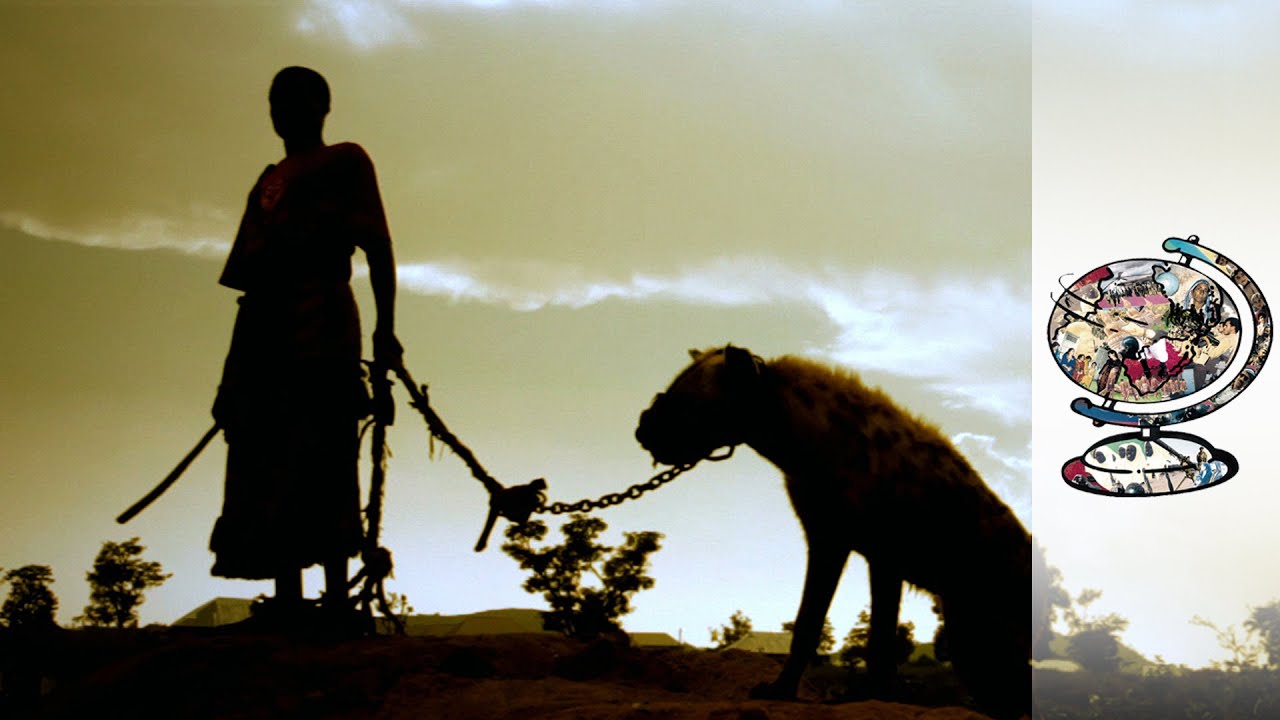
One handler states, "I have been doing this since I was five," as he tames wild hyenas and manages an entourage of snakes and baboons.
China plans to invest at least $10 billion in quantum technology over the next three years, significantly outpacing U.S. government spending on research.
1932 marked the year when Werner Heisenberg proposed isospin, a new fundamental property of matter that challenges the understanding of electric charge.
One idea presented is that the laws of physics are models of our experience of reality, rather than direct representations of the universe itself.
A recent paper by Roy Kerr suggests that the singularity at the center of black holes may not exist, challenging the Penrose Singularity Theorem.
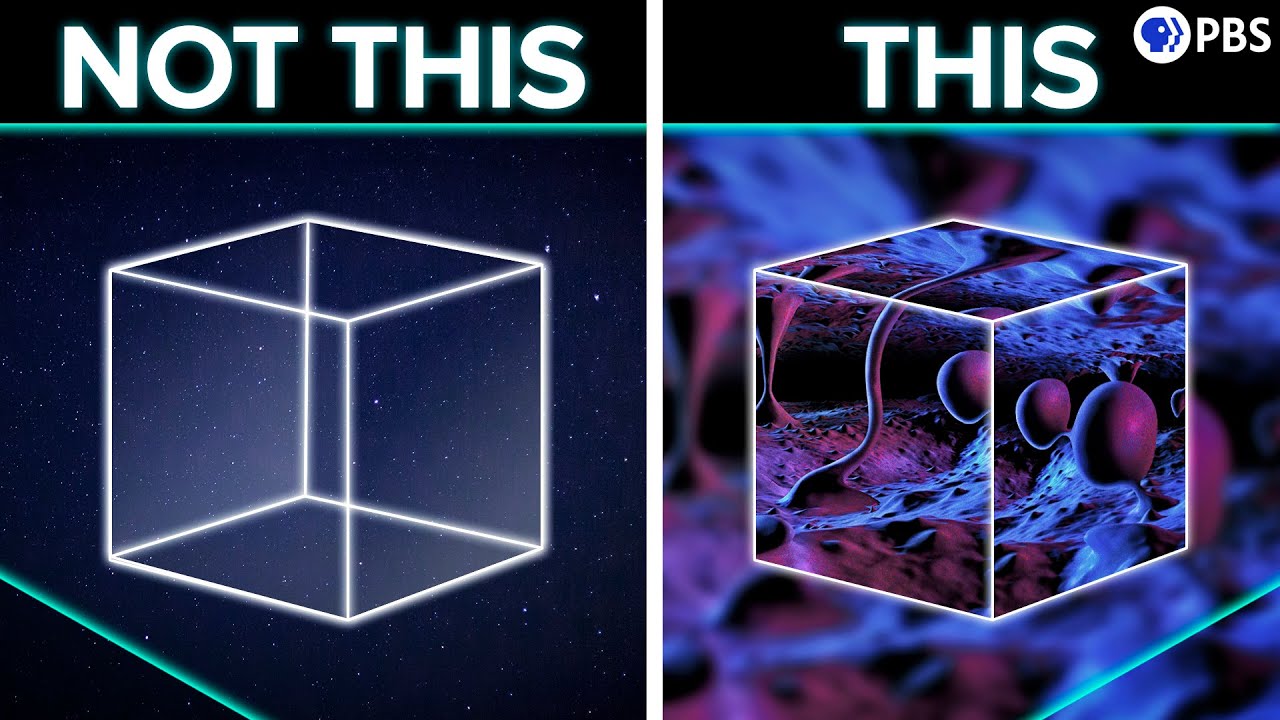
Spacetime is described as a seething ocean of black holes and wormholes flickering into and out of existence, according to many physicists.
Erwin Schrodinger's thought experiment illustrates the conflict between observer-dependent indeterminacy and a reality that exists independently of observation.
Three physicists, John Clauser, Alain Aspect, and Anton Zeilinger, won the 2022 Nobel Prize in Physics for proving the reality of quantum entanglement.
0.00729735256, or approximately 1/137, is the fine structure constant that physicists have long sought to understand due to its fundamental role in quantum physics.