From over 100,000 films, discover the handful you'll love.
Free or premium access to the world's largest documentary library.
121 films(Page 1 of 3)
Jessica Nabongo, the first black woman to visit every country in the world, hosts a global celebration featuring performances from artists like AURORA and Willie Nelson.
The 1619 Project has expanded into a book, podcast, and documentary series since its launch in 2019, examining slavery's impact on American society.
8,225 is the number of species photographed by conservationist Joel Sartori, who aims to raise awareness about wildlife conservation.
Over 20 feet below the surface in Alexandria, archaeologist Pepi Papakosta discovers a marble statue believed to be of Alexander the Great.
Bhutan is the first carbon negative country in the world, with over 70% of its land covered in forest.
In the Great Plains of Mongolia, Pallas's cats adapt to extreme temperatures while female cats teach their young essential hunting and survival skills.
Two Air Force One aircraft are maintained at Andrews Air Force Base to ensure the President always has a spare during missions.
3 million shipwrecks are estimated to exist worldwide, raising concerns about the preservation of the Titanic and its artifacts amid ongoing disputes.
The tomb of the First Emperor covers 22 square miles, making it larger than Egypt's Valley of the Kings and one of the greatest burial complexes in the world.
The PIONEER, a floating oil rig designed to access deep sea reserves over two and a half kilometers below the surface, represents a $600 million recycling project.
Ancient civilizations, including lost cities in jungles and deserts, are being revealed through modern archaeological efforts, shedding light on their histories and mysteries.
Ancient cities, hidden villages, and extreme landscapes of Iran are explored, highlighting the country’s rich history and architectural marvels beyond political narratives.
In South Africa’s Kruger Park, two rare white lion cubs face the challenges of survival and the dangers posed by their distinctive coats as they grow to adulthood.
34 persons were killed during the 1992 Los Angeles riots, which erupted after the acquittal of police officers involved in the beating of Rodney King.
Over 120 breathtaking natural wonders, including towering mountains, vast deserts, and crystal lakes, are showcased in stunning detail across the globe.
In the Caribbean, powerful natural forces such as volcanoes, storms, and ocean currents shape the islands' wildlife, culture, and ecosystems.
Nyiragongo, located in the Democratic Republic of Congo, poses a constant threat to Goma's one million residents due to its active lava lake and potential eruptions.
Tom O'Brien designs custom camera gear in the National Geographic basement, including a wolf-proof camera trap for photographing arctic wolves.
Less than 600 people have traveled to space, and three of them share their experiences and insights at the 2019 Explorers Festival.
Afghanistan's diverse landscapes, from the Bamiyan Buddha niches to the remote Wakhan Corridor, reveal a resilient culture shaped by ancient history and geography.
A recent UN report stated that one million species are threatened with extinction, including 60% of all large mammals and a significant number of plants.
In Indonesia, the archipelago's most active volcanoes, deep jungle valleys, and ancient stone ruins reveal a landscape of remarkable natural beauty and diversity.
Pakistan's hidden mountains, including the Karakoram range, ancient Silk Road kingdoms, and diverse wildlife, reveal a rich tapestry of landscapes and cultures.
In the last 25 years, paleontologists have made discoveries that have changed the understanding of dinosaur evolution and their relationship to birds.
A tornado measuring more than two and a half miles wide struck Moore, Oklahoma, in May 2013, producing winds that reached 300 miles per hour.
Only one known skeleton of Spinosaurus exists, discovered in 2013, but recent excavations in Morocco have revealed additional bones that could change its history.
Dr. Rae Wynn-Grant studies black and grizzly bears in Montana, focusing on wildlife corridors to improve conservation efforts for these species.
Three women paleontologists discuss their research on dinosaurs and vertebrate animals during a panel moderated by Shaena Montanari.
Asia's extreme landscapes, from fiery volcanoes and vast deserts to ancient civilizations, reveal the continent's untamed beauty and hidden wonders.
300 million people celebrate Nowruz, the Persian New Year, which coincides with the vernal equinox and symbolizes renewal and the cycle of life.
In the Peruvian Andes, the resurgence of cocaine trafficking is examined through the lens of local economies and the impact of the pandemic on drug production.
Up to 300 Black residents were killed and countless homes and businesses destroyed during the 1921 Tulsa race massacre, a largely forgotten chapter of American history.
Liz Bonnin travels over 7,000 miles to the Galápagos Islands, where she encounters unique wildlife and emphasizes the need for conservation efforts.
Yellowstone has experienced three super eruptions, with the largest releasing thousands of cubic kilometers of material over the past 2.1 million years.
At 80 years old, biologist Bruce Means embarks on an expedition to the Weiassipu tepui in Guyana to document rare frog species and study its unique ecosystem.
Remote terrains and hidden environments across the globe showcase Earth's most stunning and surreal landscapes, highlighting nature's rare beauty.
Rodrigo Medellin, known as the Bat Man of Mexico, argues that bats contribute to agriculture and tequila production, despite common misconceptions about them.
Fewer than 3,900 tigers remain in the wild, while over 10,000 are estimated to be held in captivity across the United States.
Three experts discuss how the COVID-19 outbreak began in a wildlife market in China and its impact on human health and wildlife conservation.
David Guttenfelder paddled through the Apostle Islands in Lake Superior, facing eight-foot waves and lightning storms during his 18-day kayaking trip.
A team of Black climbers aimed to become the first to reach the summit of Mount Everest as part of the Full Circle Everest expedition in 2022.
Mike Lebecki has completed over 60 expeditions, including a significant trip to Antarctica with National Geographic.
A horizontal mile in the Sơn Đoòng cave system can take an entire day to traverse due to sharp rocks and rugged terrain.
Construction of the Appian Way began in 312 BC, connecting Rome to southern Italy and serving as a vital route for trade and military movement.
Ancient cave dwellings, sunken cities, and cliffside villages reveal Italy's hidden wonders, showcasing beauty and history far from the typical tourist paths.
Danielle Lee studies how field mice thrive in urban parks, revealing that many wildlife species live unnoticed in neglected spaces.
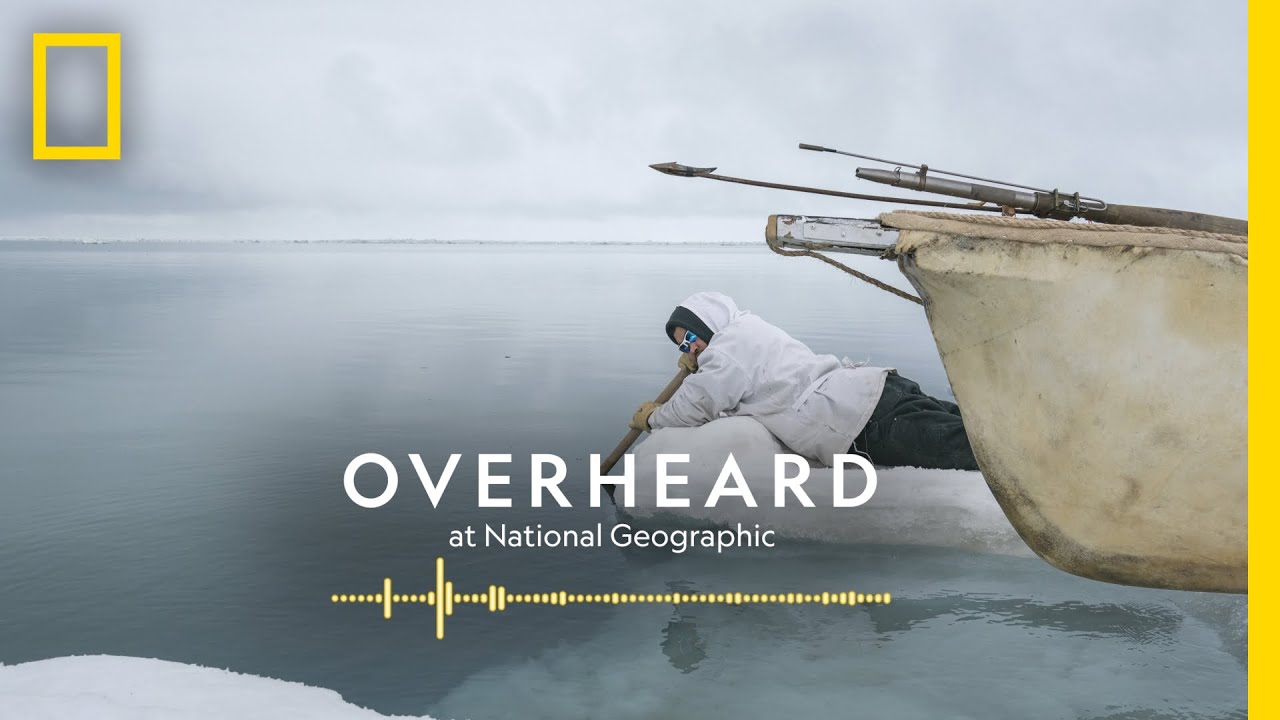
Kiliii Yuyan camped on Arctic sea ice in 2018 with Inupiaq hunters, documenting their bowhead whale hunting rituals amid unstable ice conditions.
Stephen Wilkes documented sea stacks over 100 feet tall at Shi Shi Beach, a remote location in Olympic National Park, in May 2022.