From over 100,000 films, discover the handful you'll love.
Free or premium access to the world's largest documentary library.
56 films(Page 1 of 2)
Heart rates of hummingbirds can reach 1,200 beats per minute, making them the highest among vertebrates and enabling their remarkable aerial maneuvers.
Insects may number around 10 million species, making up 90% of all life forms on Earth and playing essential roles in ecosystems and food chains.
Swarm intelligence shows how groups outperform individuals in decision-making and coordination.
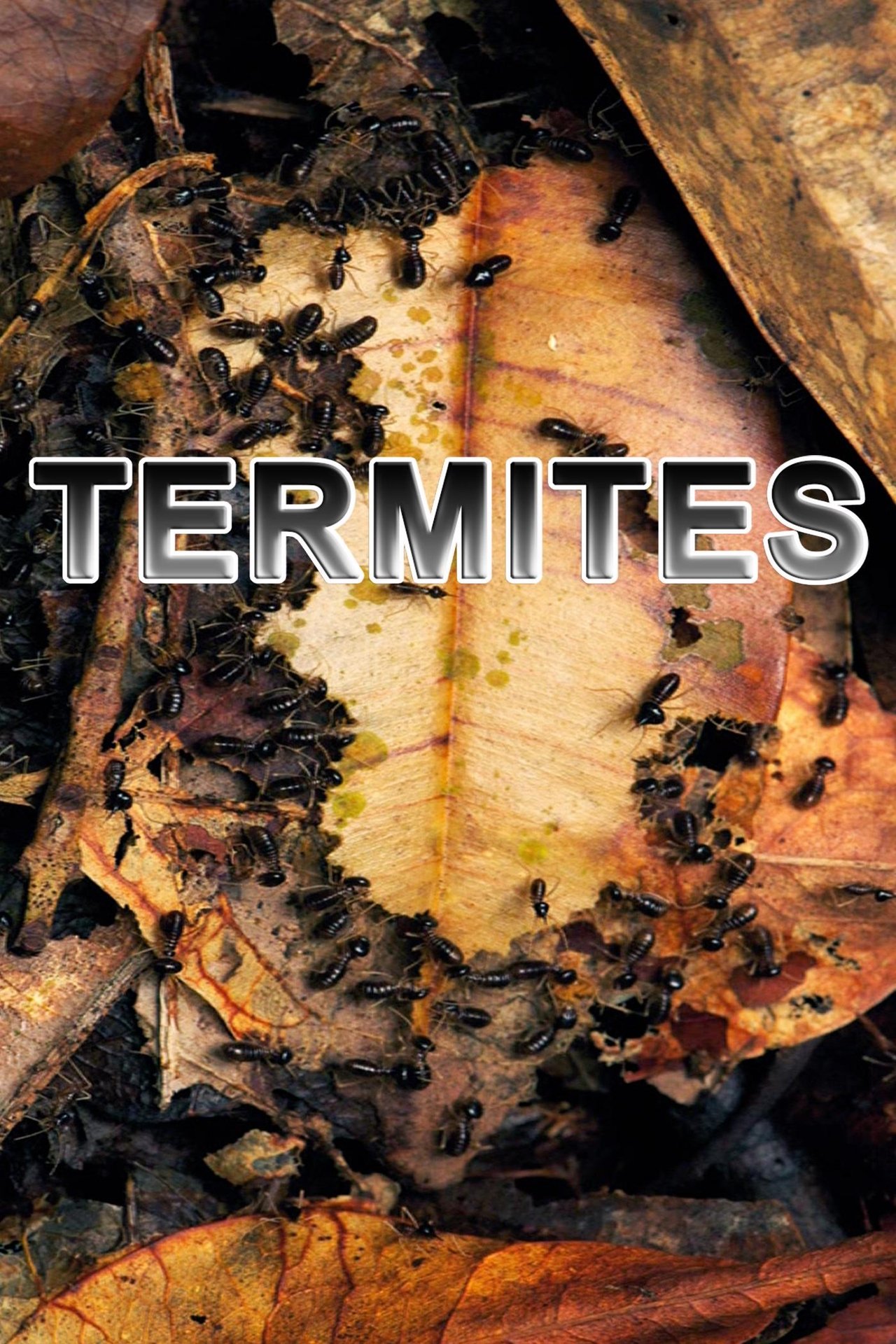
Termites build mounds that can reach heights 25 times greater than the Empire State Building in New York City.
Insects are facing a dramatic decline due to factors such as pesticide use and habitat loss, threatening ecosystems and food chains worldwide.
The Mofu people in northern Cameroon summon Jaglavak to combat invading termites.
Fossils trapped in amber provide invaluable insights into the ecosystems of the dinosaur era, preserving ancient plants and animals for scientific study.
Insects conquer diverse environments, showcasing their unique adaptations and success in nature.
Insects multiply in their millions during summer, while animals adapt to the challenges of the season, balancing growth and survival.
For every one human, there are an estimated 1.4 billion insects on Earth, making up at least 80% of all known animal species.
Evolutionary biologist Mike McHargue joins hosts Sebastian and Rutendo to explore how animals like rats and spiders inspire human innovation through their unique abilities.
In the inaugural episode of the BBC Earth Podcast, presenters Rutendo and Sebastian explore how to enjoy a safari experience from home, featuring actor Eric Stonestreet.
Ants form complex colonies and communicate in ways that reveal their roles in ecosystems across diverse environments.
Microscopic elements of nature, including pollen grains, leaf cells, and insect anatomy, reveal intricate structures and vibrant colors essential to ecosystems.
Asian Ladybirds and Colorado Potato Beetles are examined for their potential in cancer treatment and innovative construction methods by Professor Andreas.
Insects can determine the time of death within a 20-day window, providing critical evidence in homicide investigations.
Possums, snakes, and insects exhibit the fascinating survival strategy of playing dead to evade predators, showcasing unique evolutionary adaptations.
In Zambia's Luangwa Valley, a team led by Mark Evans conducts a rare dissection of a hippo, exploring its unique anatomy and survival strategies of rainforest creatures in Borneo.
Insects can lay eggs in various ways, with some species taking up to two years for their eggs to mature before hatching.
Wasps, as one of the earliest social species, may hold key insights into the existence of altruism in evolution.
A variety of insects, including dragonflies and beetles, demonstrate their unique adaptations and behaviors in diverse ecosystems.
Bee population decline poses significant threats to global ecosystems and food security, driven by habitat loss, pesticide use, climate change, and diseases.
Ants, with over a million individuals for every person, exhibit complex behaviors such as slavery, nest-building, and aggressive defense mechanisms.
Byron and Taylor guide viewers through a live safari in the Maasai Mara, searching for wildlife such as leopards and insects while encouraging audience interaction.
Ants play a vital role in ecosystems worldwide, as showcased in this compilation of videos from BBC Earth highlighting their complex behaviors and adaptations.
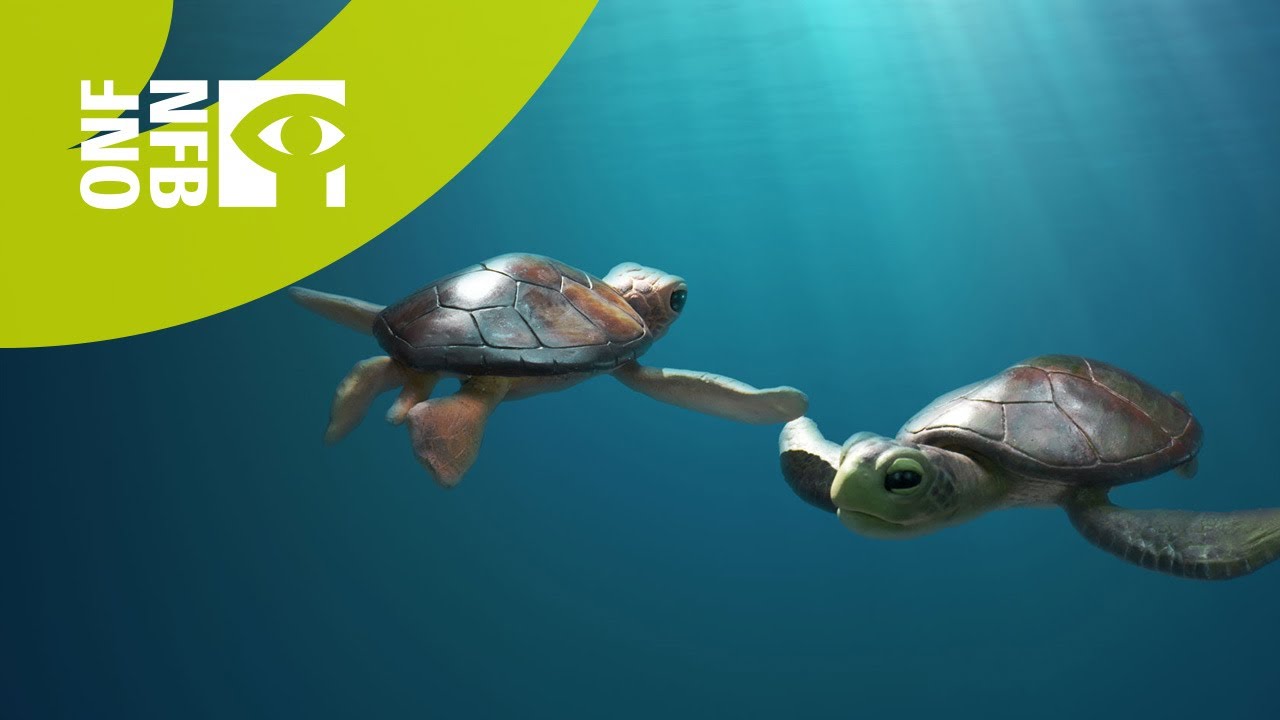
A sea turtle scrapes softly over the sand as it lays eggs in a pit, marking a crucial moment in the life cycle of this endangered species.
Bees play a crucial role in global agriculture and face critical endangerment due to the impacts of globalization and environmental changes.
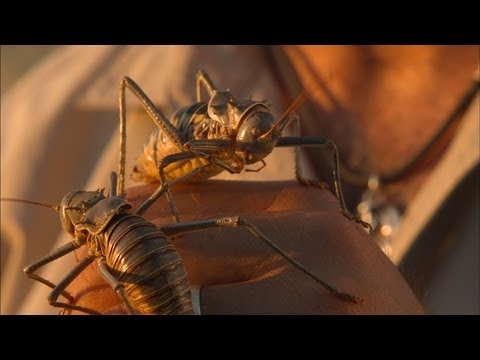
The giant cricket survives in the Namib Desert with its tough protective shield against predators.
Female glow-worms use bioluminescence to attract males during mating season.
The British Camp in the Malvern Hills rises just over 1,000 feet and features ancient trenches carved by the Britons around 500-400 BC.
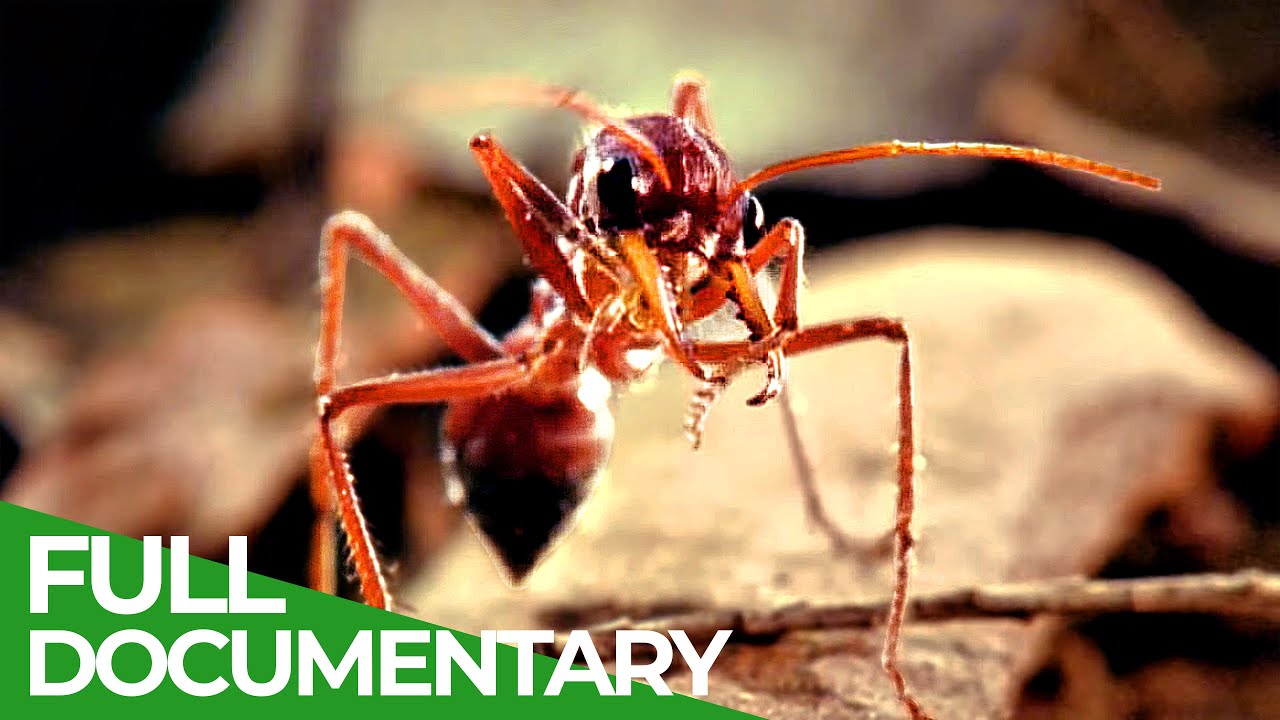
Mofu people in northern Cameroon invoke the red warrior ant, Jaglavak, through sacred rituals to combat a devastating drought and restore harmony with nature.
Insects face deadly traps from carnivorous plants in Borneo's rainforests in this nature documentary.
In Beijing, cricket fanatics rear Gladiator Bugs for serious fighting matches with Master Fu's training.
Fire ants, prevalent in the southern United States, exhibit complex social structures and aggressive behaviors that significantly impact local ecosystems.
Fire ants use complex nest-building and cooperative defense strategies to adapt and thrive in various environments, showcasing their ecological importance.
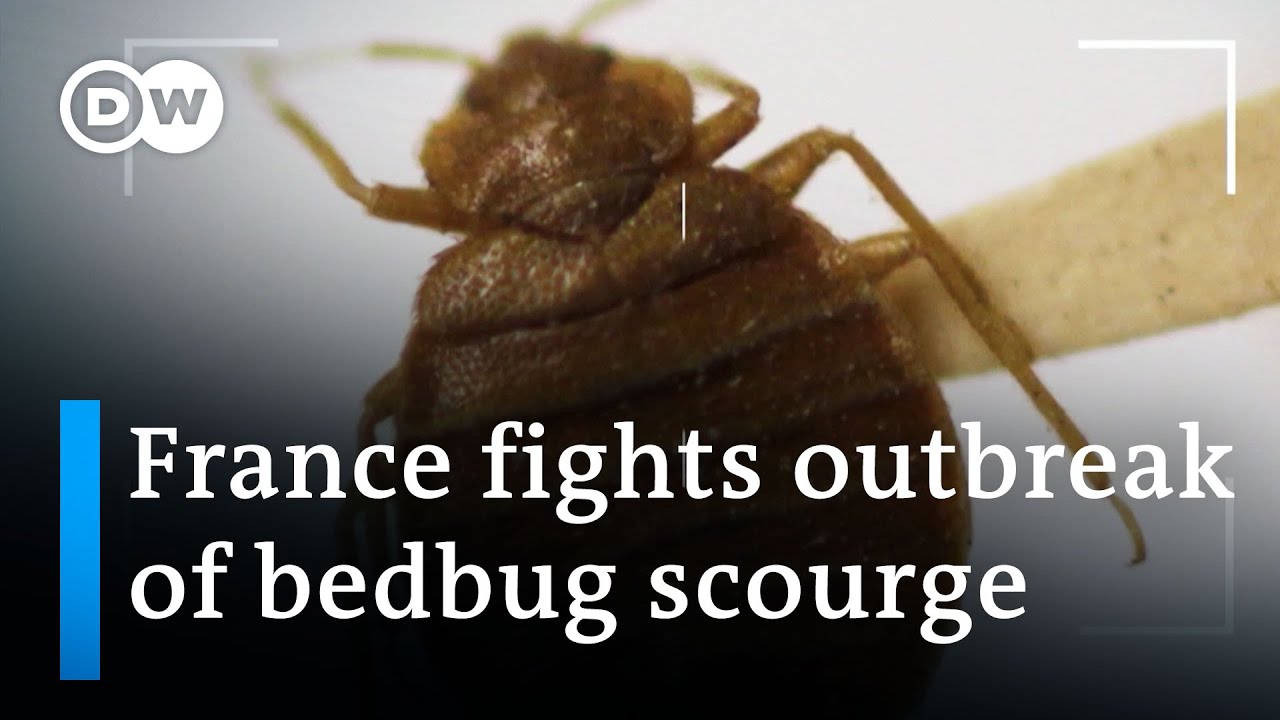
France faces a bed bug outbreak as the Paris Olympics approach, raising public concern.
Vincent Brothers claims an alibi while Dr. Lynn Kimsey analyzes insects for evidence.
Microraptors and pterosaurs illustrate the evolution of flight in vertebrates, highlighting insects as the first flying species and their significance in prehistoric ecosystems.
Insects such as butterflies, bees, and spiders play vital roles in ecosystems through pollination and decomposition, highlighting the need for their conservation.
New Jersey's Cora Hartshorn Arboretum welcomes the first 17-year cicadas this season.
The trailer highlights the vast diversity of insects, estimating 5 to 10 million species and showcasing their unique lives on Earth.
The Argiope spider captures millions of insects using its intricate silk traps daily.
More than 10,000 animals have been photographed for Joel Sartore's Photo Ark project, but during the pandemic, he turns his lens to insects in his backyard.
Termites are social insects found in Australia, with colonies reaching millions in size.
Bees use pollen for protein, while wasps rely on meat, highlighting their key differences.
Viewers learn about camera techniques for the upcoming Planet Insect on Curiosity Stream.
Over 20 banded mongooses gather to help warthogs by eating ticks and lice, creating a mutually beneficial relationship on the African savanna.
The tiger beetle can run up to 5.5 miles per hour, illustrating its adaptations for survival as shown in Macro Worlds: God's Darlings: Beetles.