From over 100,000 films, discover the handful you'll love.
Free or premium access to the world's largest documentary library.
58 films(Page 1 of 2)
Interstellar messages sent since the 1970s reflect humanity's hope to connect with extraterrestrial civilizations, highlighting their significance and low chances of reception.
More than 10,000 galaxies exist, each containing up to 100 million solar systems, raising questions about the potential for extraterrestrial life.
Light from the farthest regions of the universe takes billions of years to reach Earth, prompting scientists to consider the implications of potential alien contact.
Since 2017, more scientists have recognized that Unidentified Aerial Phenomena could justify a scientific investigation.
A mile to two mile wide triangular craft was reported by thousands of witnesses across Arizona on March 13, 1997.
Orson Welles quotes H.G. Wells, stating that in the early 20th century, Earth was being watched by intelligences greater than man's.
Over 40 trillion kilometers from the Sun, Proxima Centauri b is considered a potential candidate for extraterrestrial life due to its size and location.
Astronomers believe there could be millions of other civilizations in the universe, raising concerns about the potential for hostile extraterrestrial contact.
Ancient Aliens examines the theory that extraterrestrials have visited Earth throughout history, featuring topics like the God Particle and the concept of Star Children.
Ancient Aliens examines various alleged extraterrestrial crashes throughout history, presenting theories about their implications for human civilization.
Mysterious theories surrounding UFO conspiracies, hidden agendas, and secrets in Antarctica and Nan Madol are examined by investigators seeking historical evidence.
In a Doha Debates podcast episode, host Soraya Salam and guests including Nick Pope and David Grinspoon discuss the implications of extraterrestrial life for humanity.
Accounts of alien abductions reveal a complex phenomenon involving individuals who believe they have been taken by nonhuman entities, with potential government complicity.
Astrophysicists and astrobiologists are utilizing advanced resources to explore the possibility of life beyond Earth, suggesting we may not be alone in the universe.
On August 15, 1977, a powerful radio signal lasting 72 seconds was detected by Ohio State University's Big Ear telescope, suggesting a possible extraterrestrial source.
Extraterrestrial mysteries are explored through episodes on alleged alien breeders, Mars' hidden secrets, and mountains linked to ancient visitors.
Around 3.5 to 3.7 billion years ago, primitive anaerobic bacteria emerged on Earth, marking one of the earliest forms of life known to scientists.
The Fermi paradox raises questions about the absence of extraterrestrial civilizations despite the vastness of the universe and the potential for life beyond Earth.
The UFO phenomenon captivates a diverse group of enthusiasts and researchers who dedicate their lives to investigating extraterrestrial encounters and evidence.
Area 51, ancient artifacts like the Antikythera mechanism, and UFO sightings are examined in a concise timeline of extraterrestrial evidence spanning 3,000 years.
Humanity's quest to colonize other worlds is explored alongside the future of space travel and the universe's greatest unexplained mysteries in this marathon.
The search for extraterrestrial life encompasses theories from the Big Bang to advanced technologies like warp drives, featuring insights from physicists and astronomers.
Mars has captivated human curiosity for centuries, with the 2020 Perseverance mission reshaping our understanding of the potential for life on the planet.
Moons in the outer solar system, such as Titan and Enceladus, challenge our understanding of planetary bodies with their dynamic environments and potential for life.
More than 200 moons orbit planets in our solar system, each with unique characteristics and potential for primitive life.
Moons in our solar system, once seen as lifeless, reveal themselves as dynamic worlds with volcanic activity, magnetic forces, and potential alien oceans.
The search for extraterrestrial life examines the vast universe, advanced detection methods, and the implications of potential contact with alien civilizations.
NASA's New Horizons probe traveled 3.5 billion miles to send back the first close-up images of Pluto, revealing a world of unexpected complexity.
In Chile’s Atacama Desert, Shaun Ryder explores UFO phenomena with ufologist Antonio Huneeus and witnesses recounting alien encounters and sightings.
Famous UFO sightings and abduction claims are examined to determine whether they are mere imagination or evidence of extraterrestrial life.
Scientific perspectives on extraterrestrial life are explored, focusing on the possibility of organisms similar to bacteria and the uniqueness of human evolution.
Close encounters with alleged extraterrestrial activity are examined through over 250 pieces of footage and testimonies from credible witnesses, including astronauts.
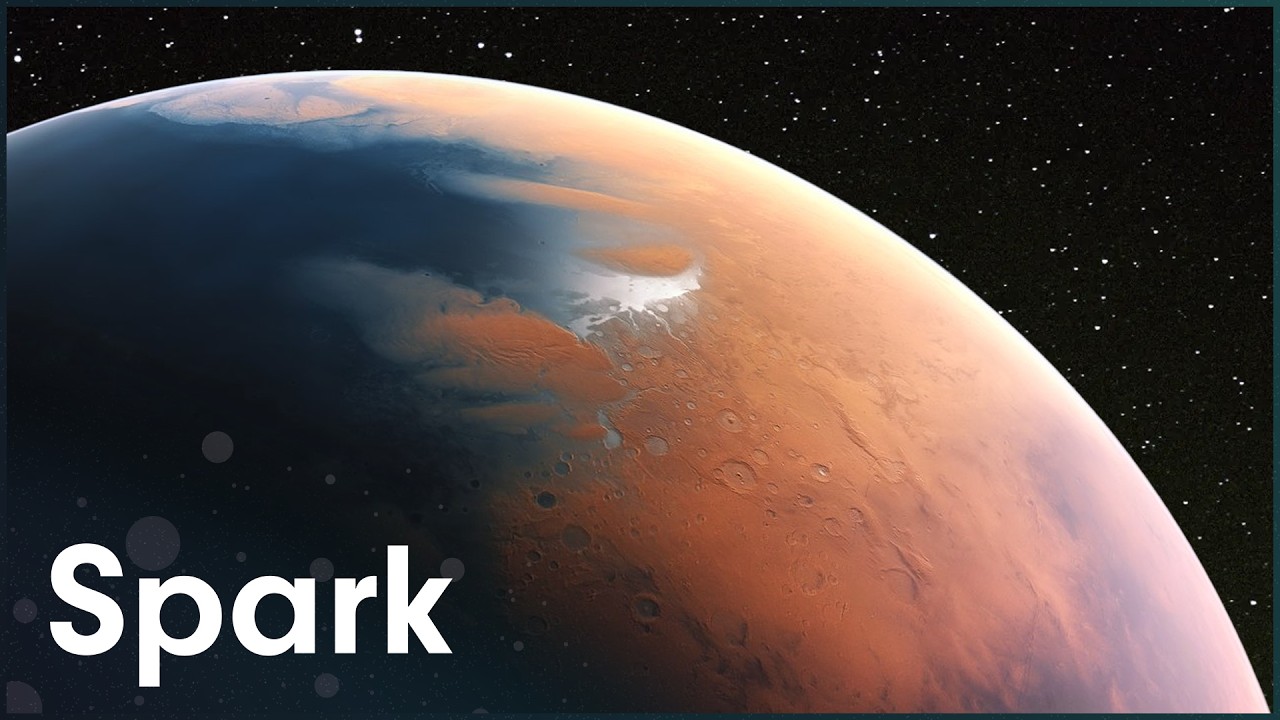
Mars, once resembling Earth with potentially habitable conditions, is a focal point for researchers seeking to understand planetary development.
Alleged alien autopsy footage from 1995, performed by military scientists, ignites debate over the existence of extraterrestrial life and government secrecy.
Dr. Avi Loeb led a deep-sea expedition to find evidence of an interstellar object that crashed into the ocean in 2014, potentially linked to extraterrestrial life.
Astronomers explore the search for extraterrestrial life, examining exoplanets and the potential for contact with intelligent beings beyond Earth.
Researchers are increasingly applying scientific methods to investigate unidentified flying objects, challenging long-held perceptions of these phenomena.
Extraterrestrial life is examined through the lens of NASA and the European Space Agency, exploring humanity's preparedness for potential first contact.
Olympus Mons rises to a height of 24 kilometers, making it the tallest peak in the solar system and a focal point of Mars's diverse geology.
The Roswell UFO incident remains a focal point of debate, featuring interviews with witnesses and exploring theories of government cover-ups and alien abduction.
Mysterious cattle mutilations, alien abduction claims, and the "Wow! signal" raise questions about government cover-ups and the existence of extraterrestrial life.
The vastness of the universe raises questions about the existence of extraterrestrial life and its implications for humanity's understanding of its place in the cosmos.
Aliens are likely to be super-intelligent machines, challenging our understanding of life in the universe and the implications of the Fermi Paradox.
Mars exploration efforts by astrobiologists and planetary scientists focus on finding signs of life beneath the Martian surface, including ancient riverbeds and subsurface ice.
Five days after Travis Walton vanished in the Apache-Sitgreaves National Forest, a search team found no trace of him or the mysterious light he encountered.
Billions of microscopic mid-air collisions at around 250 kilometers above Earth's surface create the colorful glow of the aurora borealis.
Mars is located over 34 million miles from Earth, and researchers speculate it could support extraterrestrial life due to evidence of past water.
In the vastness of the observable universe, evidence is presented for ten instances suggesting that Earth has been visited by extraterrestrial civilizations.