From over 100,000 films, discover the handful you'll love.
Free or premium access to the world's largest documentary library.
174 films(Page 1 of 4)
Ancient skywatchers and modern astronomers reveal the Milky Way's evolution, exploring its mythology and the scientific methods used to map its structure.
Physicist Roger Penrose discusses the improbable order of the universe's creation, questioning why matter exists despite the likelihood of annihilation by antimatter.
Over 2,000 years ago, Democritus proposed that matter is made of tiny, indivisible particles called atoms, a concept later confirmed by modern science.
Only 0.00005 percent of stars in the Milky Way are black holes, remnants of massive stars that have undergone supernovae.
Two trains collide on parallel tracks, challenging the long-held belief that parallel lines can never meet, as the universe's expansion raises fundamental questions.
A black hole is born when a large star dies in a supernova explosion, which can be as bright as a billion billion suns.
Thousands of volunteers contribute gravity readings to investigate how this force affects weight, height, and aging in everyday life.
On September 14, scientists made a remarkable discovery by detecting black holes for the first time using a radical new experiment in Washington state.
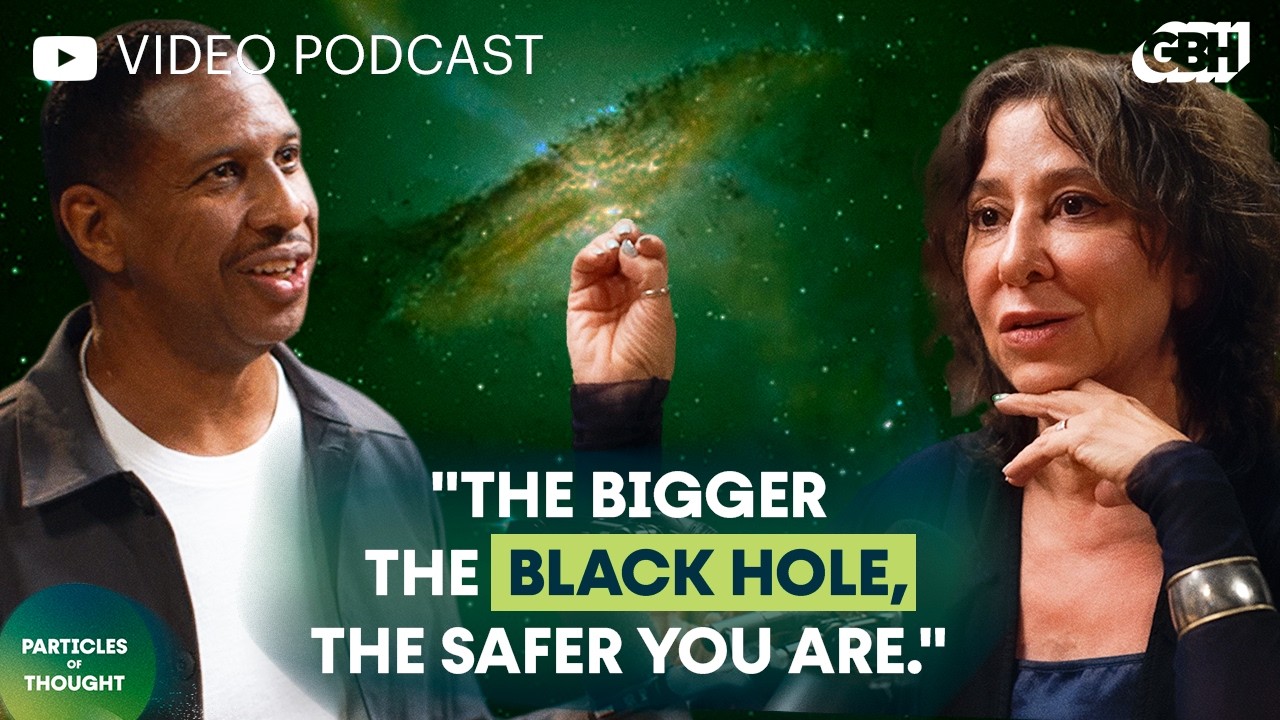
A black hole can be orbited safely from just 30 kilometers away, according to astrophysicist Janna Levin in a discussion about cosmic phenomena.
Over 13 billion years ago, the universe was so small that it could fit inside the palm of a hand before expanding to create everything we see today.
A team of leading scientists at the University of Texas' McDonald Observatory guides Peter Ustinov through the principles of Einstein's theory of general relativity.
Venus has a surface temperature of 900°F, making it inhospitable and drastically different from Earth despite their similar beginnings.
Two megawatts of power, enough for around two thousand homes, fuel the Paranal Observatory in Chile, a key site for studying dark energy.
12 billion years ago, a seething mass of energy smaller than an atom grew from nothing, marking the birth of the universe in a violent fireball.
NASA's enhanced film footage of the Apollo moon landings provides a new perspective on lunar exploration and the evidence collected about Earth's origins.
Dark matter and dark energy together account for 95% of the universe, yet scientists have only detected about 5% of this elusive mass.
Gravity, the invisible force that shapes the universe, influences everything from the orbits of planets to the collision of galaxies and the nature of black holes.
Droughts, exacerbated by climate change, have historically reshaped human migration and agriculture, with recent impacts highlighted by former California Governor Jerry Brown.
In 2020, North America reported 8,500 UFO sightings, with modern technology enabling the capture of compelling visual evidence and personal accounts from witnesses.
Earth's orbit has remained stable for 4.2 billion years, allowing life to flourish, while chaotic orbits elsewhere in the universe lead to destruction.
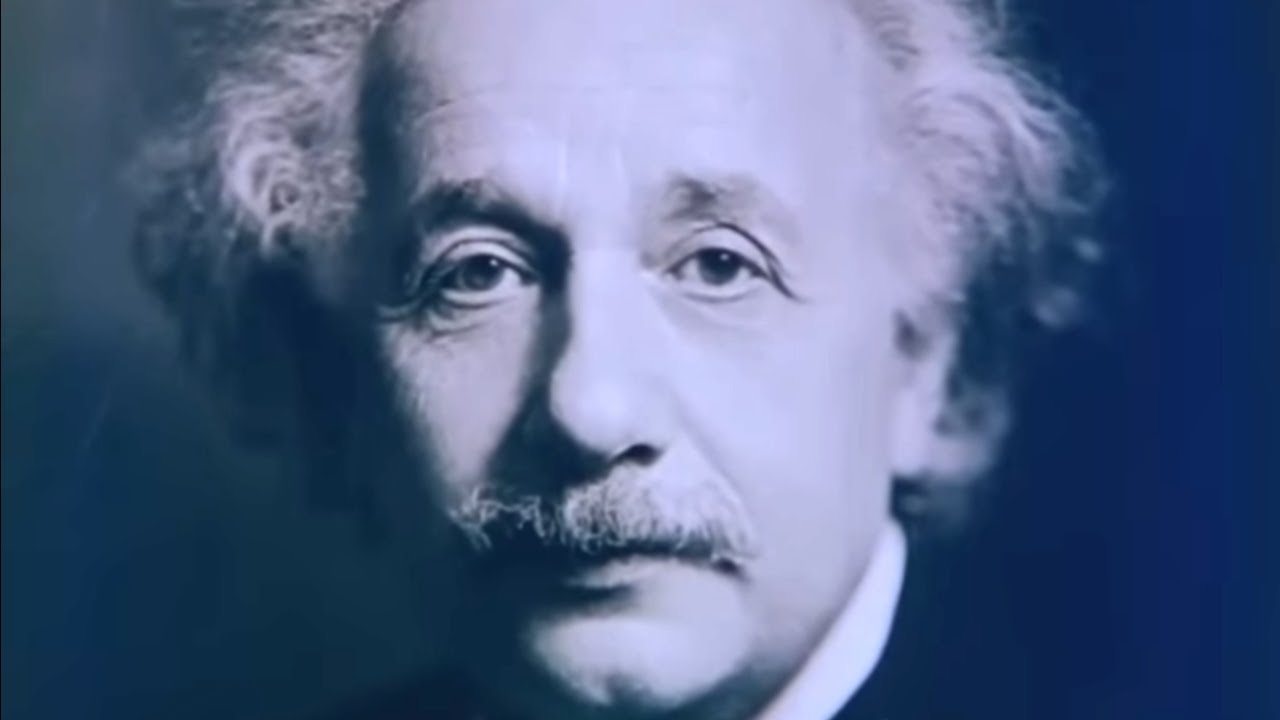
Albert Einstein and Stephen Hawking revolutionized our understanding of the universe through their groundbreaking theories on relativity and black holes.
Scientists estimate there could be as many as 40 billion Earth-like planets in the Milky Way galaxy alone.
A barn-size UFO aggressively approaches a teenager hitchhiking, while a retired French engineer encounters a crashed flying saucer that emits a high-pitched whistle.
As global temperatures rise, tornadoes are increasingly striking densely populated areas outside Tornado Alley, posing greater risks to communities and industries.
US Air Force pilots recount encounters with a 60-foot metallic UFO, while a police constable describes a beam of light from a mysterious crash site.
Every second, 100 billion neutrinos travel through the universe, providing clues about cosmic events and the nature of dark matter.
In 1967, physicist John Wheeler coined the term 'black hole' to describe these gravitational phenomena that challenge our understanding of the universe.
One solar flare can release energy equivalent to over 200 million hydrogen atomic bombs, posing a significant threat to life on Earth.
The search for extraterrestrial life encompasses theories from the Big Bang to advanced technologies like warp drives, featuring insights from physicists and astronomers.
Carp, Ontario, has gained notoriety as a UFO hotspot, raising questions about the legitimacy of sightings and the mysterious entity known as Guardian.
Countless UFO sightings reported globally each year include a select few that remain unexplained, captivating experts and researchers from Alberta to Australia.
In rural Australia, a farmer encounters a mysterious 25-foot-wide object emerging from a swamp, while similar phenomena occur in New Mexico and Germany.
Directed by Thomas Lucas, this 23-minute film examines black holes, their formation, and theories about their nature using advanced computer-generated imagery.
Seventy-five years of UFO encounters are examined through expert analysis, revealing the interplay of government disinformation, cultural beliefs, and technological secrecy.
In Texas, residents report a series of mysterious flashing lights on New Year's Eve, while a French doctor claims an alien craft healed his injury without contact.
In Missouri, a group of 500 residents reports sightings of bright lights and strange crafts, while a cigar-shaped object targets a family in Nova Scotia.
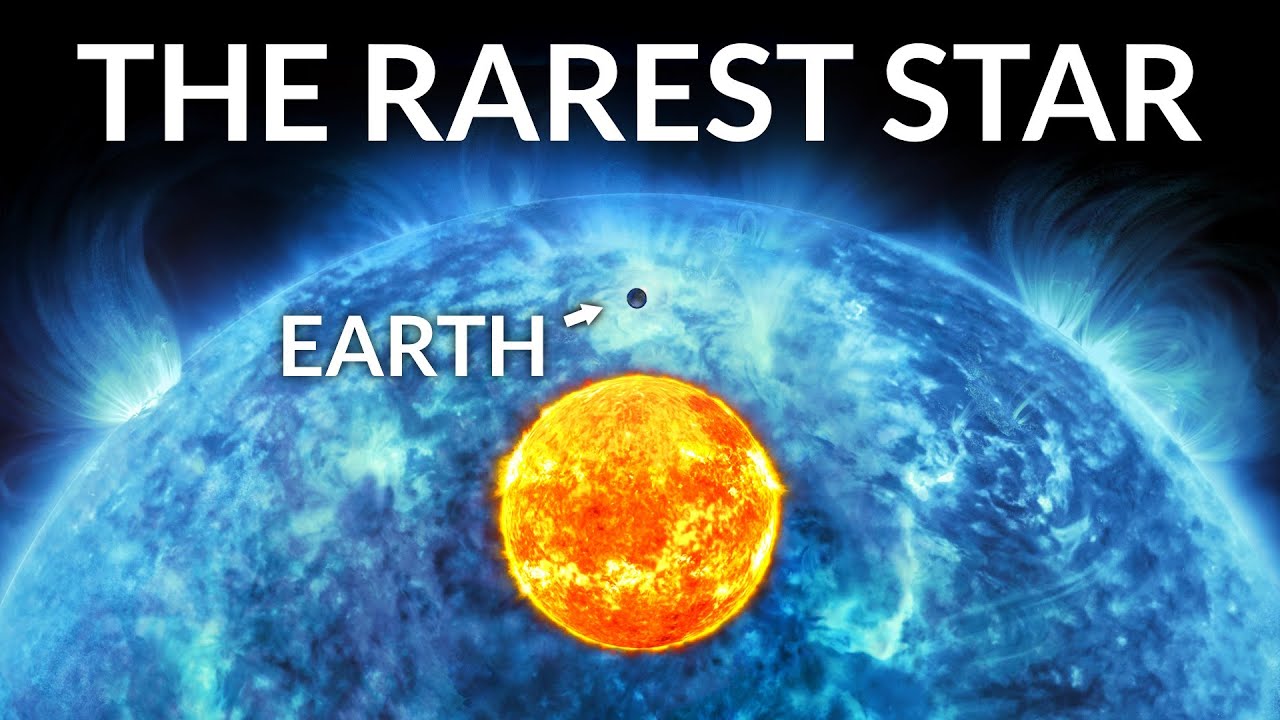
Two advanced space probes, one from NASA and the other from Europe, are studying the Sun's atmosphere and solar winds from within Mercury's orbit.
Survivors from Japan, Thailand, Indonesia, and California recount their harrowing experiences with tsunamis while examining their causes and safety measures.
Saskatchewan crop circles, a Hudson Valley wave of sightings, and a low-flying saucer that kills plants highlight a series of unexplained UFO phenomena.
13.8 billion years ago, the universe began with the Big Bang, a moment that set the stage for the fundamental particles that shape all matter today.
Black holes, including stellar and supermassive types like Sagittarius A*, challenge current understanding of physics, as scientists seek to reconcile quantum mechanics and general relativity.
Recurring UFO sightings in locations like Norway and the Pacific Ocean raise questions about the intentions of these phenomena and their impact on eyewitnesses.
Survivors of deadly tornadoes in Oklahoma, Kentucky, and Alabama share their experiences alongside scientists developing technology to predict tornado formation.
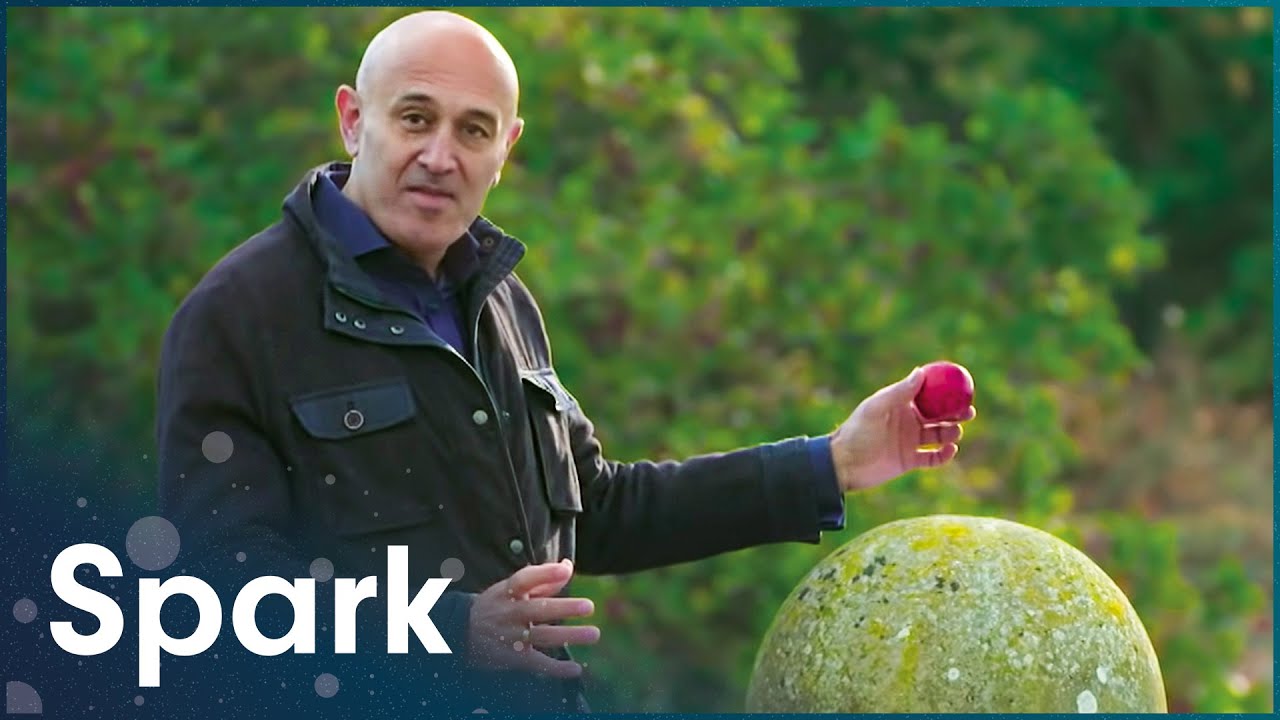
Astrophysicist Jim Al-Khalili examines gravity's role in the cosmos, from Newton's laws to Einstein's theory of relativity and its impact on black holes.
The universe is 13.8 billion years old, and understanding its origins requires knowledge of elementary particles and quantum processes.
UFO abductions are explored through the harrowing first-hand accounts of experiencers who face psychological and physical effects, alongside societal ridicule.
Mass UFO sightings, such as the Phoenix Lights and mysterious Atlantic Ocean events, raise questions about extraterrestrial contact and the physical evidence left behind.
A massive alien craft in Michigan threatens a pregnant woman and injures an Argentinian woman with a fiery blast, leading to coast guard investigations.