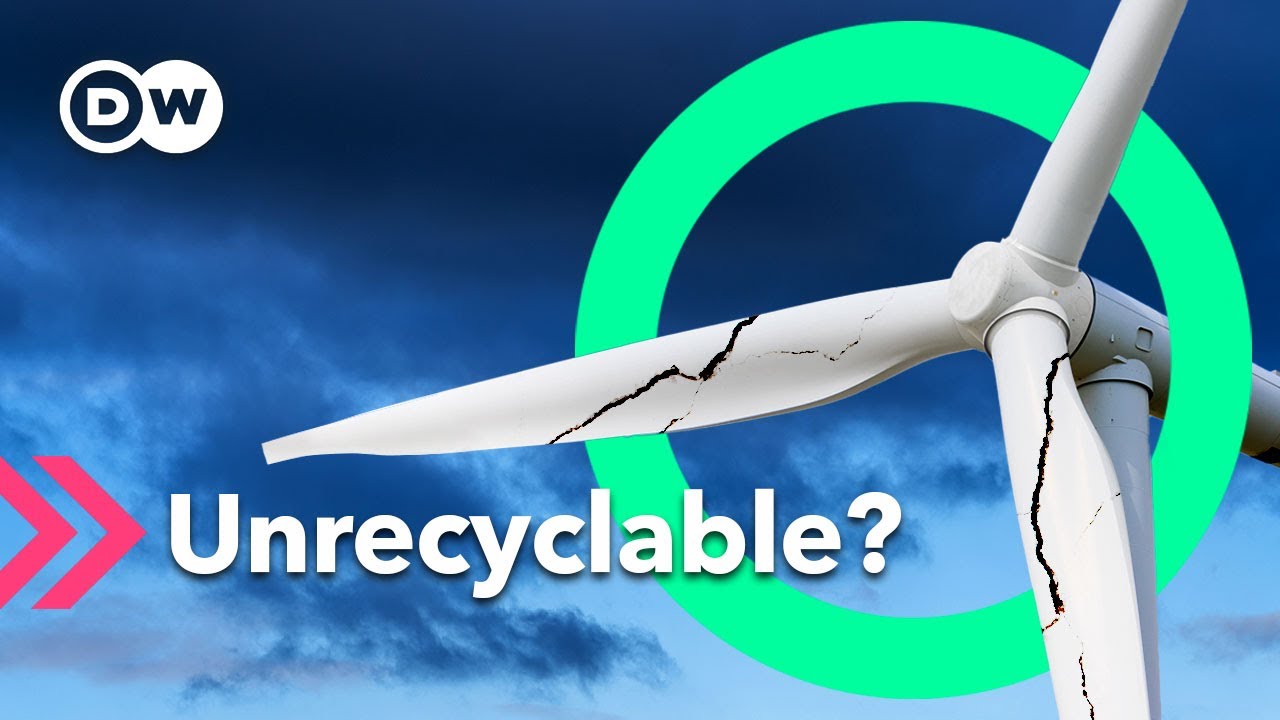
Wind power's unsolved problem
Synopsis
By 2050, an estimated 43 million metric tons of retired wind turbine blades will need to be managed, with most currently ending up in landfills.
Synopsis
Aubryn Cooperman, an engineer at the National Renewable Energy Laboratory, discusses the challenges of recycling wind turbine blades. Many blades, made from glass and carbon fibers, end up in landfills after their lifespan of 20 to 30 years. Claire Barlow from the University of Cambridge explains the difficulty in separating the materials for recycling. As the demand for wind energy grows, companies like Siemens Gamesa and Vestas are working on solutions to make blades recyclable, aiming to improve the industry's environmental image.
Deep Dive
Why Watch
- Find out why wind turbine blades often end up in landfills.
- Meet experts like Aubryn Cooperman and Claire Barlow.
- See how the wind industry is addressing recycling challenges.
Did You Know
- Wind turbine blades are mainly made of glass or carbon fibers and epoxy resin.
- By 2050, there could be an estimated 43 million metric tons of retired blades.
- The largest wind turbine in the world has a rotor diameter of 260 meters.
Perfect For
Frequently Asked Questions
What materials are wind turbine blades mainly made of?
Wind turbine blades are mainly made of glass or carbon fibers and epoxy resin.
How long are wind turbine blades designed to last?
Wind turbine blades are designed to last through all sorts of weather conditions for 20 to 30 years.
What is the estimated amount of retired wind turbine blades by 2050?
By 2050, there will be an estimated 43 million metric tons of retired wind turbine blades.
What are people saying?
Play More Like This






Where else to watch







Related Films
Is this your film?
If you made this film or hold the rights to it, we'd like to talk. We can license it and pay you a share of what it earns.
Comments