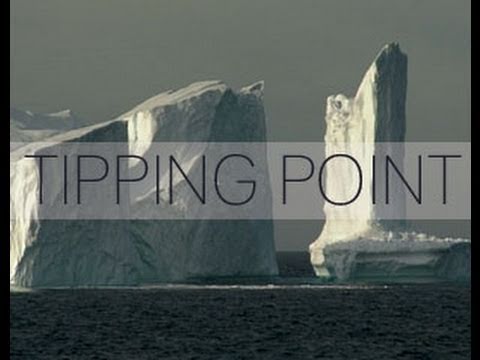
Tipping Point
Synopsis
In September 2007, Arctic sea ice reached its lowest extent in the satellite record, prompting urgent concerns about climate change and its rapid effects.
Synopsis
The Canadian Coast Guard's icebreaker Louis St Laurent sails from Dartmouth, Canada, towards the Arctic Circle in July 2008. The crew faces the historical dangers of the Northwest Passage, where many explorers have perished in the past. Satellite data shows that Arctic sea ice has reached its lowest levels in recorded history, with predictions of an ice-free Arctic by 2030. The film documents the urgent consequences of climate change and the new race for oil and gas in the region.
Deep Dive
Why Watch
- See satellite animations of Arctic sea ice decline.
- Find out why scientists are alarmed by 2007 sea ice levels.
- Meet the Canadian Coast Guard on an Arctic icebreaker.
Did You Know
- The Arctic sea ice could be ice-free by 2020 or 2030.
- September 2007 recorded the least sea ice in thousands of years.
- The size of Arctic sea ice in 1980 was comparable to Australia.
- The Northwest Passage was virtually ice-free for the first time last year.
Perfect For
Frequently Asked Questions
When was the last time the Arctic sea ice was reported to be ice free?
Scientists indicate that the last time the Arctic sea ice was ice free was long before humans set foot on the Earth.
What year do some scientists predict the Arctic could be ice free?
Some scientists predict that the Arctic could be ice free as early as 2020 or 2030, with some suggesting it could happen in 2012 or 2013.
What significant event occurred in the Northwest Passage in 2007?
In 2007, the Northwest Passage was virtually ice free for the first time in recorded history.
What are people saying?
Play More Like This








Browse more like this




Related Films
Is this your film?
If you made this film or hold the rights to it, we'd like to talk. We can license it and pay you a share of what it earns.
Comments