
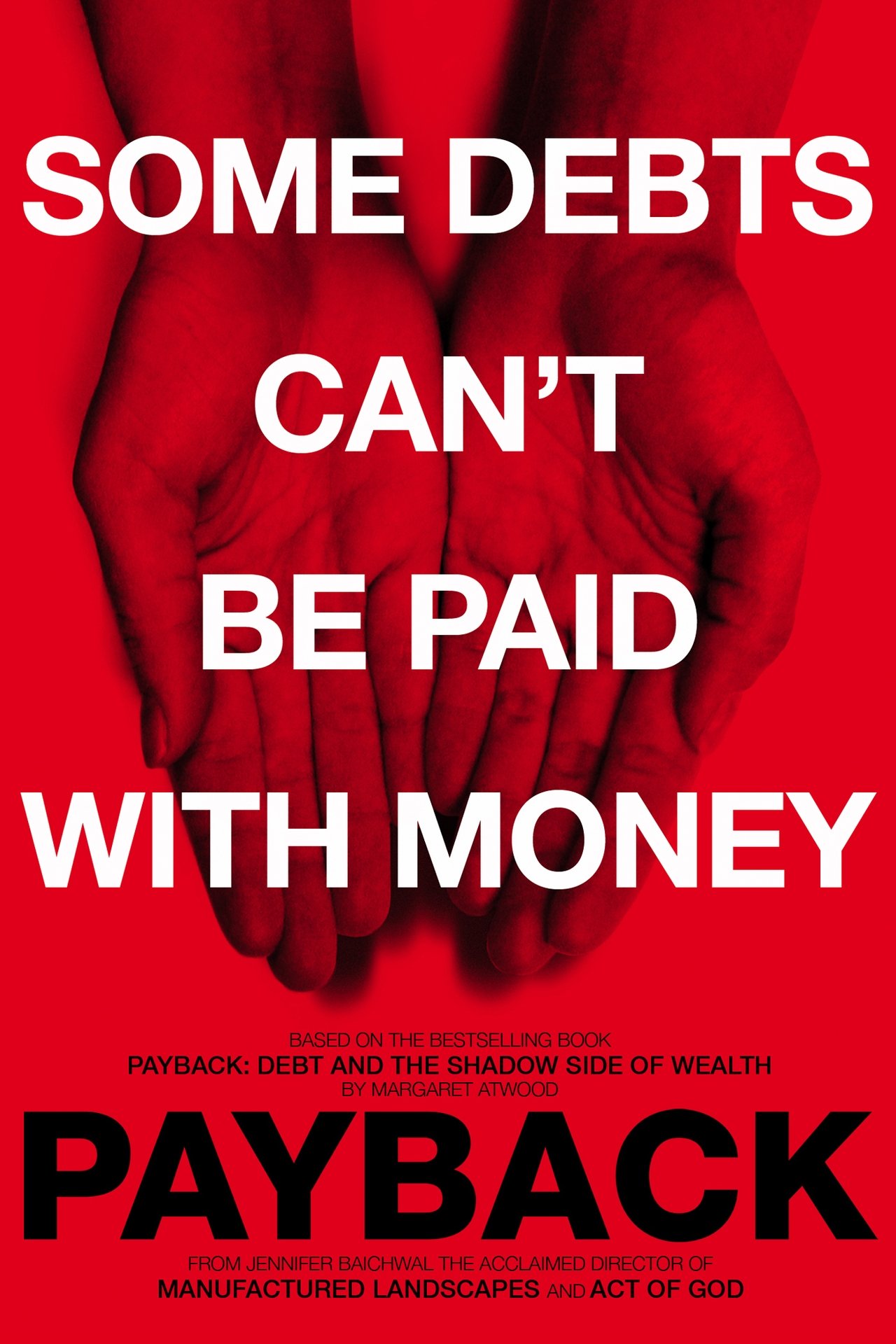
Payback
Synopsis
Forty-seven million people in the United States have a criminal record, many for minor offenses, as discussed in the context of debt and justice.
Synopsis
Margaret Atwood's reflections on debt resonate throughout "Payback." The film features personal narratives from individuals grappling with financial obligations, including a former prisoner who discusses the U.S. legal system's impact on those with criminal records. Locations range from the mountains of northern Albania to the tomato fields of southern Florida. Notable figures such as Karen Armstrong and Raj Patel contribute insights on the societal and environmental dimensions of debt. Directed by Jennifer Baichwal, the documentary runs for 86 minutes.
Deep Dive
Why Watch
- Find out how debt shapes societal norms.
- Meet individuals affected by the legal system.
- See a fresh perspective on crime and morality.
Did You Know
- The U.S. has 47 million people with a criminal record.
- Over 90% of cases are prosecuted by the system.
- The phrase 'crime does not pay' may have a pessimistic meaning.
- The documentary discusses a ritual exchange about weather and payment.
Perfect For
Frequently Asked Questions
How many people in the US have a criminal record?
The US has 47 million people with a criminal record, most for relatively trivial offenses.
What percentage of cases do prosecutors win in the US?
Prosecutors win more than 90% of their cases in the US.
What does the phrase 'crime does not pay' imply?
The phrase may suggest that crime does not ultimately reward the criminal, or it could mean that crime escapes responsibility for its debts.
What are people saying?
Play More Like This










Where else to watch







Related Films
Is this your film?
If you made this film or hold the rights to it, we'd like to talk. We can license it and pay you a share of what it earns.
Comments