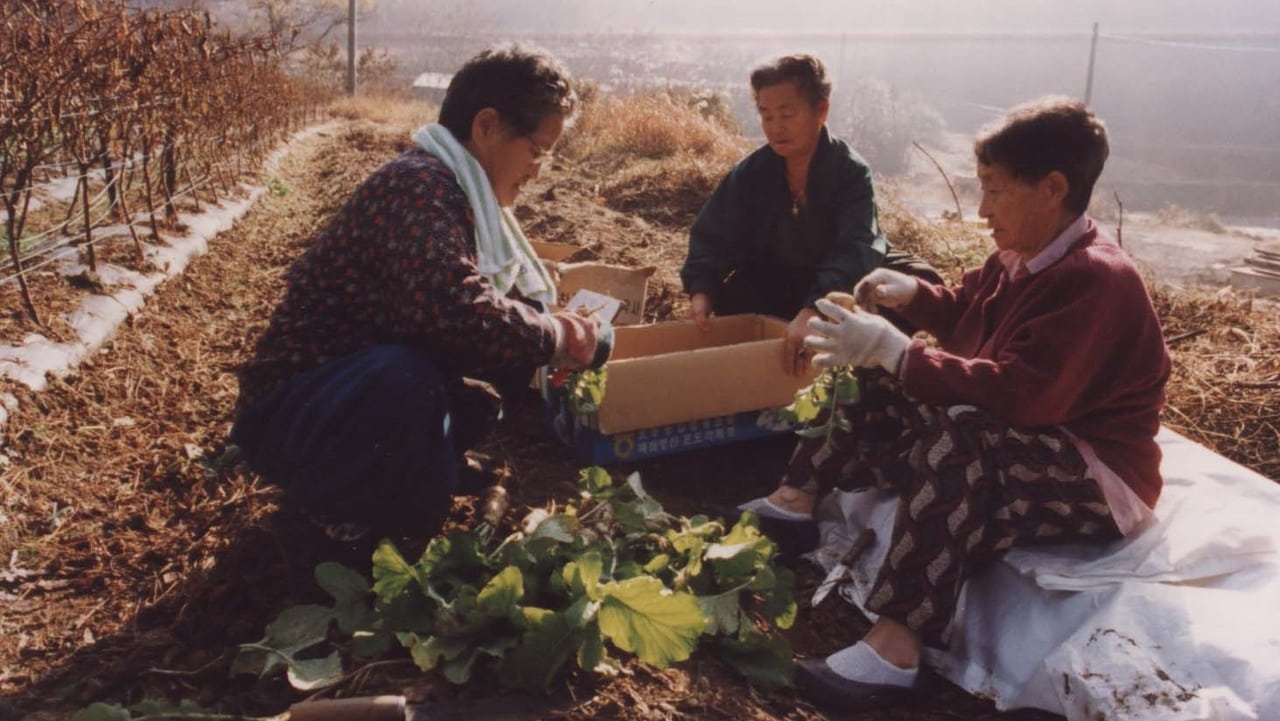
Elderly women at the 'House of Sharing' cultivate vegetables and raise chickens while confronting the emotional scars of their past as comfort women.
Synopsis
Elderly women at the 'House of Sharing' cultivate vegetables and raise chickens while confronting the emotional scars of their past as comfort women.
People

Synopsis
At the House of Sharing in South Korea, elderly women find refuge after enduring sexual slavery as comfort women during World War II. They cultivate vegetables and raise chickens, yet carry deep emotional scars. Many face prejudice upon their return home. They express sorrow and anger over the Japanese government’s denial of their suffering. The documentary calls for acknowledgment of their stories and the injustices they faced.
Deep Dive
Why Watch
- Meet the comfort women of World War II.
- Find out about the House of Sharing.
- See the impact of societal prejudice on survivors.
Did You Know
- The film was directed by Chang Ho-jun in 1997.
- The documentary has a runtime of 71 minutes.
- The women in the House of Sharing cultivate vegetables and raise chickens.
Perfect For
Frequently Asked Questions
What is the House of Sharing?
The House of Sharing is a refuge in the Korean countryside for elderly women who were forced into sexual slavery as comfort women during World War II.
Who directed the documentary Habitual Sadness?
Habitual Sadness was directed by Chang Ho-jun.
What societal issues do the women in the documentary face?
The women face societal prejudice upon their return to Korea and express sorrow and anger towards the Japanese government's denial of their suffering.
What are people saying?
Play More Like This













Related Films
Is this your film?
If you made this film or hold the rights to it, we'd like to talk. We can license it and pay you a share of what it earns.





Comments