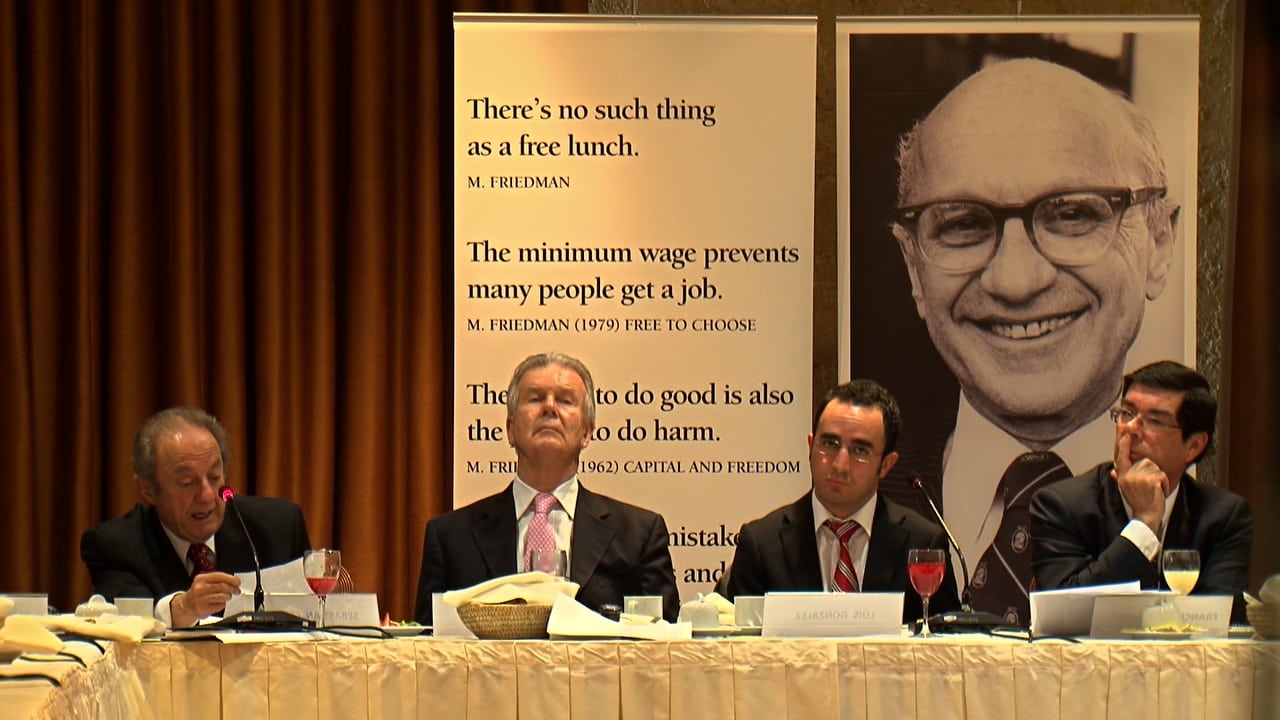
In 1970s Chile, economists known as the Chicago Boys implemented free-market reforms under General Augusto Pinochet, leading to economic growth and social inequality.
Synopsis
In 1970s Chile, economists known as the Chicago Boys implemented free-market reforms under General Augusto Pinochet, leading to economic growth and social inequality.
Go deeperPeople
View all →

Synopsis
In the 1970s, a group of Chilean economists known as the Chicago Boys returned from the University of Chicago to implement radical economic reforms under General Augusto Pinochet's regime. Led by figures like Sergio de Castro and influenced by professor Arnold Harberger, their policies aimed to reshape Chile's economy through free-market principles. The documentary features interviews with key economists and archival footage, detailing the consequences of these reforms, which resulted in economic growth alongside significant social inequality and unrest.
Deep Dive
Why Watch
- Meet the Chicago Boys and their economic influence.
- See interviews with key Chilean economists.
- Find out about the impact of Pinochet's policies.
Did You Know
- Sergio de Castro was Minister of Economy from 1975 to 1976.
- The film won Best Documentary Feature at the 2016 Premios Pedro Sienna.
- Arnold Harberger was a professor at the University of Chicago.
- Carlos Massad served as President of the Central Bank of Chile from 1996 to 2003.
Perfect For
Frequently Asked Questions
Who directed the documentary Chicago Boys?
Chicago Boys was directed by Carola Fuentes and Rafael Valdeavellano.
What economic model did the Chicago Boys promote in Chile?
The Chicago Boys became the main ideologues of the neoliberal economic model in Chile after returning from their studies.
Which festival awarded Chicago Boys Best Documentary Feature in 2016?
Chicago Boys won Best Documentary Feature at the Premios Pedro Sienna de Cine Chileno in 2016.
Awards & Festivals
What are people saying?
Play More Like This












Related Films
Is this your film?
If you made this film or hold the rights to it, we'd like to talk. We can license it and pay you a share of what it earns.




Comments