From over 100,000 films, discover the handful you'll love.
Free or premium access to the world's largest documentary library.
44 films
Georges Lemaître, a priest and theoretical physicist, proposed a theory in 1927 that would shape modern understanding of the expanding universe.
Neutron stars can reach half the speed of light when an object is dropped from their surface, where gravity is so strong that mountains form only fractions of a millimeter high.
A black hole is born when a large star dies in a supernova explosion, which can be as bright as a billion billion suns.
74 stations in a gymnasium simulate the galaxies' evolution over millions of years, illustrating how the universe is already declining.
Over 13 billion years ago, the universe was so small that it could fit inside the palm of a hand before expanding to create everything we see today.
Over 200 billion stars exist in the Milky Way galaxy, yet it is just one of an estimated 100 billion galaxies in the universe.
Conspiracy theories surrounding space travel, including the moon landing and UFO sightings, are examined alongside scientific insights into human survival in space.
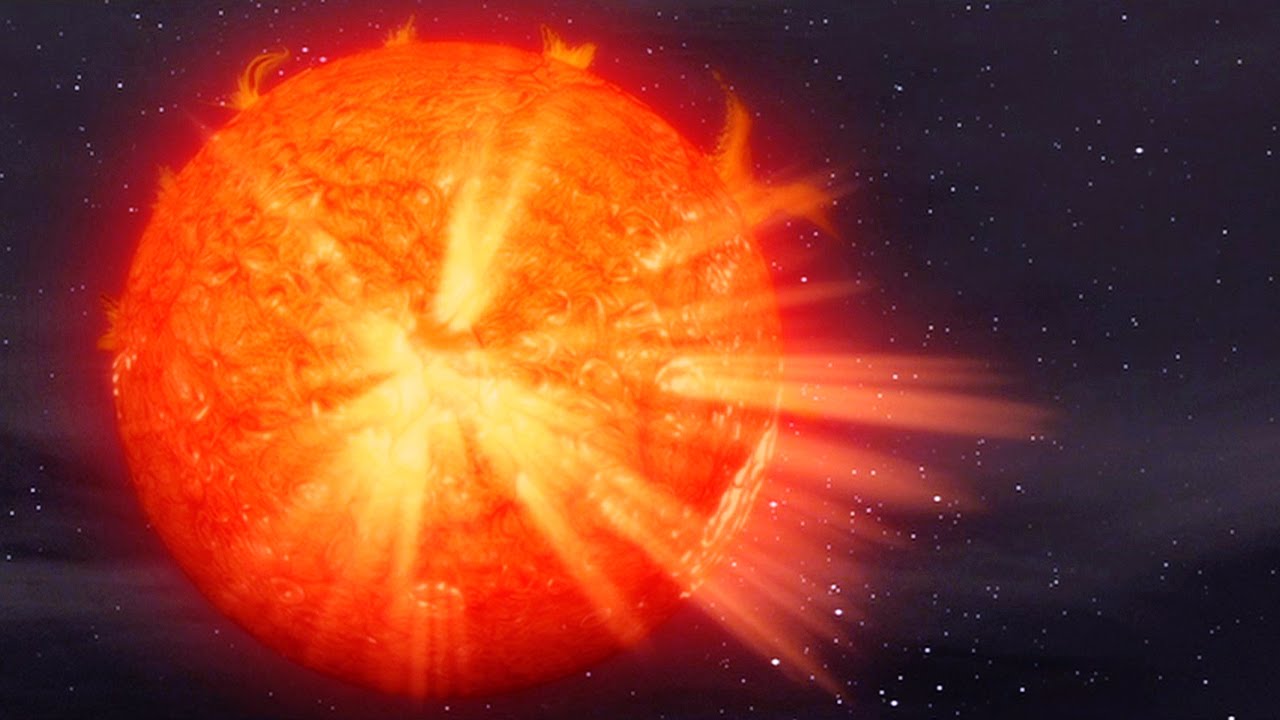
More than a million Earths could fit inside the Sun, which will eventually become too hot for life, melting the planet's surface and evaporating its oceans.
On October 7, 2023, Hamas terrorists attacked the Supernova music festival in Re'im, marking a tragic escalation in the Israel-Palestine conflict.
Advanced technology provides a new perspective on our solar system, showcasing supernova explosions and the beauty of our planet and the universe.
A giant cloud of gas and dust, chilled to more than 400 degrees below zero, began collapsing 4.6 billion years ago, leading to the formation of the solar system.
Season Five of Cosmic Vistas explores the formation of stars, their colors, temperatures, and how they create matter, featuring stunning views of the sun and planets.
In 2015, NASA telescopes identified a promising exoplanet with Earth-like temperatures and potential liquid water, prompting astrophysicists to explore similar solar systems.
Over 13 billion years of light travel reveals what the universe looked like in its infancy, providing insights into its early formation.
Astronaut and scientist Ulrich Walter examines the fundamental role of gravity in shaping life on Earth and its significance in understanding the universe.
500 years ago, a supernova visible from Earth changed the prevailing belief about the universe, leading to a deeper understanding of its size and shape.
Explore the unique challenges of life, love, and sex in space as astronauts navigate daily routines and relationships beyond Earth.
Every atom in your body, forged in ancient stars and scattered through supernovae, connects you to a 13.7 billion-year cosmic history.
In 2019, space nations including China, Japan, and the United States reignite lunar exploration ambitions, exploring the feasibility of moon bases and tourism.
A supernova can send a vast wall of gas racing toward the Pillars of Creation, compressing gas and dust into new stars and solar systems.
Jupiter and Saturn have played a major role in shaping the evolutionary history of the solar system, influencing its development after gas planets formed.
In 2015, Nepal experienced its strongest earthquake, with radar satellites providing precise geological mapping and insights into the disaster's impact.
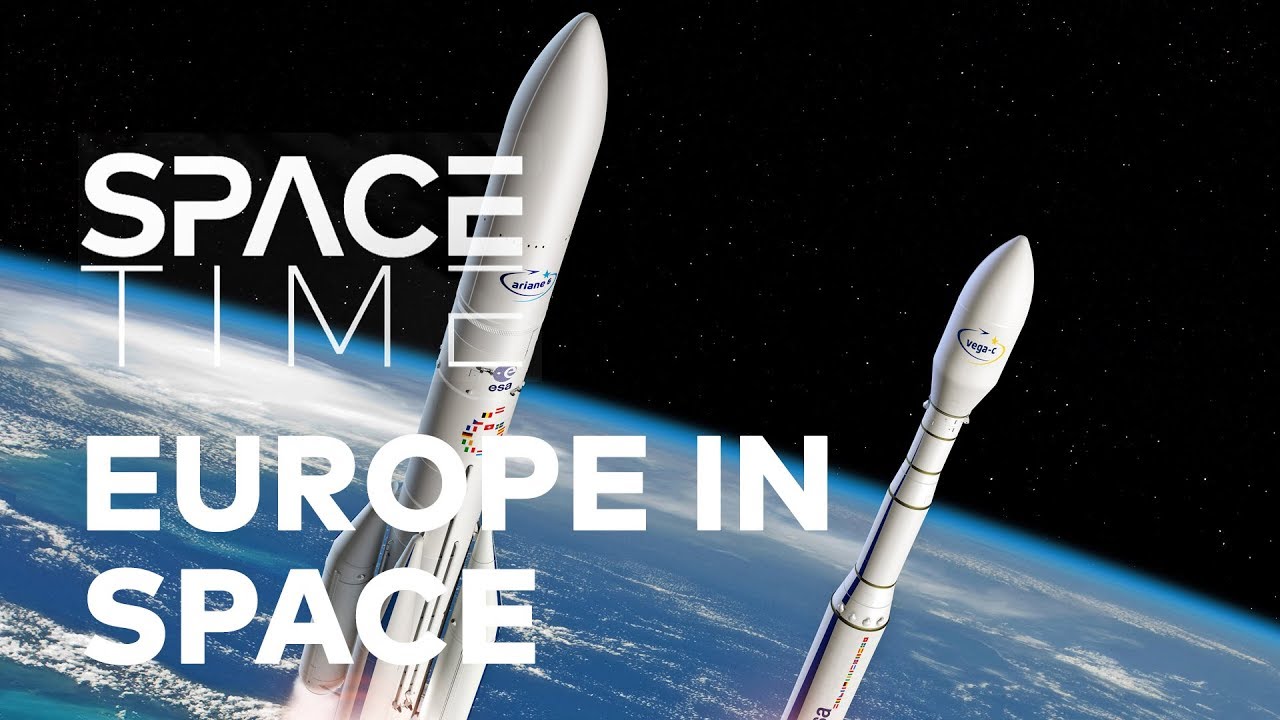
Europe's Ariane 5 rocket, boasting a 98% success rate, establishes the continent as a leader in commercial satellite launches amid increasing competition.
Seven new stars form each year within the Milky Way, driven by events like supernova explosions and interactions with other stars.
Explore the rigorous training and challenges of becoming an astronaut through the insights of Prof. Dr. Ulrich Walter and stories of legendary space explorers.
More than a million Earths could fit inside the sun, which will eventually become too hot and bright, making life on Earth impossible.
By the end of the century, sea levels are expected to rise as much as one meter, threatening coastlines around the world.
The chaotic and violent formation of the Solar System reveals a spectacular history shaped by early nebular theory and evidence of a nearby supernova blast.
Stars, from their explosive births to their eventual demise, shape the universe through processes like supernovae and the formation of black holes.
Carbon, formed in the hearts of stars and essential for life, is explored through its origins, unique properties, and implications for extraterrestrial existence.
Black holes are mind-blowing objects essential to understanding our universe's fabric.
A gamma ray burst lasting four and a half hours signals the violent birth of a black hole as a massive star collapses and is torn apart.
In June 2023, scientists from the North American Nano Hertz Observatory for Gravitational Waves detected a background of gravitational waves throughout the universe.
A supernova can release energy equivalent to the output of the sun over its entire lifetime in just a few seconds.
20 years of planning and construction culminate in LIGO's first search for gravitational waves, marking a new era in the study of the universe.
NASA detects a powerful flare from the Crab Nebula, lasting six days from April 12.
The video shows the Hamas attack on Israel's Supernova festival, resulting in chaos and casualties.
A neutron star has the mass of the sun but a radius of only about six miles, resulting in an incredibly dense object with intense gravity.
Carl Jansky discovered radio waves from the Milky Way in 1931, revealing a universe beyond the limits of human eyesight.
Footage from 'Journey to the Edge of the Universe' reveals the life cycle of stars.
The Crab Nebula shows unexpected brightness variations, challenging its status as a standard candle.
A supernova can release as much energy in 10 seconds as all the stars, galaxies, and quasars in the observable universe combined.
A black hole forms when a large star dies in a supernova explosion, which can be as bright as a billion billion suns.
3.9 kilometers below South Africa, the intense heat of the world's deepest mine reaches 60 degrees, making further travel impossible.