From over 100,000 films, discover the handful you'll love.
Free or premium access to the world's largest documentary library.
15 films
In early 2021, 200 scientists at Fermilab conducted an experiment measuring the wobble of muons to test predictions about fundamental forces in the universe.
In the late 1970s, physicist Sydney Coleman discovered a way to potentially destroy the entire universe through the concept of a false vacuum.
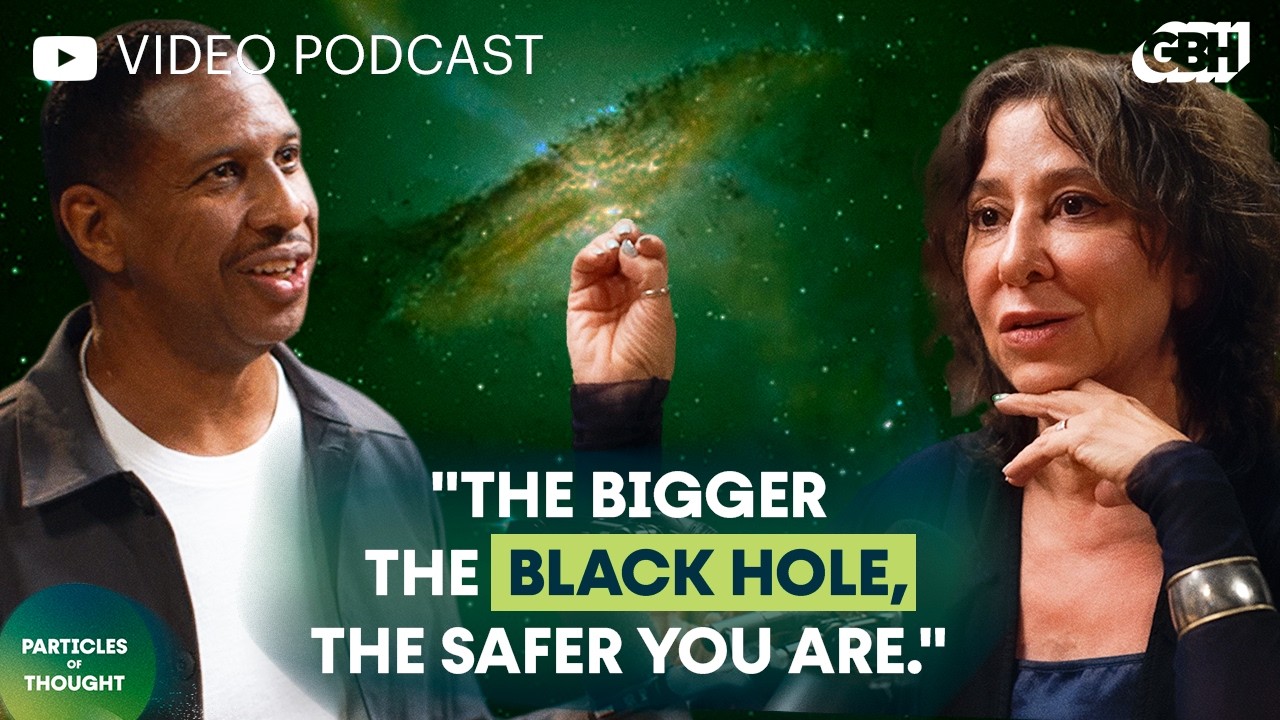
A black hole can be orbited safely from just 30 kilometers away, according to astrophysicist Janna Levin in a discussion about cosmic phenomena.
Neutrinos, the universe's most abundant yet elusive particles, are the focus of an international team aiming to capture a fourth form and challenge the Standard Model of physics.
13.8 billion years ago, the universe began with the Big Bang, a moment that set the stage for the fundamental particles that shape all matter today.
Physicists explore the quantum realm, investigating the fundamental nature of existence and the potential of hidden dimensions in this thought-provoking documentary.
The universe is 13.8 billion years old, and understanding its origins requires knowledge of elementary particles and quantum processes.
Antimatter experiments conducted in space and underground facilities in Japan are revealing fundamental insights into the universe's creation.
Trillions of atoms, each less than a millionth of a millimeter across, form the building blocks of everything in the universe, from stars to human beings.
The mass of an electron's classical electrostatic field has a mass equivalent 20,000 times larger than the measured mass of the electron.
Ten thousand scientists collaborated on the Large Hadron Collider, which helped confirm the existence of the Higgs boson in 2012.
Particles in the universe should be 100 million billion times heavier, yet recent observations suggest the universe continues to exist without collapsing.
The Standard Model Lagrangian, a complex equation, represents the best understanding of the subatomic world in particle physics.
1932 marked the year when Werner Heisenberg proposed isospin, a new fundamental property of matter that challenges the understanding of electric charge.
Three physicists, John Clauser, Alain Aspect, and Anton Zeilinger, won the 2022 Nobel Prize in Physics for proving the reality of quantum entanglement.