From over 100,000 films, discover the handful you'll love.
Free or premium access to the world's largest documentary library.
12 films
In 1946, peacetime nuclear tests in the Pacific and Stalin's push for the bomb mark the beginning of an arms race that could determine humanity's fate.
A team of 40 engineers traveled 175 miles from Phoenix to Kingman, Arizona, to investigate a UFO crash two days after a nuclear test in 1953.
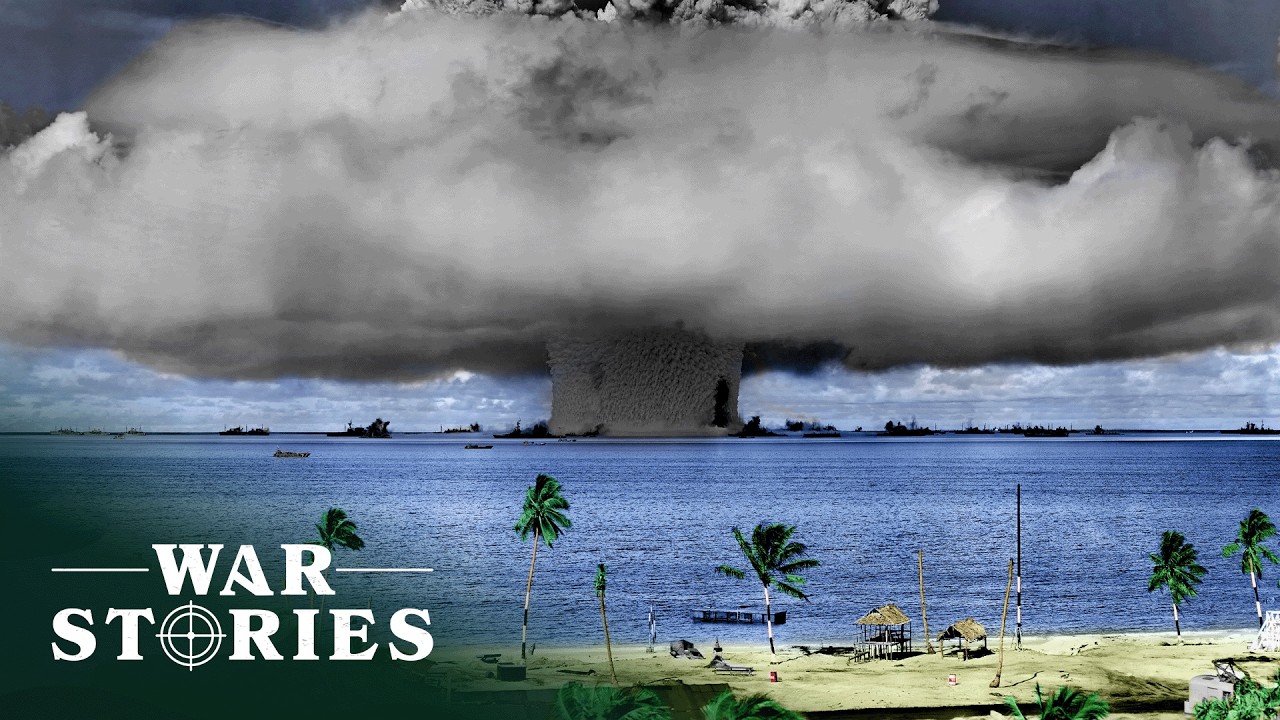
Between 1946 and 1954, 80 million tons of explosive nuclear power were unleashed on Bikini Atoll during a series of tests by the U.S. military.
Close to 700 ships have been wrecked or disappeared within Australia's Great Barrier Reef, including the infamous Yongala, which vanished in 1911.
Bikini Atoll, site of the first nuclear tests in 1946, remains a radioactive ship graveyard, impacting the local environment and islanders' livelihoods.
Bikini Atoll, site of the 1946 Operation Crossroads atomic tests, became a radioactive ship graveyard, highlighting the lasting impact of nuclear warfare.
Locals in Tahiti allege that exposure to radiation from France's nuclear tests has poisoned them, straining relations with the French government.
Bikini Atoll, site of 23 U.S. nuclear detonations from 1946 to 1958, remains a symbol of colonial power and environmental injustice for the displaced Bikinian people.
In July 1946, the Army Air Forces conducted the fourth and fifth atomic detonations, known as Able and Baker, at Bikini Atoll.
Eighteen atomic blasts were witnessed by Frank Farmer while serving in the Pacific, as military personnel faced exposure to radioactive contamination.
Jim Moye has digitized more than 4,000 reels from over 210 nuclear tests conducted by the U.S. and aims to declassify this footage for public access.
India conducted three underground nuclear tests in the Pokhran range in 1998, escalating tensions with Pakistan amid rising Hindu nationalism.