From over 100,000 films, discover the handful you'll love.
Free or premium access to the world's largest documentary library.
33 films
Alan Turing's theoretical computer principles continue to underpin modern computing, as demonstrated by computer scientist Benedict Nixon's variations of Turing Machines.
There are thought to be up to 100,000 quadrillion vigintillion atoms in the entire observable universe, a number that challenges human comprehension.
Countless trillions of humans may one day live across the Milky Way, but a fundamental difference in matter and anti-matter could prevent true contact with other civilizations.
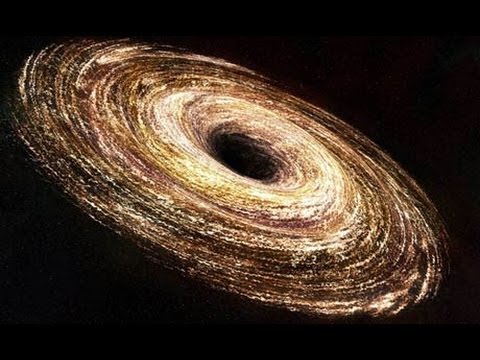
Jim Al-Khalili explores the profound relationship between "everything" and "nothing," revealing how our understanding of the universe has evolved through science and mathematics.
General relativity, a theory developed 100 years ago, transformed the understanding of gravity and the relationship between space and time.
Katherine Johnson was born on August 26, 1918, and her calculations were essential for NASA's early manned space missions and the Space Shuttle program.
In ancient Mesopotamia, the Sumerians established the first cities, invented writing and mathematics, and laid the groundwork for modern civilization.
Zero, introduced thousands of years after the birth of mathematics, revolutionized calculation and enabled advancements in science and technology.
Pythagoras grew up on the island of Samos in the 6th century BCE and is remembered for his theorem on right-angle triangles.
Over $25 million is awarded to scientists for excellence in life sciences, mathematics, and physics during a ceremony hosted by Morgan Freeman.
In the summer of 213 BC, Archimedes used giant mirrors to set Roman ships on fire during their siege of Syracuse.
Johnny Ball presents a playful exploration of mathematics and science, featuring games, tricks, and creative demonstrations that engage and entertain audiences.
Jim Al-Khalili explores the profound relationship between everything and nothing, examining the universe's nature through the lenses of math and science.
Pythagoras and Plato's philosophies are examined for their lasting influence on modern thought, architecture, and societal structures across North America and Europe.
Katherine Johnson was born on August 26, 1918, and her mathematical skills were crucial to NASA's early manned space flights and the Space Shuttle program.
Richard Bellman, a mathematician who invented dynamic programming, held professorships in mathematics, medicine, and electrical engineering.
Over $20 million is awarded to scientists for achievements in physics, mathematics, and life sciences during a ceremony hosted by Pierce Brosnan.
Life on Earth is shaped by finely tuned forces, raising questions about whether its existence is a product of chance or a deeper cosmic design.
Liam Dale's documentary reveals Shakespeare's genius beyond the real torture of studying him.
Extreme engineering feats, from the Eiffel Tower to offshore gas platforms, showcase the science and mathematics that ensure their stability and resilience.
Tom Kilburn, a pioneering mathematician and computer scientist, co-invented the Manchester Baby, the world's first stored-program computer, and contributed to the Atlas supercomputer.
Two men who are each 100 years old share their thoughts on aging and the bonds of family in a 15-minute animated short.
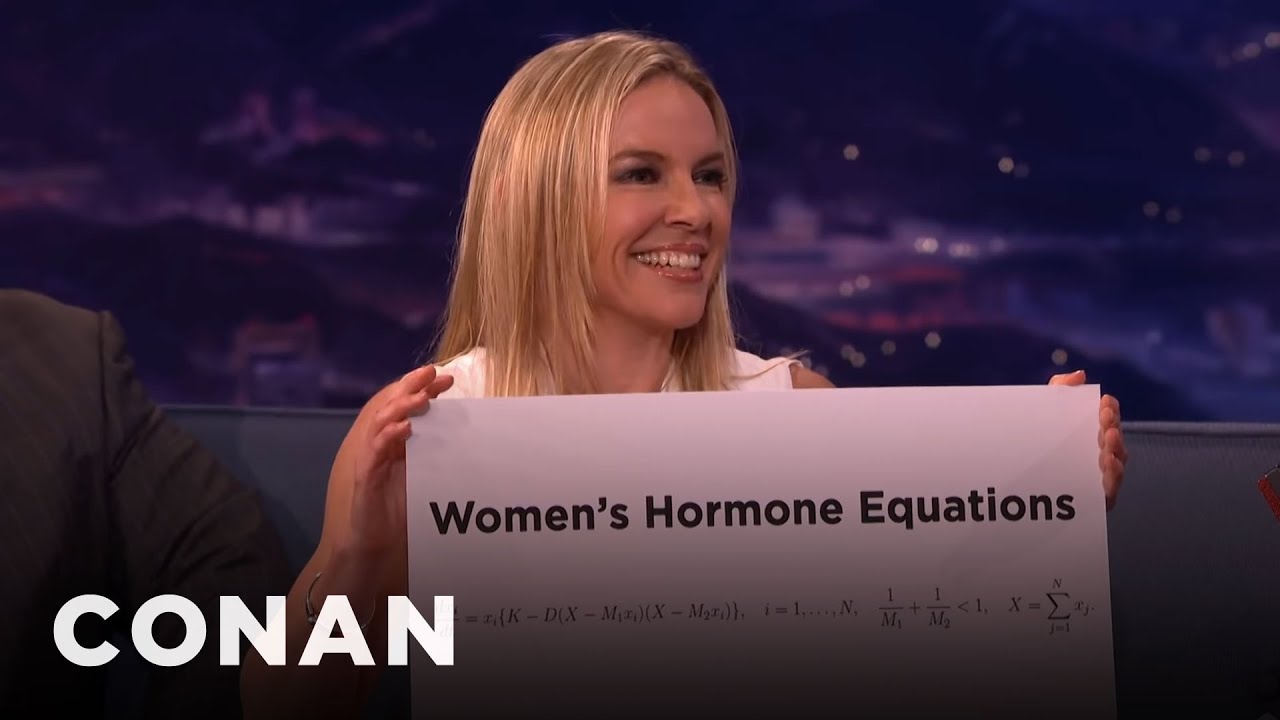
Conan interviews Clio Cresswell about hormones versus equations, sparking laughter and insights.
Isaac Newton and Robert Hooke, two pivotal figures in science, are examined for their brilliance and contentious personalities in the realm of mathematics.
Märten Ajne skates on thin ice, using math to calculate its safety across North America and Norway.
1 + 2 + 3 all the way to 100 equals 5,050, illustrating how mathematics provides solutions to complex problems in everyday life.
Many flowers exhibit a preference for five petals, or other Fibonacci numbers like 8 and 13, reflecting mathematical patterns in nature.
The video highlights how the invention of numbers 0-9 transformed calculations in Europe.
An aggressive plan to fire principals if test scores did not improve marked Michelle Rhee's controversial approach to reforming Washington, DC's public schools.
More than 25,000 students studied at the University of San Koy in Timbuktu during the 16th and 18th centuries, making it a key center of learning in the Muslim world.
Ancient Arabia's contributions to mathematics are explored through the influence of early mathematicians, highlighting their impact on various fields and historical advancements.
Pythagoras's lovely Greek Cup teaches moderation in drinking through a clever design.
Alec Wilkinson explains Yitang Zhang's significant mathematical breakthrough in this video.