From over 100,000 films, discover the handful you'll love.
Free or premium access to the world's largest documentary library.
21 films
Bobby Kasthuri discusses the similarities between human and mouse neurons, noting that they appear identical under a microscope despite differing capabilities.
Clive Wearing has a memory span of only seven seconds due to severe amnesia caused by a virus that damaged his brain in 1985.
A jury of 12 listens as a lawyer argues that a defendant's actions can be traced back to the origins of the universe.
Zeke Spector confronts his fear of death by using ketamine to simulate near death experiences, exploring what these moments reveal about life.
Rael, the leader of the Raelian movement, claims to have nearly 100,000 followers who believe humans were created from alien DNA.
Near-death experiences reported by over 8 million Americans suggest that consciousness may persist beyond physical death, challenging traditional views on mortality.
Ayahuasca, a hallucinogenic brew from the Amazon, is explored through its origins, integration into the Santo Daime religion, and its impact on modern healing practices.
Twenty-four individuals named David share their diverse experiences, ranging from a cosmologist to a recycler, across three continents.
Energy of the mind equals mass of the mind force times frequency squared, according to Darrenpo's law first formulated in 1978.
Alex Vikoulov argues that consciousness can be defined as a degree of autonomy gained through dynamic relations with the environment.
Watch this video to explore if robots can be considered individuals with rights.
Over 40 years, Coney Island's Mermaid Parade has become a vibrant celebration of creativity, drawing participants from across New York City.
Deepak Chopra explains how consciousness affects biology and electromagnetic fields.
Deepak Chopra claims Donald Trump's consciousness is stuck in his genitals, affecting his maturity.
Five young men are mounted on a beam in the middle of the country as part of a performance that mixes humor and social commentary.
Neuroscientist Heather Berlin says that defining consciousness requires understanding first-person subjective experience, which is only accessible to the individual.
Dr.
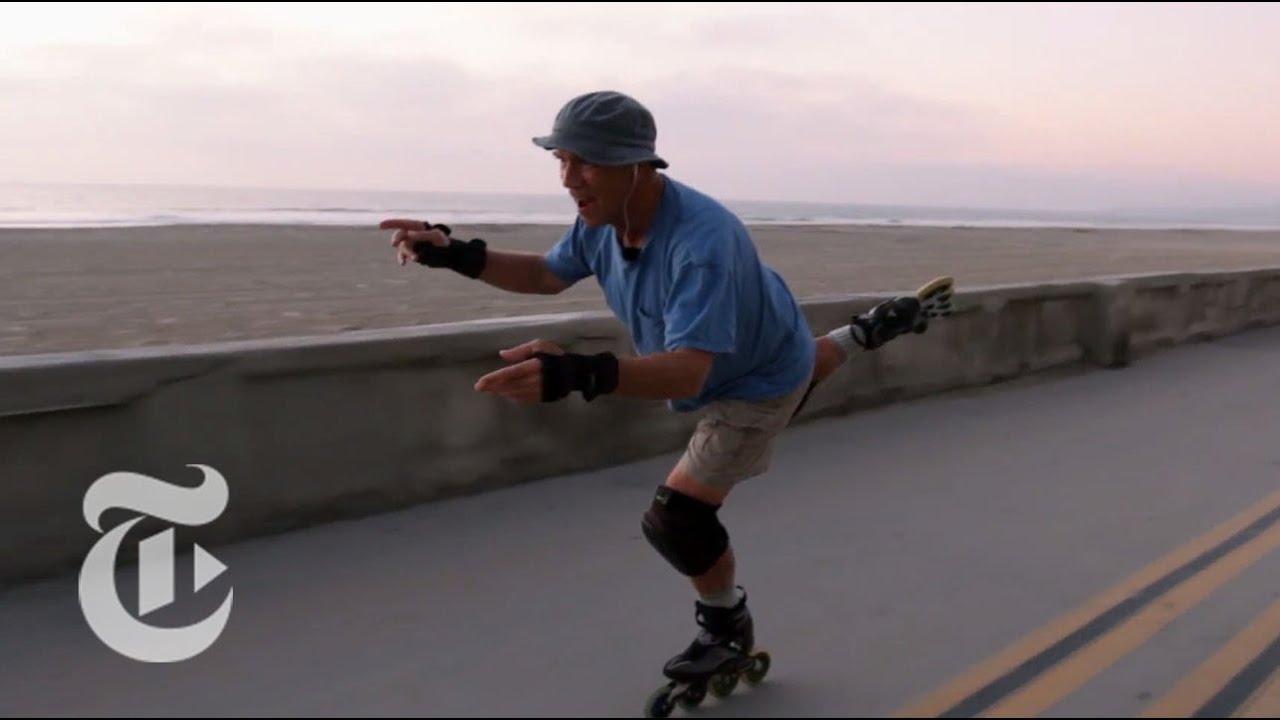
Dr. John Kitchin, known as "Slomo," abandoned his medical career to skate along the Pacific Beach boardwalk, prioritizing personal passion over societal norms.
Prof. Nasir Raza Awan discusses reality and perception through neuroscience and philosophy.
This feature documentary reveals the tukdam phenomenon among Tibetan Buddhists after death.
Neuroscientists explore how communication between different brain regions contributes to the formation of individual identity and consciousness.