Society Politics Justice
Why do we go to war?
Why do we go to war?
A look at the reasons people fight, from ancient conquest to today's front lines.
Why this matters
War shapes borders, families, and the news you read every morning. Most of us react to it emotionally without knowing why wars start or how anyone decides one is worth fighting. Spending about ten hours here gives you a real toolkit. You will learn the main theories people use to explain and justify war, and you will see those theories tested against actual battles and modern conflicts. After that, you will not be at the mercy of headlines. You will understand what is actually being argued when leaders talk about security, justice, or national interest.
You become someone who can hear a leader justify a war and calmly ask whether it is about power, justice, or just national pride.
War is an armed conflict between the armed forces of states, or between governments and organized armed groups that can sustain military operations 1. That plain definition hides a hard question. Why do people keep choosing it? Some thinkers say states act like self-interested players in a world with no referee, always chasing power and safety 5. Others say wars are sometimes justified when justice is the goal, and they built a whole set of rules to test whether a war is fair 3. And some societies simply glorify their military and want to use it to expand their interests, a belief called militarism 4. This journey works through those ideas using real conflicts. You will see the machinery of world wars, the front lines of modern insurgencies, and the human cost that never shows up in a strategy briefing. The point is not to celebrate battles. It is to understand the different forces that push people toward them. By the end you should be able to look at any conflict in the news and ask better questions. Is this about power and security 5? Is anyone claiming it is just 3? Is a culture cheering the fight on 4? Those questions will not give you easy answers, but they will make the news make more sense.
Chapter I
What war is and what it costs
Start with the basics. What counts as a war, and what does it actually do to people? These films show the scale and the human cost before we get to the theories.
FoundationsWatch

The Somme, one terrible day
Battle of the Somme
20,000 British soldiers were killed on the first day of this battle, showing the raw cost of industrial war 1.
Watch this documentaryFoundationsWatch

The bomb that changed everything
Oppenheimer's Atomic Bomb: The Nuclear Weapons That Could Wipe Out All Life
Up to 70,000 people were killed instantly at Hiroshima, raising the hardest questions about how far war can go 1.
Watch this documentaryFoundationsRead
Read Hiroshima
John Hersey
John Hersey's classic tells the bombing through the lives of ordinary survivors.
Foundations · Do this
Do this
Watch tonight's news and write down every armed conflict mentioned. Note who is fighting whom and whether they seem to be states or organized armed groups.
Chapter II
The reasons and the rules
Now the ideas. Why do states choose war, and how do people argue that some wars are fair? Match the theories to real conflicts.
Going deeperWatch

Why Japan attacked Pearl Harbor
Why Japan Attacked Pearl Harbor Waking The Sleeping Giant
A clear case of a state calculating power and security, exactly what realism describes 5.
Watch this documentaryGoing deeperWatch

Vietnam, before, during and after
The Vietnam War: Before, During and After
A 20-year war that forced hard questions about whether it was ever justified 3.
Watch this documentary
Going deeperRead
The American Revolution
Geoffrey C. Ward, Ken Burns
Ken Burns and Geoffrey Ward on a war fought over who gets to rule, a good test case for just war questions.
Going deeper · Do this
Do this
Pick one war from these films. Write down whether it seems driven mostly by power and security, by a claim to justice, or by pride in the military. Give one reason for your choice.
Chapter III
Modern wars and hard cases
Today's conflicts are messier. Insurgents, proxy wars, and militias blur the old lines. Test everything you have learned against them.
Going furtherWatch

The Battle for Bakhmut
The Battle for Bakhmut
A modern grinding fight in Ukraine that shows war between states in the present day 1.
Watch this documentaryGoing furtherWatch

Militias against the Islamic State
The Battle for Iraq: Shia Militias vs. the Islamic State
When organized armed groups fight, not just states, the definition of war stretches to fit 1.
Watch this documentaryGoing furtherWatch
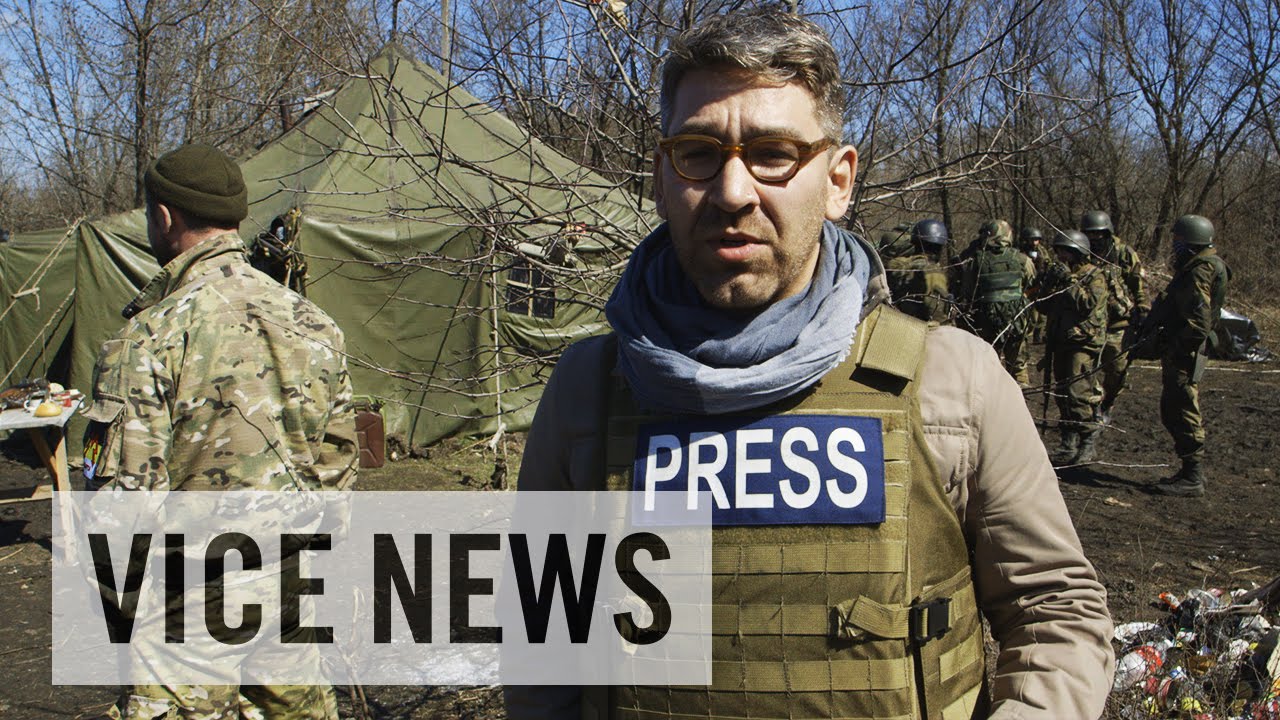
Russia checks in to Ukraine
Selfie Soldiers: Russia Checks in to Ukraine
A close look at how a state can deny involvement even when its troops are on foreign soil 5.
Watch this documentaryGoing further · Do this
Do this
Choose one ongoing conflict in the news. Try to describe it using all three ideas: realism, just war, and militarism. Notice which one fits best and where each one falls short.
What you'll take away
- Define what counts as a war and who fights them [1]
- Explain the main criteria just war theory uses to judge a conflict [3]
- Describe how realism views states as self-interested actors chasing power [5]
- Recognize militarism when a society glorifies and expands its military [4]
Check your understanding
What does just war theory try to do?
According to realism, what drives states in world politics?
What is militarism?
Who can be a party to a war?
Key concepts
- War
- An armed conflict between the armed forces of states, or between governments and organized armed groups that can sustain military operations.
- Just war theory
- A tradition of military ethics with criteria that must all be met for a war to be considered morally justifiable.
- Realism
- A view of world politics as an endless competition among self-interested states chasing power and security in a world with no central authority.
- Militarism
- The belief that a state should keep a strong military and use it aggressively to expand its interests, often glorifying the military itself.
Timeline
- 1916 · The Battle of the Somme
- 1941 · Attack on Pearl Harbor
- 1945 · Hiroshima
- 1955 · The Vietnam War begins
- 2022 · The Battle for Bakhmut
Historical context
For most of history, war has meant organized armed groups with a command structure fighting each other or fighting a government 1. People have long tried to explain it. One tradition, realism, treats the world as a contest among self-interested states with no central authority to keep order, each chasing power and survival 5. Another tradition tries to judge war rather than just explain it. Just war theory sets out criteria a war must meet to be called just, covering both the reasons for going to war and how it is fought 3. Alongside these sits militarism, the belief that a strong military should be built up and used aggressively to expand a nation's interests and values 4. These ideas run through every conflict in this journey, from the world wars to today's front lines.
Family mode
Dinner questions
- •Is there ever a good reason to go to war?
- •If two countries disagree and there is no one to judge between them, what should they do?
- •Should we ever celebrate soldiers and battles, or does that make war more likely?
Experiments
- •Play a simple resource game where each player wants the same thing and there are no rules. See how quickly conflict starts and talk about why.
Crafts
- •Draw a map of two made-up countries and mark what each one wants. Show why they might end up fighting.
Games
- •Play a strategy board game like Risk and afterwards talk about whether real countries think the same way.
Travel
- •Visit a local war memorial and read the names. Talk about who these people were before the war.
For younger children
- •What is the difference between an argument and a war?
- •Who gets to decide when a war stops?
Discuss & reflect
Discussion
- Does realism explain most wars, or does it miss something important about why people fight?
- Can a war be both just and terrible at the same time?
- When an armed group is not a state, is fighting it still a war?
- Does glorifying the military make a country safer or more dangerous?
Reflection
- •Think of a conflict you already had strong feelings about. Did those feelings change after learning these theories?
- •Which idea, realism, just war, or militarism, do you find most convincing, and why?
- •What would it take for you to believe a specific war was justified?
Go further
Further learning
Expert learning
Sources & further reading
- 01War · en.wikipedia.org
- 02War · en.wikipedia.org
- 03Just war theory · en.wikipedia.org
- 04Militarism · en.wikipedia.org
- 05Realism (international relations) · en.wikipedia.org
- 06Realism (international relations) · en.wikipedia.org